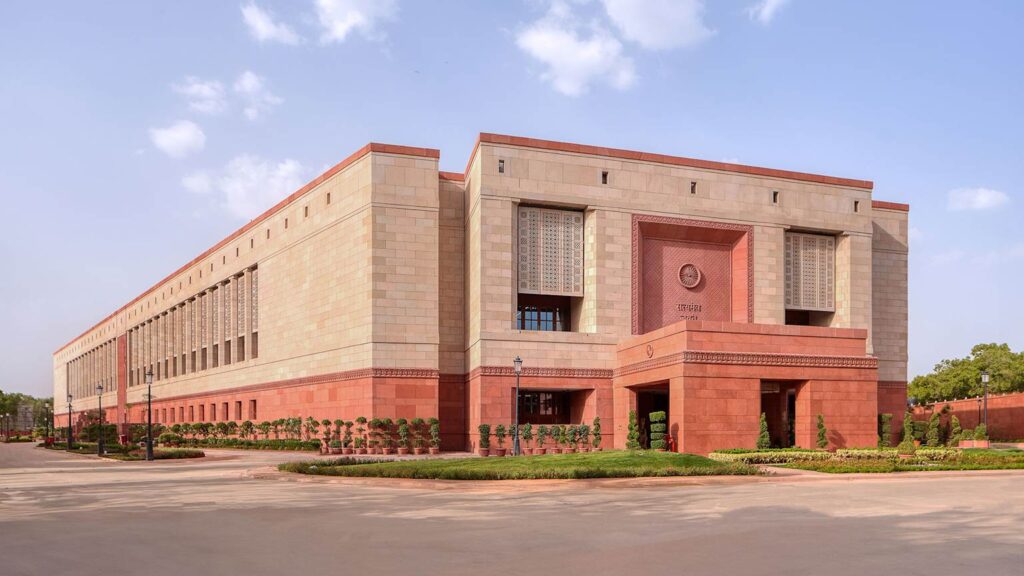
The 131st Amendment Fails. If you’ve been scrolling through the news lately, you’ve likely seen the headlines about a “historic defeat” or a “grave betrayal” in Parliament. On Friday, April 17, 2026, something happened in the Lok Sabha that hasn’t happened in over 12 years: a government-backed constitutional amendment bill was rejected.
People are confused. Some are celebrating it as a “win for democracy,” while others are calling it an “insult to 700 million women”. Is it wrong? Is it right? The truth is, it’s complicated. Let’s strip away the political shouting and break down exactly what the Constitution (131st Amendment) Bill was, why it crashed, and what it really means for the future of India.
The “Midnight Marathon” in Parliament
This wasn’t just another day at the office for India’s lawmakers. The government called a special sitting of Parliament from April 16 to 18 specifically to address these reforms. What followed was a marathon debate that saw nearly 130 members take the floor, with discussions stretching past midnight on Thursday and continuing deep into Friday.
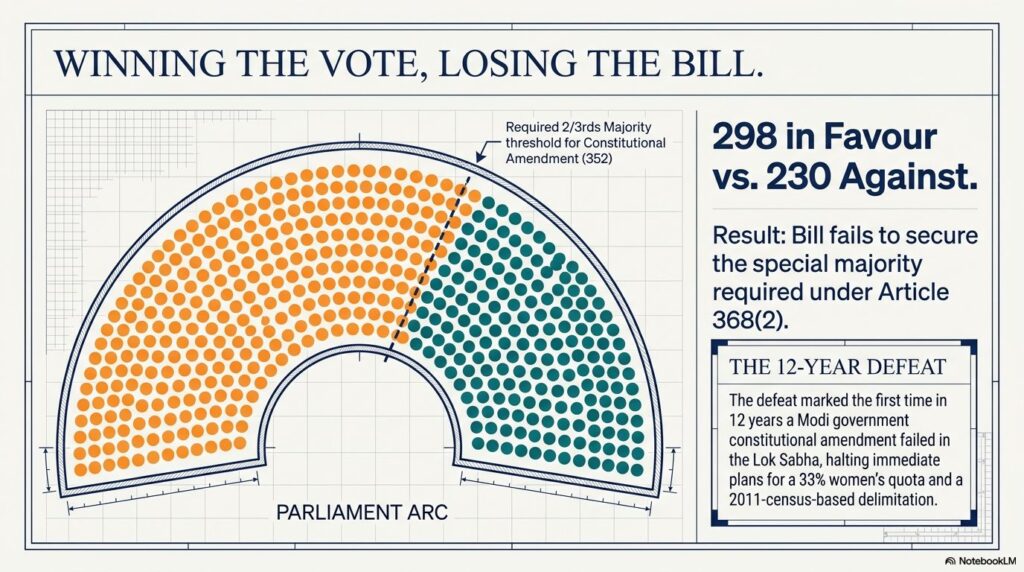
The tension was palpable. Prime Minister Narendra Modi made a personal pitch, framing the bill as a matter of “national interest” rather than politics. But when the final division of votes occurred on Friday afternoon, the numbers told a shocking story. The Bill received 298 “Yes” votes and 230 “No” votes. In a normal vote, 298 would be a winning number. However, because this was a Constitutional Amendment, it required a “special majority”—meaning two-thirds of the members present and voting. Out of the 528 members who voted, the government needed 352 votes. They fell short by 54 votes, and the Bill was officially rejected.
What was actually in the “Triple Bill” Package?
To understand the confusion, you have to realize the 131st Amendment wasn’t acting alone. It was part of a “triple-threat” legislative package that the government argued was “intrinsically linked”:
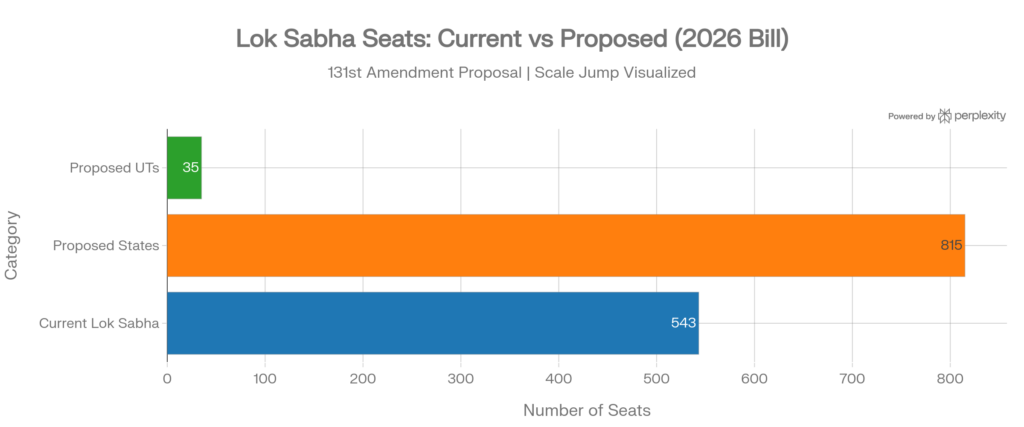
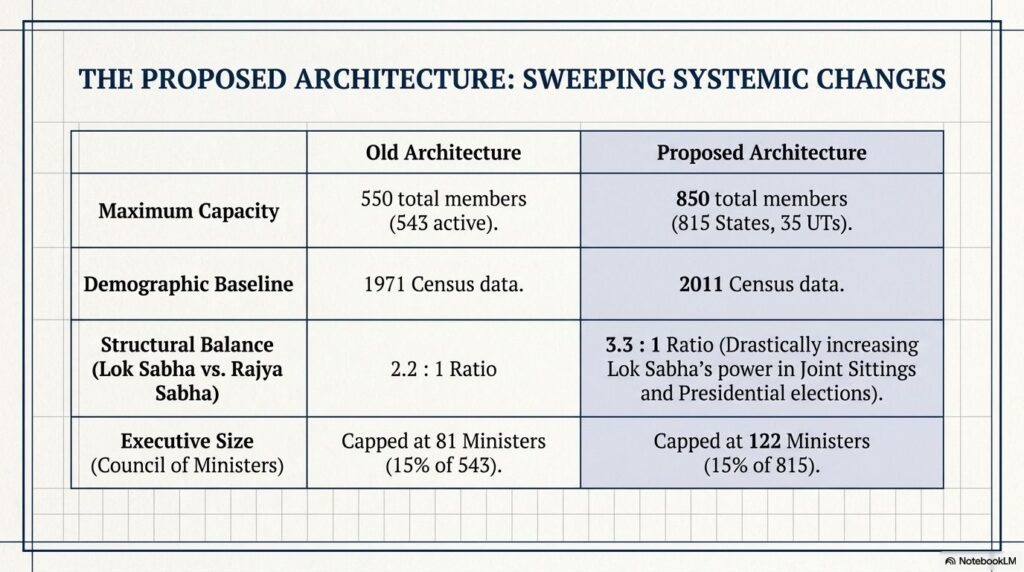
- The Constitution (131st Amendment) Bill, 2026: This was the anchor. It sought to increase the Lok Sabha’s maximum strength from 550 to 850 members. It targeted Articles 81, 82, and 334A of the Constitution to allow for a massive expansion of seats.
- The Delimitation Bill, 2026: This bill provided the framework to redraw the boundaries of all 850 constituencies based on the 2011 Census.
- The Union Territories Laws (Amendment) Bill, 2026: This extended these changes to assemblies in Delhi, Puducherry, and Jammu & Kashmir.
The primary goal, according to the government, was to “decouple” women’s reservation from the requirement of waiting for a post-2026 census. Under the existing 106th Amendment (2023), reservation was contingent on a census that hasn’t happened yet, effectively pushing the implementation to 2034. This new Bill wanted to use the 2011 data to fast-track that 33% quota for the 2029 elections.
The North-South Divide (The “Real Story”)
Why did the opposition parties, who all say they support women’s reservation, vote against a Bill that promised to speed it up? The conflict wasn’t actually about the women; it was about Delimitation.
Delimitation is the process of redrawing electoral maps based on population. Currently, India’s seat allocation is mostly frozen based on the 1971 Census to ensure that states that successfully controlled their population (mostly in the South) weren’t “punished” by losing political power to states with high growth (mostly in the North).
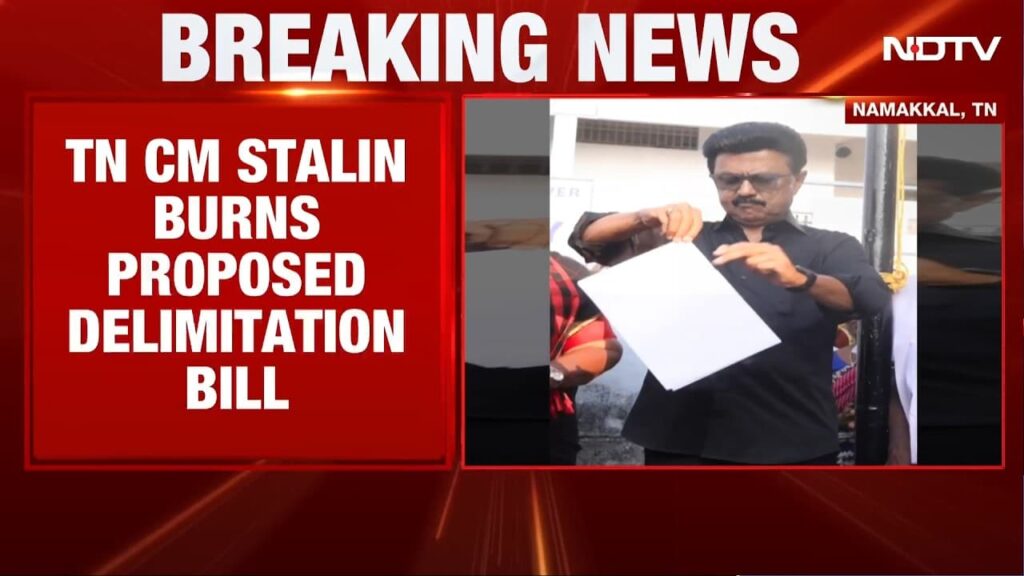
The 131st Bill proposed using the 2011 Census to redraw the map. Opposition leaders like Rahul Gandhi and M K Stalin argued this was a “devious” attempt to change the country’s electoral map in favor of the ruling party’s strongholds. Stalin even set fire to a copy of the Delimitation Bill in protest, claiming the South had “defeated Delhi’s arrogance”.
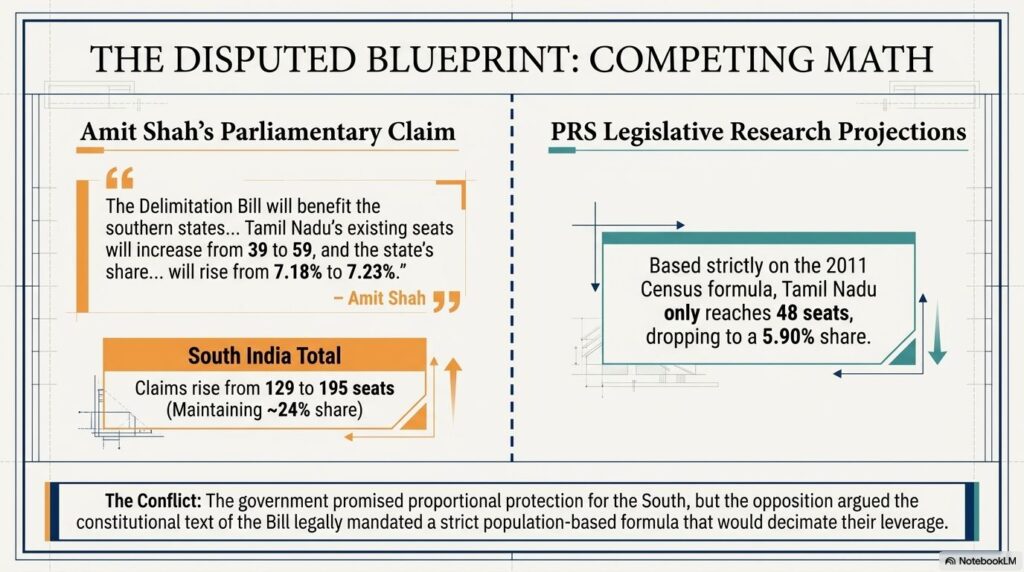
The “50% Increase Model” Projections: To calm these fears, Home Minister Amit Shah presented a model where the total number of seats would grow from 543 to 816.
| State | Current Seats | Projected Seats (2011 Model) | Relative share of power |
| Uttar Pradesh | 80 | 133 | Increases (14.7% to 16.3%) |
| Bihar | 40 | 69 | Increases (7.3% to 8.4%) |
| Tamil Nadu | 39 | 59 | Decreases (7.18% to 5.9%) |
| Kerala | 20 | 30 | Decreases (3.6% to 2.7%) |
While every state would gain more seats numerically, the relative share of the South would drop significantly. For instance, Kerala’s share of the House would plummet from 3.6% to 2.7%, while Uttar Pradesh’s share would climb to over 16%.
The “Hidden Layers” Experts Are Worried About
Beyond the political slogans, legislative researchers at PRS Legislative Research flagged several structural risks that would have changed the very nature of Indian democracy:
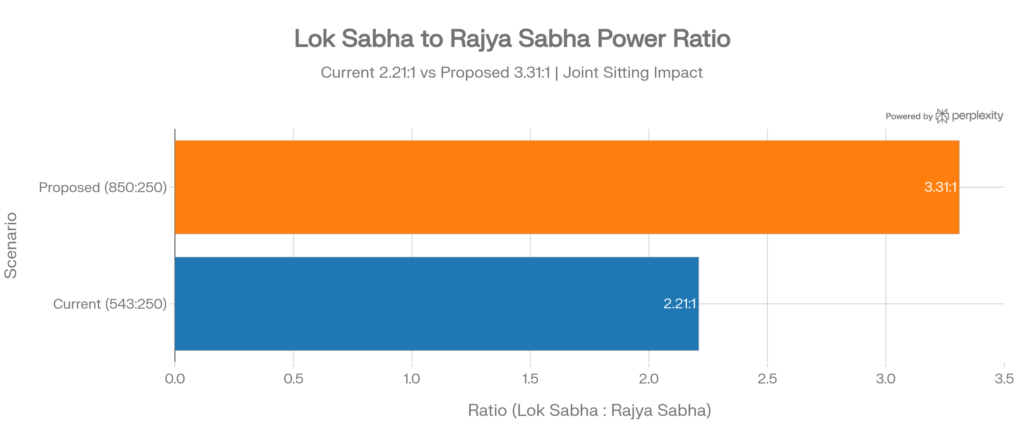
- The Rajya Sabha Override: The Bill sought to increase the Lok Sabha to 850 seats while leaving the Rajya Sabha at 250. This changes the power ratio from 2.2:1 to 3.3:1. In a joint sitting of Parliament, this would allow a government with just 56% support in the Lok Sabha to override even a two-thirds majority in the Rajya Sabha.
- The “Super-Cabinet”: Article 75 limits the number of ministers to 15% of the Lok Sabha. An 850-seat House would allow for a cabinet of up to 122 ministers, up from the current 81. Experts questioned if such an “abnormally large” executive was necessary.
- Diluting Your MP’s Voice: PRS noted that with more MPs, each individual representative would have less time to participate in debates. Matters of public importance are often allotted via ballot, and more members mean a lower probability of your specific MP being chosen to raise your concerns.
- Constitutional Uncertainty: The Bill sought to allow Parliament to determine the timing and census for delimitation by a simple majority, removing the constitutional certainty that it must happen after every census.
Why the Opposition Said “No”
The opposition’s refusal to vote “Yes” was a rare coordinated pushback by the INDIA bloc. Their arguments focused on three main pillars:
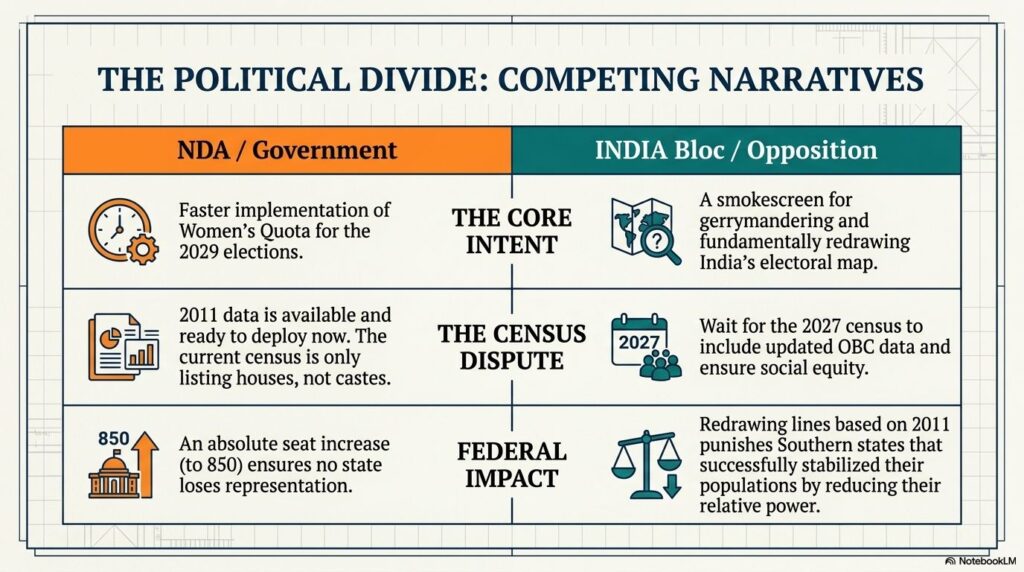
- The “Smokescreen” Allegation: Rahul Gandhi alleged the government was using women as a “shield” to carry out an “unconstitutional trick” to break the Constitution. He argued that if the government truly wanted women’s reservation, they should implement it immediately within the existing 543 seats.
- Anti-OBC and Anti-SC/ST: Critics slammed the Bill for lacking a “quota within a quota”. Gandhi claimed the government was attempting to “bypass the caste census” and avoid giving representation to OBC communities.
- The Federalism Threat: Opposition parties from the South and North-East called the move “Anti-National” and a “national disaster”. They argued it punished states that had successfully stabilized their populations.
What Happens Now? (The 2034 Reality)
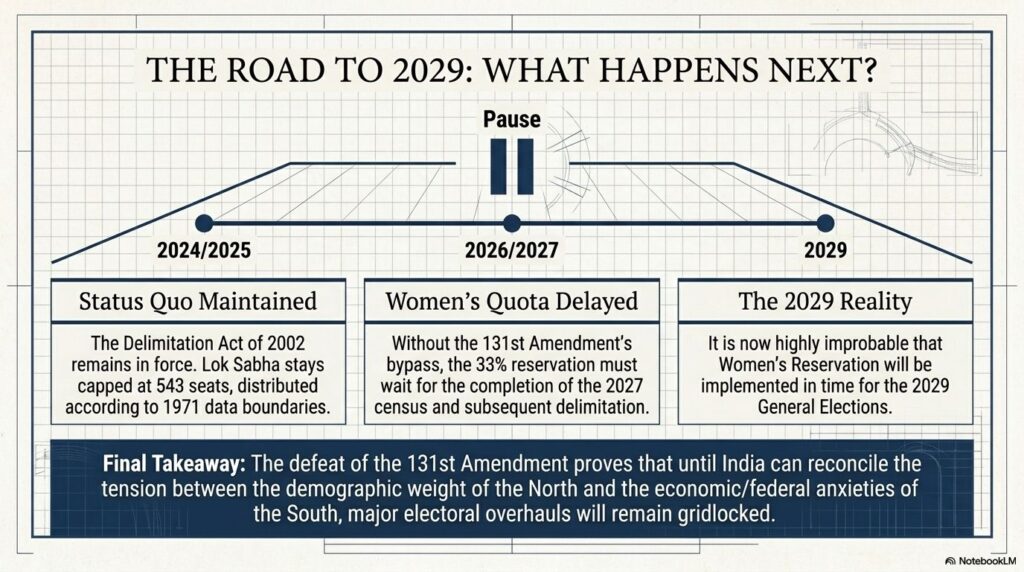
Immediately following the Bill’s defeat, the government took a step back. Parliamentary Affairs Minister Kiren Rijiju withdrew the two other linked bills (Delimitation and UT Laws), stating the government had “no intention of pursuing” them further at this time.
So, when do women get their seats? Because the “fast-track” 131st Amendment failed, the timeline reverts to the original 2023 law.
- We must now wait for the 2027 Census to be conducted and published.
- Only then can a delimitation exercise begin.
- Realistically, experts believe women’s reservation will now only be implemented by the 2034 or 2035 elections.
Is it Right or Wrong?
There is no single “right” answer; it depends on what you value most for India’s future:
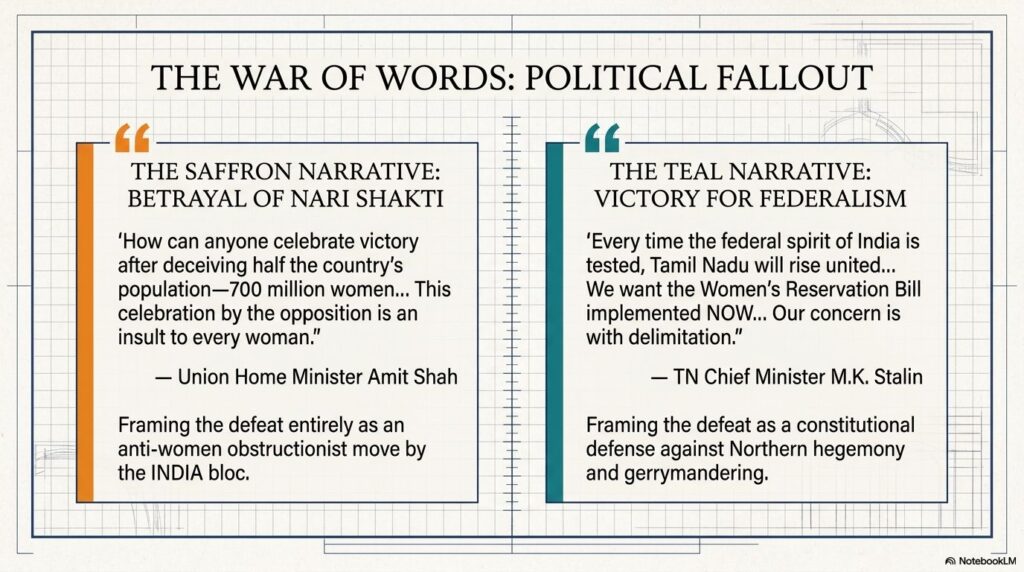
- The Government’s View: They argue this was a historic opportunity to give 700 million women their rights by 2029. To them, the expansion to 850 seats was the only fair way to redrawing the map without any state losing its current voice. Amit Shah warned that the opposition would face the “wrath of women” in the next elections for blocking this path.
- The Opposition’s View: They argue they saved the country from a structural “conspiracy”. By voting “No,” they protected the federal balance of power and prevented a scenario where Northern states would dominate the House at the expense of the South. Rahul Gandhi has challenged the PM to implement the 2023 law “100%” if it is decoupled from the delimitation expansion.
The 131st Amendment is dead for now, but the questions it raised about who holds power in India are more alive than ever. Whether this was a “Grave Betrayal” or a “Historic Safeguard” is a debate that will likely define the 2029 General Elections.