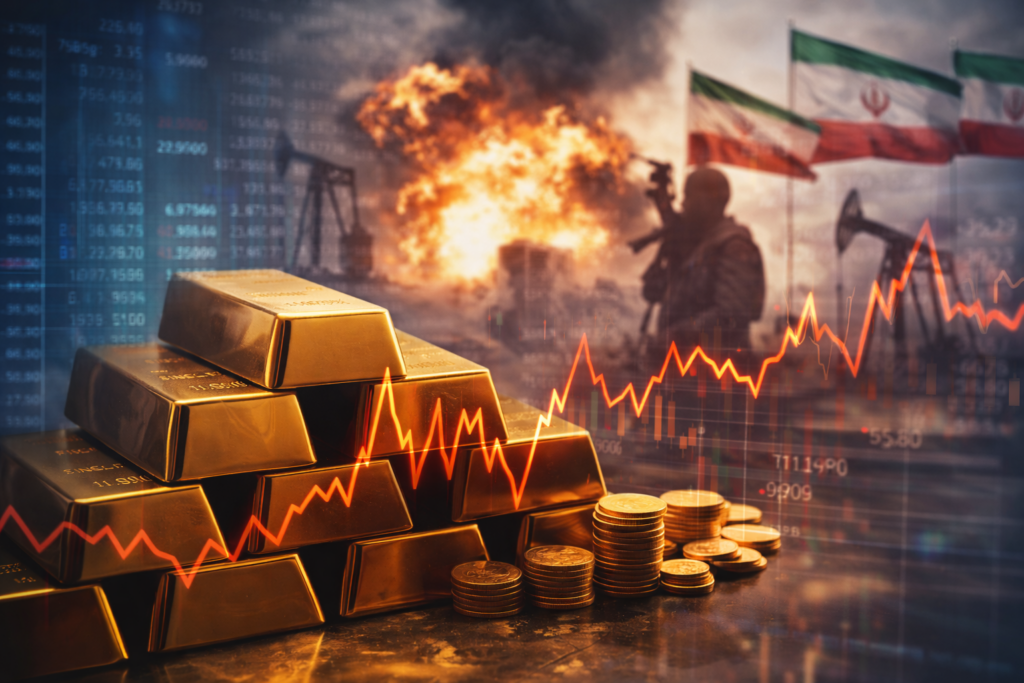
Lately, you might have seen people talking about gold prices again.
Whenever something big happens in the world, like a war, gold always comes into the conversation. The ongoing situation involving Iran is one of those moments.
Usually, when there’s uncertainty, people move towards gold. It’s seen as a “safe” place to put money. So the basic expectation is simple – war happens, gold goes up.
But this time, it’s not that straightforward.
In some cases, gold did rise because of fear and uncertainty. Investors tend to shift towards safer assets when things feel unstable. That’s why gold often reacts first during conflicts.
But at the same time, other forces are pulling in the opposite direction.
The war has pushed oil prices higher. That leads to inflation. And when inflation rises, central banks often keep interest rates high. Higher interest rates make gold less attractive, because gold doesn’t give any returns like interest or dividends.
So you get a strange situation:
- Fear pushes gold up
- Economic pressure pulls it down
That’s why prices have been moving unpredictably.
There’s also another layer.
In times like this, some countries actually sell gold to manage their own economic problems, especially when energy prices rise sharply. That can also affect prices globally.
So the connection isn’t simple anymore.
The Iran war is affecting gold—but not in a straight line. It’s being influenced by multiple things happening at once: fear, oil prices, inflation, and policy decisions.
What used to be a clear pattern is now more complicated.