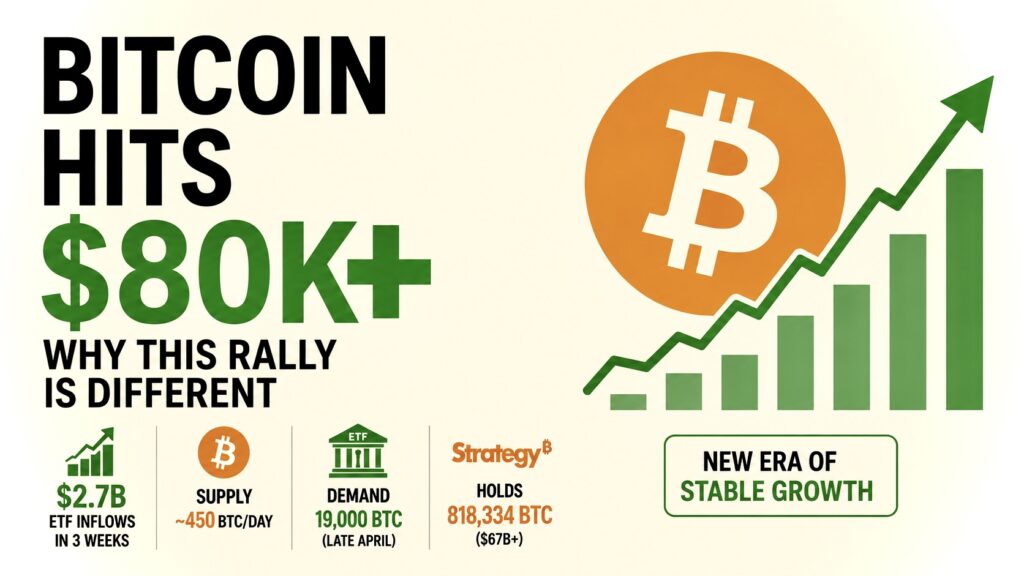
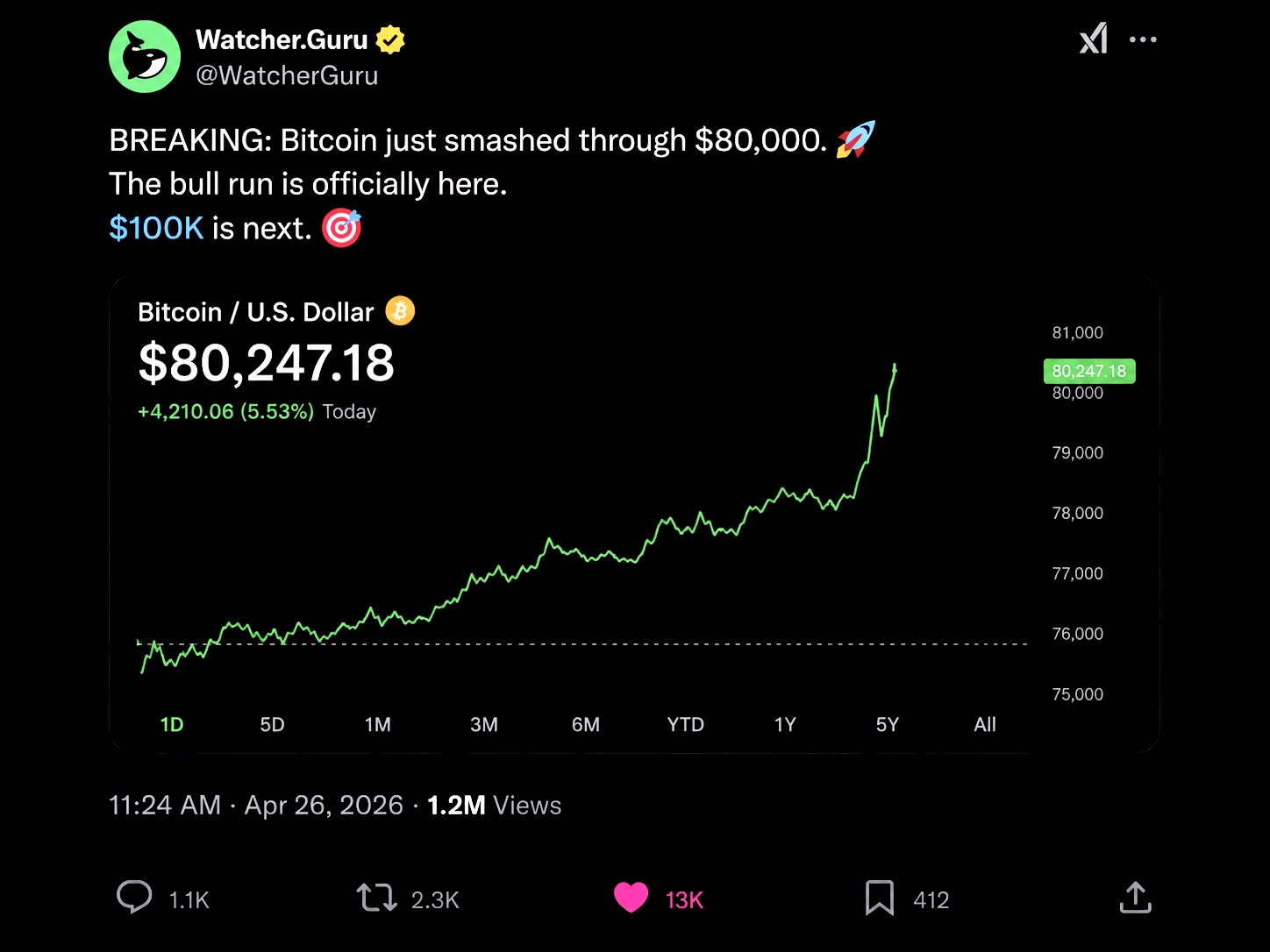
Every few years, the internet goes through a predictable ritual. Your social feeds, group chats, and the broader web suddenly become obsessed with one thing: Bitcoin. After months of sideways movement, quiet accumulation, and general lack of mainstream hype, the world’s largest cryptocurrency has surged back into the spotlight, crossing the $80,000 milestone for the first time since January.
When the price spikes, the noise follows. But if you think this is just another wave of blind internet hype, you’re missing the bigger picture. The underlying mechanics of the crypto market have changed drastically. Here is what is actually driving the current Bitcoin surge, and why it looks very different from the rallies of the past.
Wall Street Has Entered the Chat
For a long time, crypto was a playground for retail investors and tech enthusiasts. Today, Wall Street is steering the ship. The single biggest catalyst right now is the massive influx of money into U.S. spot Bitcoin Exchange-Traded Funds (ETFs).
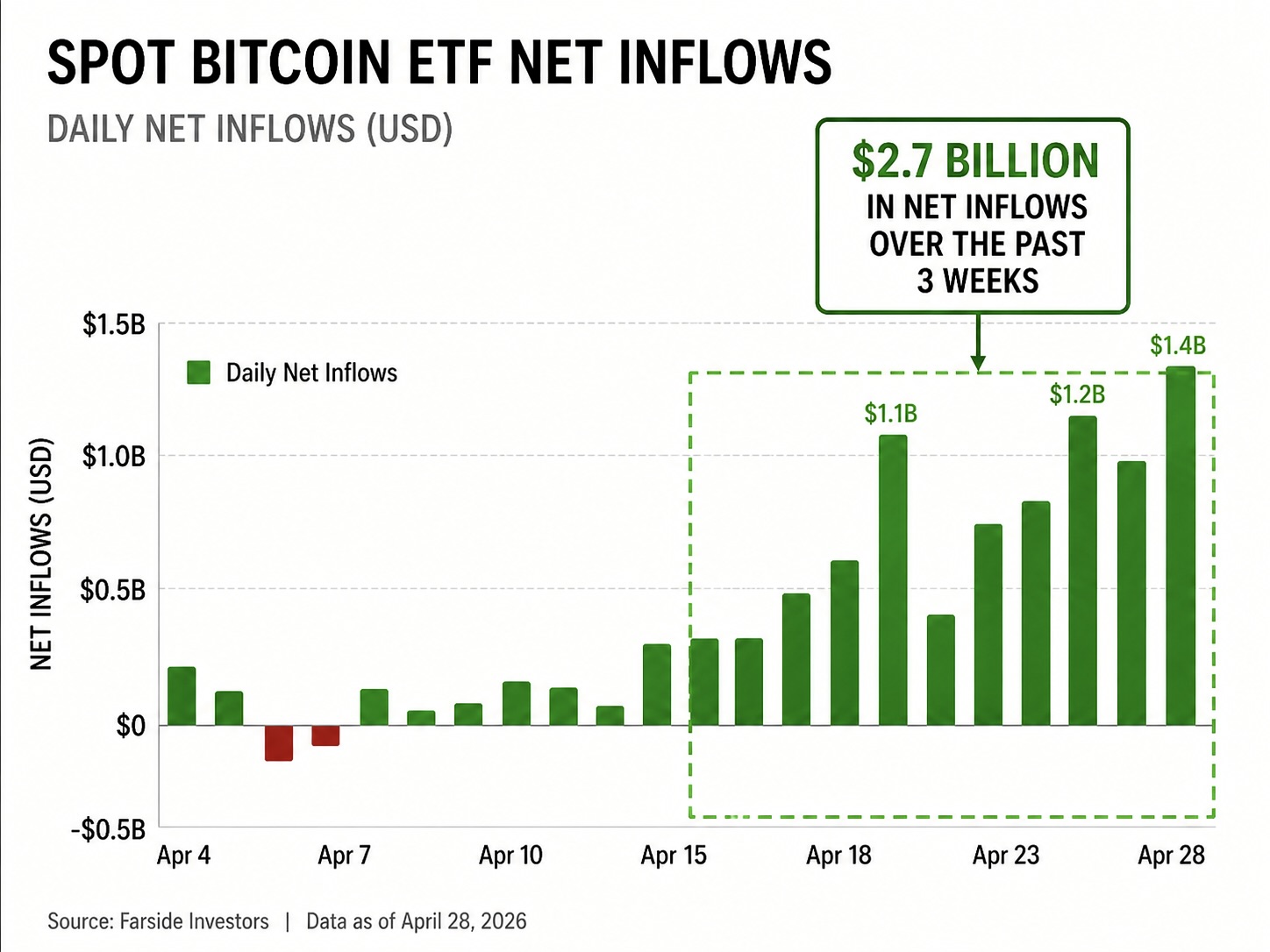
ETFs allow traditional investors to buy into Bitcoin through standard brokerage accounts without dealing with the hassle of digital wallets or passwords. Over a recent three-week period, these funds pulled in roughly $2.7 billion, pushing the total net assets in these products past the $100 billion mark. This isn’t just everyday people buying fractions of a coin on their phones. It is institutional capital flowing into the market through regulated pipelines. In fact, while everyday retail investors actually sold off 62,000 Bitcoin in the first quarter of 2026, institutional investors quietly bought up 69,000. (source)
The Math of Supply and Demand
This massive institutional appetite is colliding head-on with a mathematically enforced supply squeeze. In April 2024, Bitcoin went through its fourth “halving”. A halving is a pre-programmed event that cuts the reward given to miners in half, which essentially reduces the amount of new Bitcoin entering circulation.
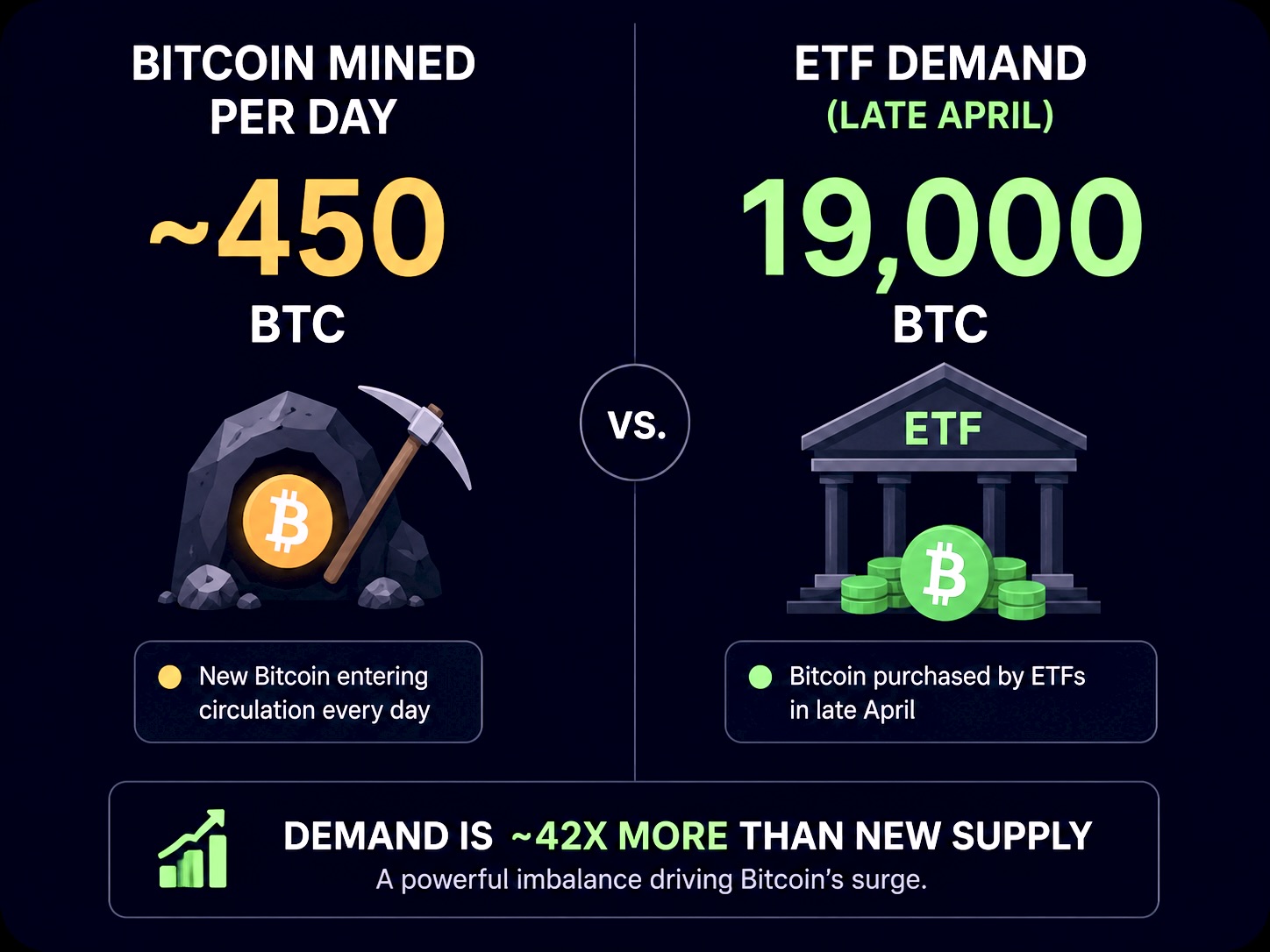
The result is a classic supply and demand shock. The network currently produces roughly 450 new Bitcoins a day. Yet, in the last five days of April alone, spot ETFs absorbed an estimated 19,000 Bitcoin. When Wall Street demands thousands of coins a week and the network only mints a few hundred a day, basic economics takes over. (source)
Interestingly, this cycle has rewritten some of the old rules. Historically, Bitcoin peaked 12 to 18 months after halving. This time around, the market priced in the event early, with Bitcoin breaking previous all-time highs months before the halving even occurred.
Interest Rates and the Global Economy
Bitcoin doesn’t exist in a vacuum. Its price is highly sensitive to the broader economy, specifically what the U.S. Federal Reserve does with interest rates.

Interest rates represent the cost of borrowing money. When rates are low, or when investors expect them to drop, borrowing is cheap, liquidity floods the market, and investors are much more willing to bet on riskier assets like crypto. Right now, the Fed is holding rates steady in the 3.50% to 3.75% range, but the market is constantly looking ahead.
Geopolitics are also playing a major role. The recent announcement of “Project Freedom,” a U.S. military initiative to secure shipping lanes in the Strait of Hormuz, eased massive global tensions. The news caused oil prices to drop and gave a “risk-on” green light to global markets. When the world feels a little less chaotic, and the U.S. dollar weakens slightly, money naturally flows back into Bitcoin. (Source)
The Return of FOMO and Social Media
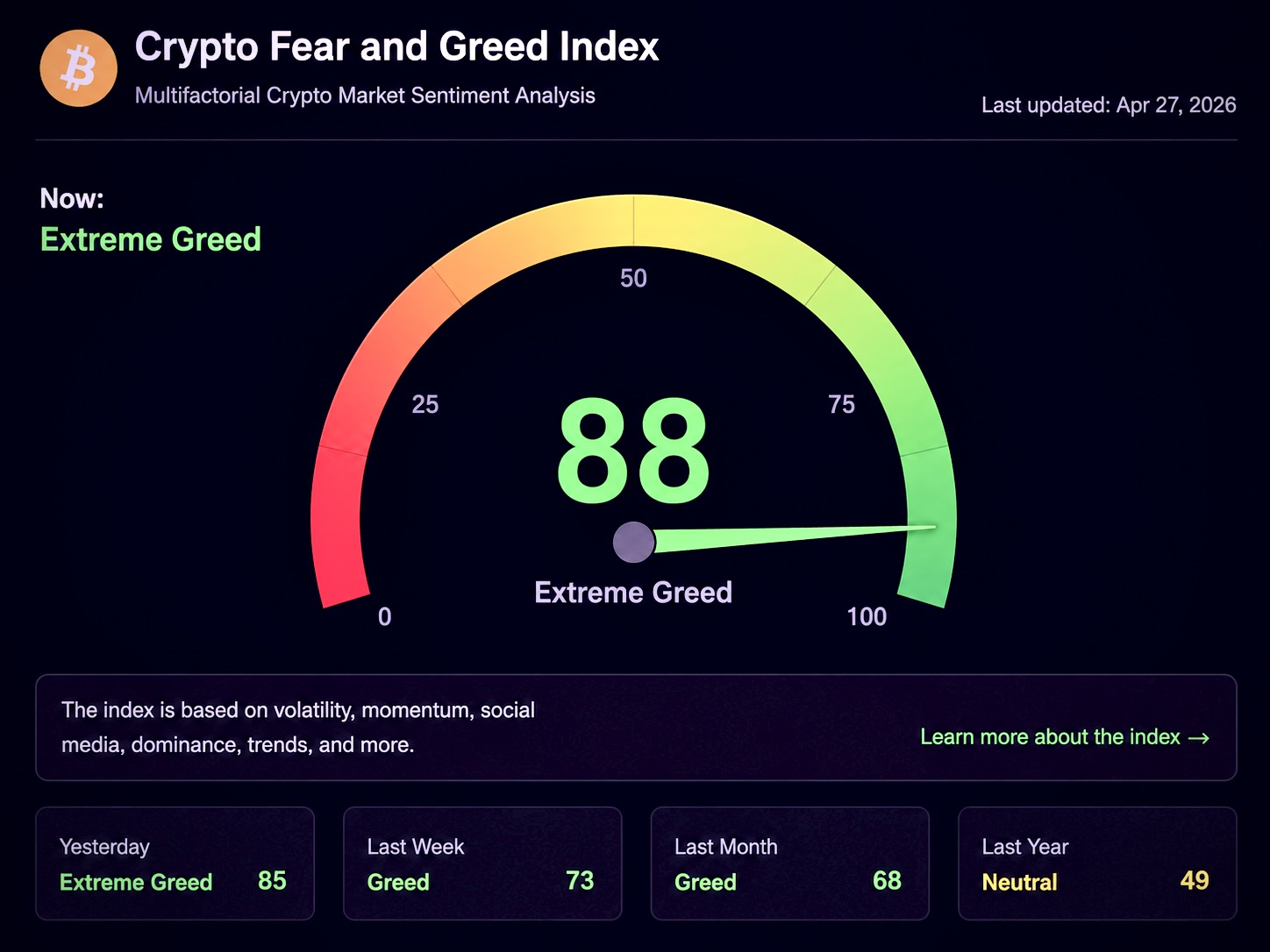
Even though institutions are driving the baseline, human psychology still dictates the short-term swings. As Bitcoin crossed $80,000, social media sentiment flipped violently from fear to extreme optimism. The Fear of Missing Out (FOMO) is a powerful force, and tracking metrics show that positive crowd sentiment recently hit a four-month high.
The way people interact with crypto has also evolved. Consumers, especially younger demographics, are increasingly using social platforms like TikTok and YouTube as search engines for financial discovery. Furthermore, new “social wallets” and trading apps have turned speculation into a multiplayer experience.
Users can track and copy the moves of top traders with a single tap, blending their financial and social lives. While this removes technical barriers, it deeply amplifies herd behavior. When a popular online trader buys an asset, thousands follow blindly, creating sudden, viral price spikes.
Why This Surge is Different
If you’ve been around the internet for a while, you remember the previous booms. The 2017 surge was a wild, retail-driven bubble fueled by hype. The 2021 run was sparked by pandemic stimulus checks and the first wave of corporate buyers.
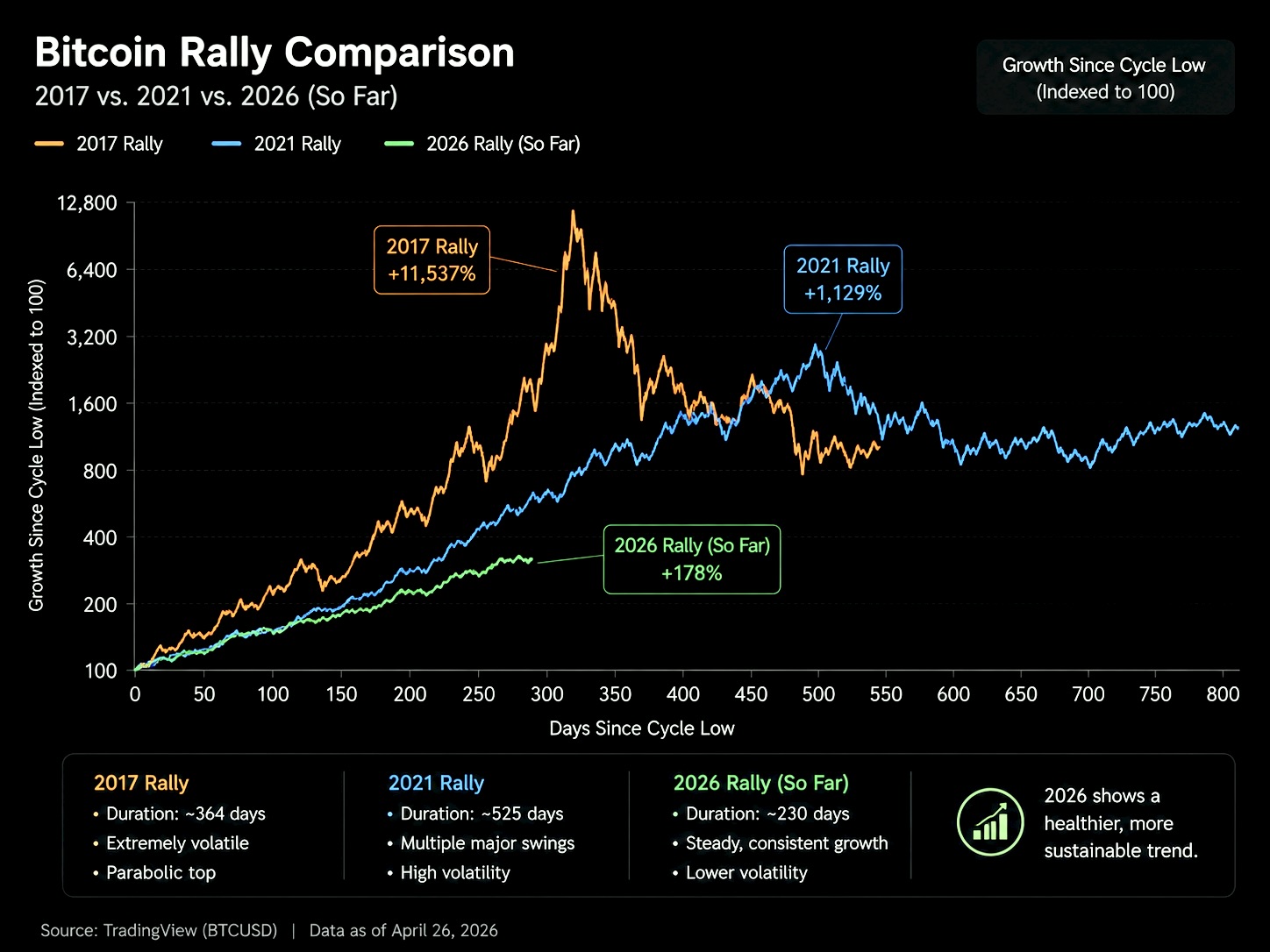
The 2026 resurgence is being called the “stable growth” era. Volatility is actually lower than in past cycles, and the growth is structural rather than purely speculative. People return to crypto during these rallies because the narrative shifts from “it’s crashing” to “it’s an established asset class.” The presence of major banks and regulated ETFs makes it feel safer for the average person to jump back in.
The Risks Everyone is Ignoring
But beneath the excitement of an $80,000 price tag, there are real risks that people are actively ignoring in the rush to make money.
First, the recent breakout wasn’t entirely built on solid ground. A significant portion of the push past $80,000 was fueled by the derivatives market—traders making highly leveraged bets with borrowed money. If the price falters and dips just a few thousand dollars, these leveraged positions can trigger cascading liquidations, wiping out weeks of gains in a matter of minutes.
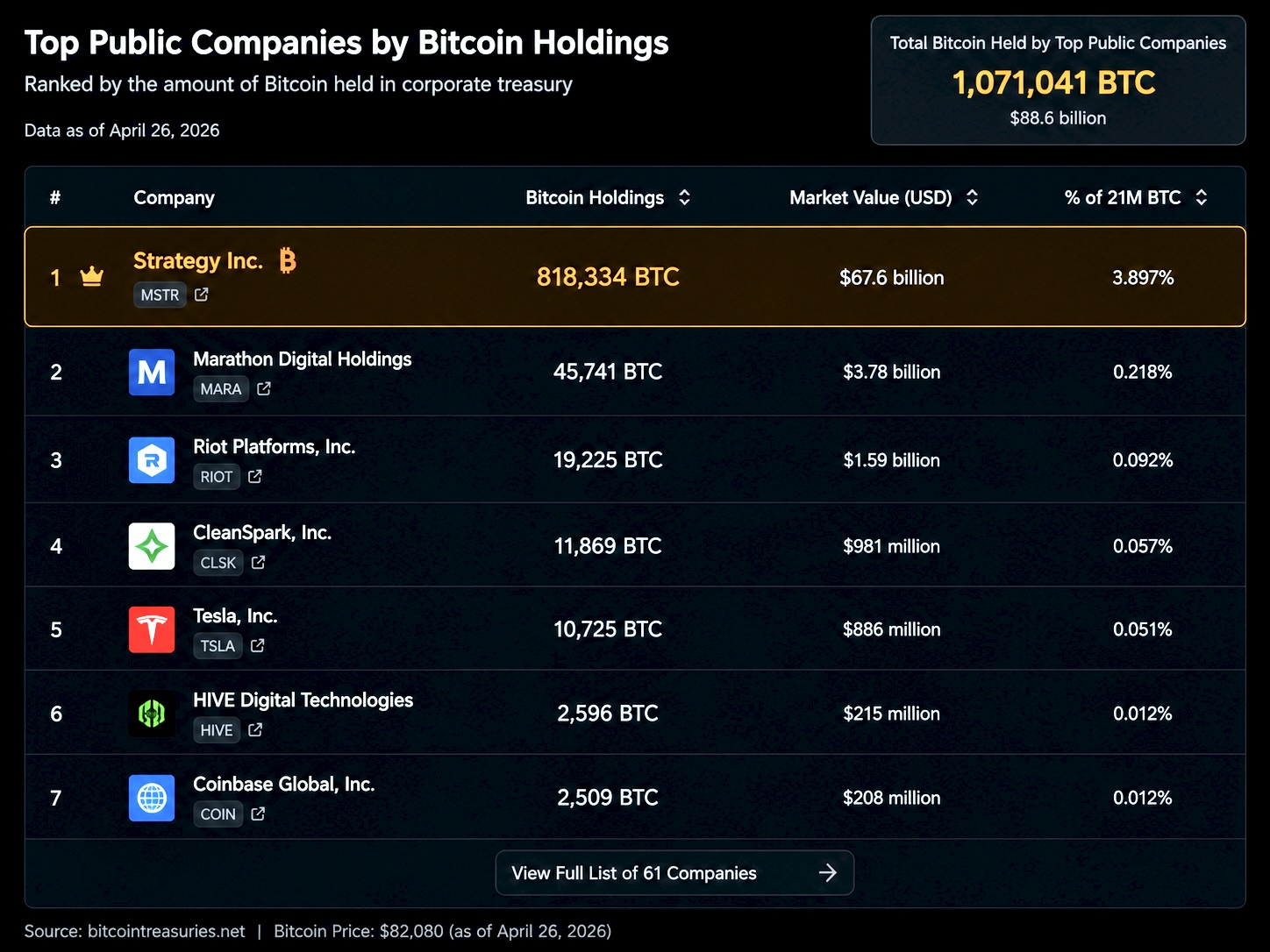
Second, there is a massive centralization risk. The software company Strategy Inc. holds over 818,000 Bitcoin. While this provides a fortress-like balance sheet for them, it creates a scary single point of failure for the wider market. If they were ever forced to sell to meet corporate obligations, the sheer volume could severely damage the market.
Finally, there’s a looming, sci-fi-sounding threat: quantum computing. Advanced quantum computers could eventually become powerful enough to break the cryptographic security that keeps Bitcoin wallets safe. Researchers estimate that up to 30% of the Bitcoin supply is sitting in vulnerable legacy addresses that could be exposed if a quantum computing breakthrough occurs in the coming years.
Final Thoughts
Bitcoin is growing up. It’s no longer just a digital experiment traded by internet subcultures; it’s a recognized financial asset parked in Wall Street portfolios and corporate treasuries. The current surge is backed by real math, structural demand, and shifting global economics.
But it remains a volatile, complex ecosystem driven equally by high-level monetary policy and sudden bursts of internet FOMO. Whether you’re watching from the sidelines or actively participating, it pays to look past the hype and understand the machinery quietly running underneath it all.
Frequently Asked Questions