The Instagram algorithm watches how you use the app and uses those signals to decide what you see. It is not one single system either. Feed, Stories, Reels and Explore can all make different decisions about what to show you.
You open Insta for five minutes, start scrolling, and then somehow forty minutes are gone. What makes it stranger is that a lot of what you saw probably felt relevant. Maybe you saw cars, football, phones, food, memes or creators you had never seen before, but somehow the app kept finding things you were willing to watch.
That is not because Insta somehow knows exactly what you are thinking. It is because the app keeps learning from what you do.
The Instagram algorithm is constantly looking for clues. What do you watch? What do you like? What do you save? What do you skip? Which accounts do you interact with? These actions help Instagram make its next guess. And then it does the same thing again.
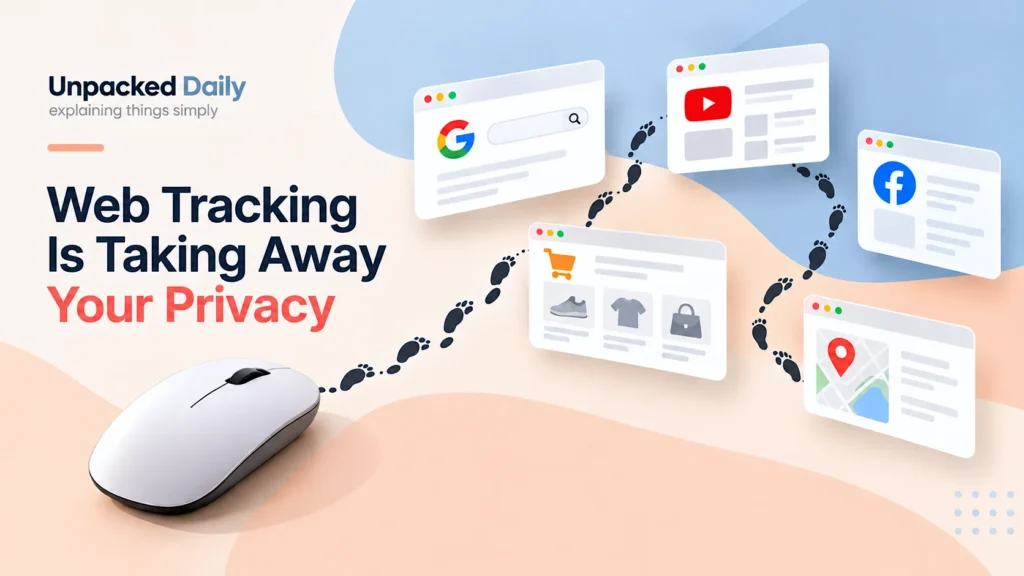
This is also part of the bigger picture of how data tracking actually works online.
Instagram does not have just one system
One of the easiest mistakes is to think that Instagram has one giant algorithm that controls the whole app.
It is actually more complicated than that, but the basic idea is simple. Different parts of Instagram have different ways of deciding what to show you. Your Feed works differently from Stories. Reels work differently from Explore. Each one is trying to predict what you are likely to find useful, interesting or worth watching.
Content from accounts you already interact with.
Stories from accounts that matter more to you.
More room for content from people you do not follow.
Content Instagram thinks you may want to discover.
The point is not that every part of Instagram follows a completely separate set of rules. It is that Instagram does not treat every piece of content in exactly the same way.
Your Feed has more of a connection to the people you already follow. Reels can take you much further outside that circle.
Explore is even more about finding things you have not asked for directly. That is why Insta can feel like several different apps inside the same app.
Your behaviour is the real clue
Forget about trying to understand every tiny detail for a moment. The most useful thing to understand is your own behaviour.
Instagram can learn a lot from what you actually do while using it. You might follow someone today, but that does not automatically mean you are interested in everything they post. Your actions tell Instagram much more.
Imagine you keep watching car Reels until the end. Then you watch another one. Then another. After seeing that pattern several times, Instagram has a good reason to think you are interested in cars.
Now imagine you see a cooking video and immediately scroll past it. You have given Instagram another clue.
This is what makes the system feel personal. You are constantly giving it information without directly telling it anything.
You are basically training your own feed without realising it.
That does not mean every single action instantly changes what you see. Instagram is looking at patterns rather than one isolated moment. But over time, those patterns become useful.
This is also connected to a bigger question about how websites and apps use information about our behaviour. We have looked at that in How Data Tracking Actually Works, because the things you do online can become useful information for the services you use.
New does not always mean better
You may think Instagram simply shows the newest posts first.
That would be easy to understand, but it would also be a pretty poor way of keeping the feed interesting. A new post matters, but it is only one part of the decision.
Instagram can also look at your history with the account, how much you normally interact with it, and how much attention a piece of content is getting. So imagine two posts arrive at almost the same time.
One comes from an account you almost never interact with. The other comes from someone whose posts you regularly watch, like or comment on. They may not be treated exactly the same way.
The same thing can happen with content that is suddenly getting a lot of attention. If people are quickly liking, commenting or sharing something, that can become another useful signal.
What can affect the decision?
When you open Instagram, the first post you see is not necessarily the newest one.
It is the one Instagram currently thinks has the best chance of being useful or interesting to you based on the information it has. And that guess can change.
Instagram is constantly testing
This is probably the part people notice the least. Instagram does not have to completely understand you before showing you something new. It can simply try.
Maybe you have mostly been watching technology videos and suddenly a video about a different but related topic appears. Maybe a creator you have never seen before starts showing up in your Reels. Maybe a completely new kind of content appears for a few days.
It may be a test. Instagram can show you something and watch what happens next. If you engage with it, the system gets a useful signal. If you quickly move past it, that tells the system something too.
That means your feed is never really finished. It keeps changing as you change.
Instagram puts something in front of you.
You react by watching, liking, saving or skipping.
Instagram uses that reaction in its next decision.
That is why something can appear in your feed today and disappear tomorrow.
It does not necessarily mean Instagram made a permanent decision about you. The system is constantly trying things, seeing what happens and adjusting.
It is less like creating one fixed profile of you and more like having a conversation that never quite ends.
You are shaping the feed too
When people say, “Instagram knows what I like,” they are only talking about half of the story.
Yes, Instagram decides what to put in front of you. But you are also helping make that decision through your behaviour.
You may never tell Instagram that you want more car content. You simply keep watching car videos.
You may never tell it that you are tired of a certain topic. You just keep skipping those posts. After hundreds or thousands of small actions, Instagram has a much clearer picture of what tends to hold your attention.
It is not perfect. You can still get strange recommendations. You can still see things you do not care about. Sometimes the system gets it completely wrong. That is normal because it is making predictions, not reading your mind.
The feed is a moving target
This is why your Instagram feed can change without you consciously changing anything.
Your interests change. You follow new people. You stop watching certain things. You start spending more time on something else. Instagram also keeps testing different content.
All of these things can slowly change what appears in front of you. So there is no single moment when Instagram finishes figuring you out.
It is always updating its guess.
The easiest way to think about the Instagram algorithm is not as one giant machine that knows exactly what you want. Think of it as a system that keeps making guesses based on your behaviour.
It shows you something. You react. It learns from that reaction. Then it makes another guess.
That loop is why your feed feels personal. You are not just scrolling through a feed that Instagram built for you. You are helping build it every time you scroll, pause, watch, like, save or skip. And tomorrow, when you open It again, the whole thing starts over.