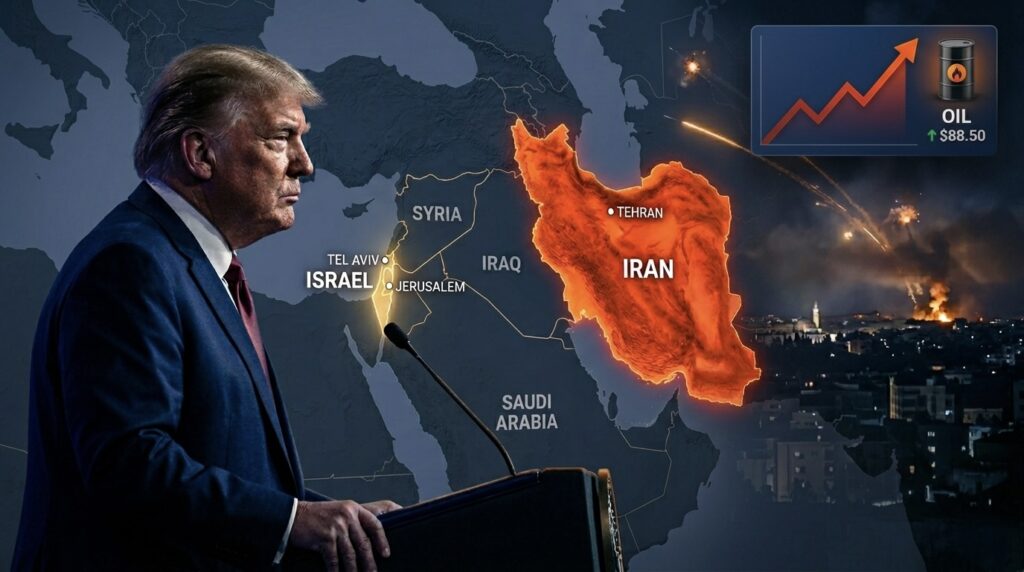
A Shift From Pause to Pressure
The current pause between Israel and Iran is starting to look less certain. What was meant to hold things steady for a while may not last much longer, at least not in its current form.
Donald Trump has indicated that extending the ceasefire isn’t really the focus right now. Instead, the attention is shifting toward something more permanent—a deal that could replace the temporary pause altogether. On the surface, that sounds like progress. A deal is always better than a pause. But the situation doesn’t feel that straightforward.
Why Not Extending the Ceasefire Changes Things
A ceasefire, even if fragile, creates a kind of breathing space. It slows things down. It gives both sides time to step back, even if nothing is fully resolved. Removing that layer without a confirmed agreement in place introduces uncertainty again. It changes the tone from controlled tension to something more open-ended.
Right now, the idea seems to be that continuing short-term pauses doesn’t solve anything. That instead of extending something temporary again and again, it’s better to push both sides toward a final understanding. That logic makes sense. But it also assumes that both sides are ready for that step, which isn’t always the case in situations like this.
The region itself has been sitting in a careful balance. Even during ceasefires, the tension doesn’t disappear—it just becomes quieter. And when decisions like this come in, it reminds you how quickly that balance can shift.
The Risk of Moving Too Fast
There’s also the timing of it. Moving from a pause directly into negotiations adds pressure. Talks that happen under pressure don’t always lead to stable outcomes. Sometimes they lead to quick agreements that don’t hold for long. And sometimes they don’t lead anywhere at all.
That’s where the uncertainty sits right now.
Where Things Stand Right Now
If a deal actually comes through, it could reset things in a more stable way. It would move the situation out of this cycle of temporary calm followed by spikes in tension. But if the ceasefire ends without anything solid replacing it, the region could slide back into the same pattern, just faster this time.
What makes this moment different is that it doesn’t feel like a clear step forward or backward. It feels like a transition point. Something is changing, but it’s not fully clear in which direction yet.
For now, the ceasefire still exists. But it feels less like a stable arrangement and more like something waiting to either evolve or end.