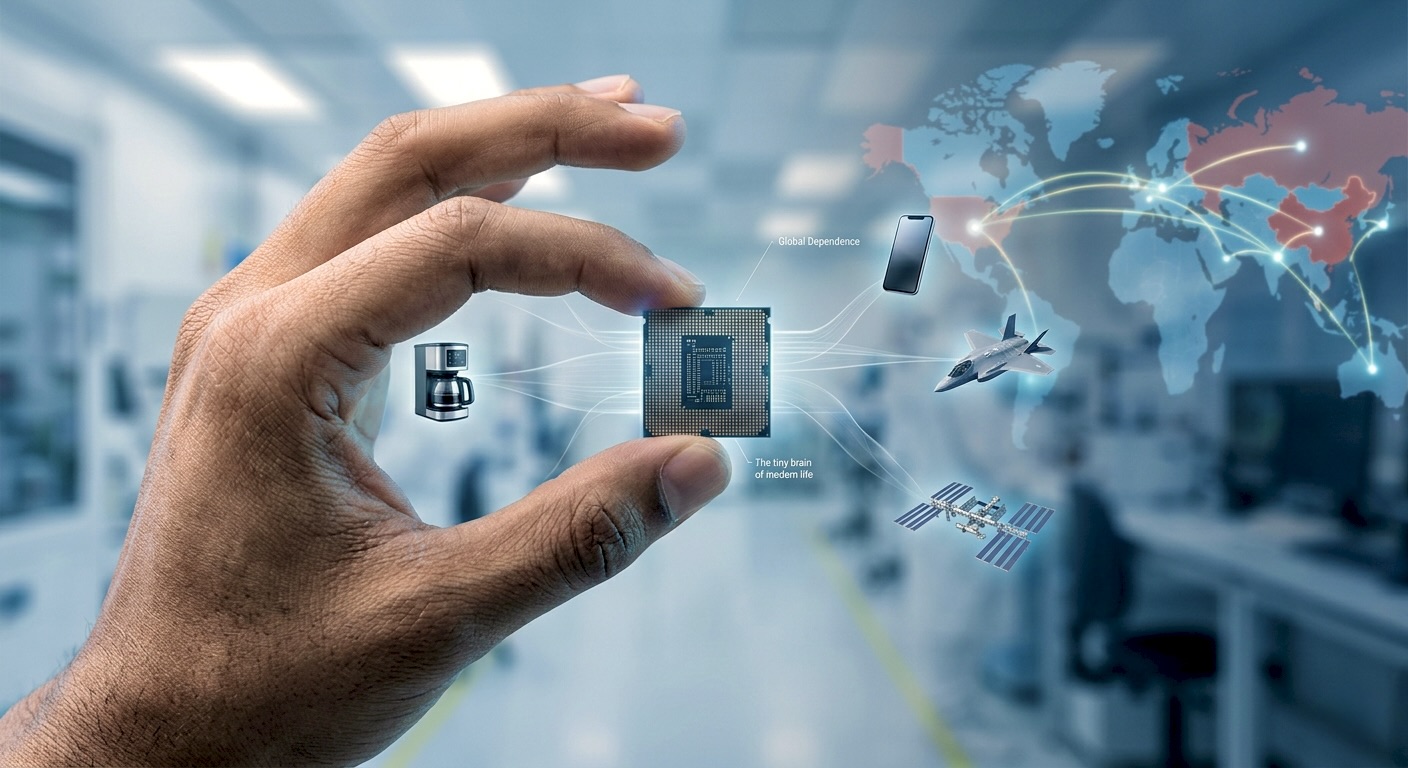
The global chip war explained, why tiny semiconductors have suddenly become the most important thing countries are competing over. You’re probably holding one of the most contested pieces of technology in human history right now without even realizing it.
These tiny “brains,” or semiconductors, are in almost 98% of the tech we use, from your coffee maker to the F-35 fighter jets and the international space station. Because modern life has become totally dependent on them, they’ve become the “new oil” of the 21st century, sparking a global power struggle between the world’s biggest superpowers.
At its simplest, a semiconductor is just a tiny piece of material, usually silicon made from purified sand—that can either conduct electricity or block it. By flipping that flow of electricity on and off billions of times a second, these chips act like a massive system of light switches that allow a device to perform incredibly complex math and “think”. Making them is so difficult and precise that it’s been called a “nation-state activity,” requiring factories that use more electricity than a small city.
Why Chips Suddenly Matter More Than Ever
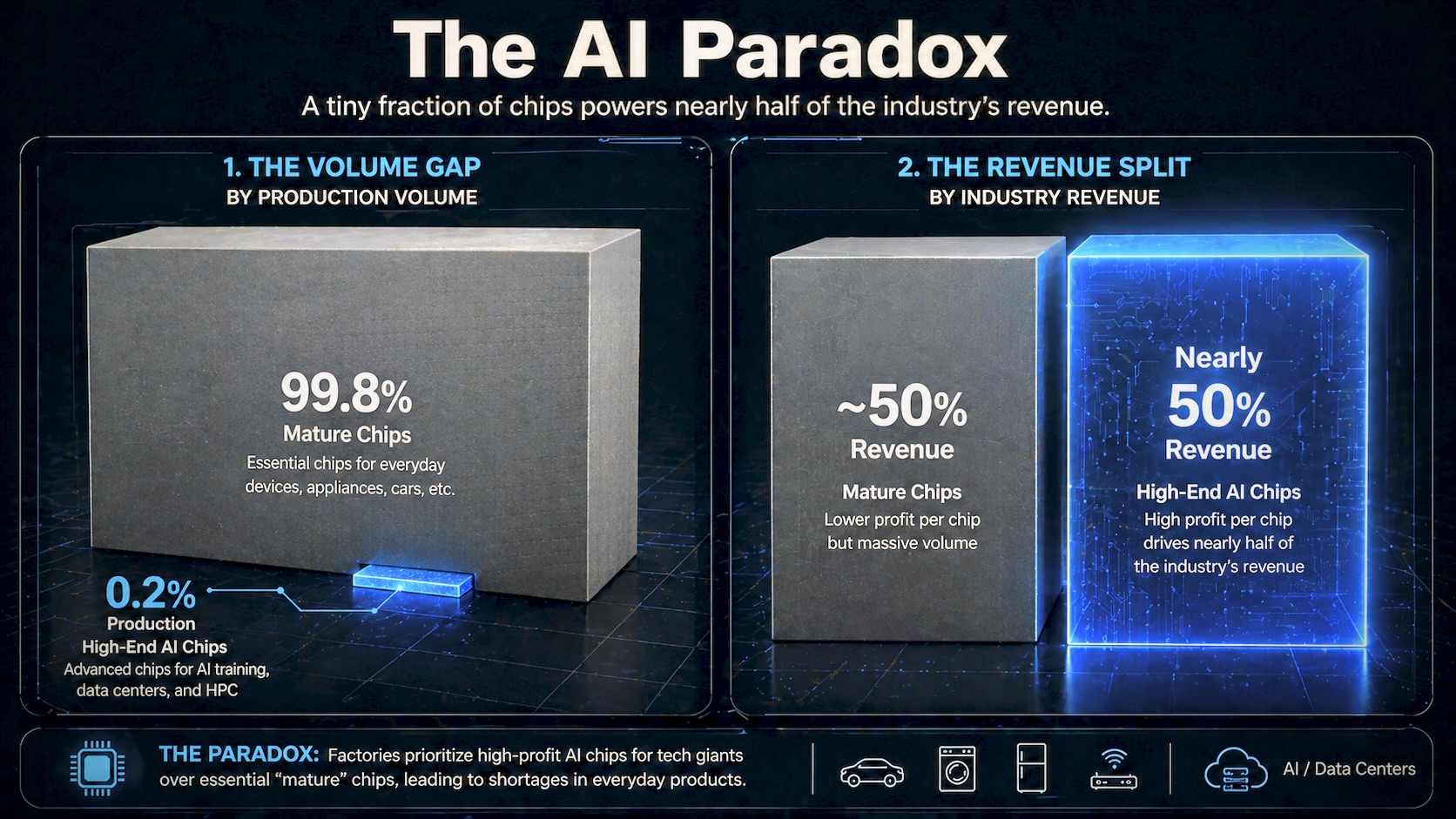
The reason this is hitting a boiling point right now is the massive boom in Generative AI. AI systems like ChatGPT need an unbelievable amount of “compute power,” which can only be handled by the most advanced chips ever built. This has created a weird paradox: while these high-end AI chips make up nearly half of the entire industry’s revenue, they represent less than 0.2% of the actual number of chips produced. It’s a “zero-sum” game where factories are choosing to make high-profit AI chips for tech giants instead of the “mature” chips needed for your dishwasher or your car’s power windows.
Who Controls the Global Chip System
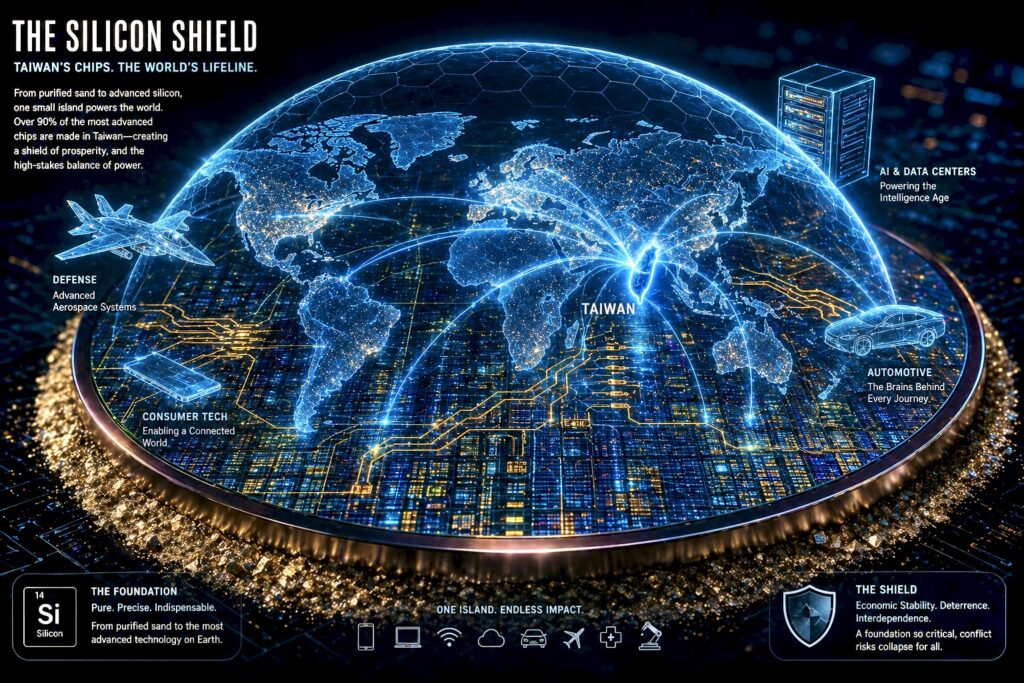
When you look at the global map, the production is dangerously concentrated in just a few spots. Taiwan is the undisputed leader, manufacturing over 90% of the world’s most advanced chips. At the heart of this is a company called TSMC. They are so vital that many people believe in a “Silicon Shield”—the idea that as long as the entire world (including the U.S. and China) depends on TSMC’s factories, no one will risk a war that would destroy them and cause a global economic collapse.
The Power Struggle Between the U.S. and China
The United States leads the world in actually designing these chips and the software used to map out their circuits, but they only manufacture about 12% of the world’s supply. Because of this, the U.S. has started using export controls to block China from buying the most advanced chip-making tools, citing national security concerns. China, which spends more money importing chips than it does on oil, is now in an all-out sprint to become self-sufficient. They’ve even been caught using shell companies to smuggle banned chips or finding creative workarounds like renting compute power from U.S. cloud providers.
How This Impacts Everyday Life
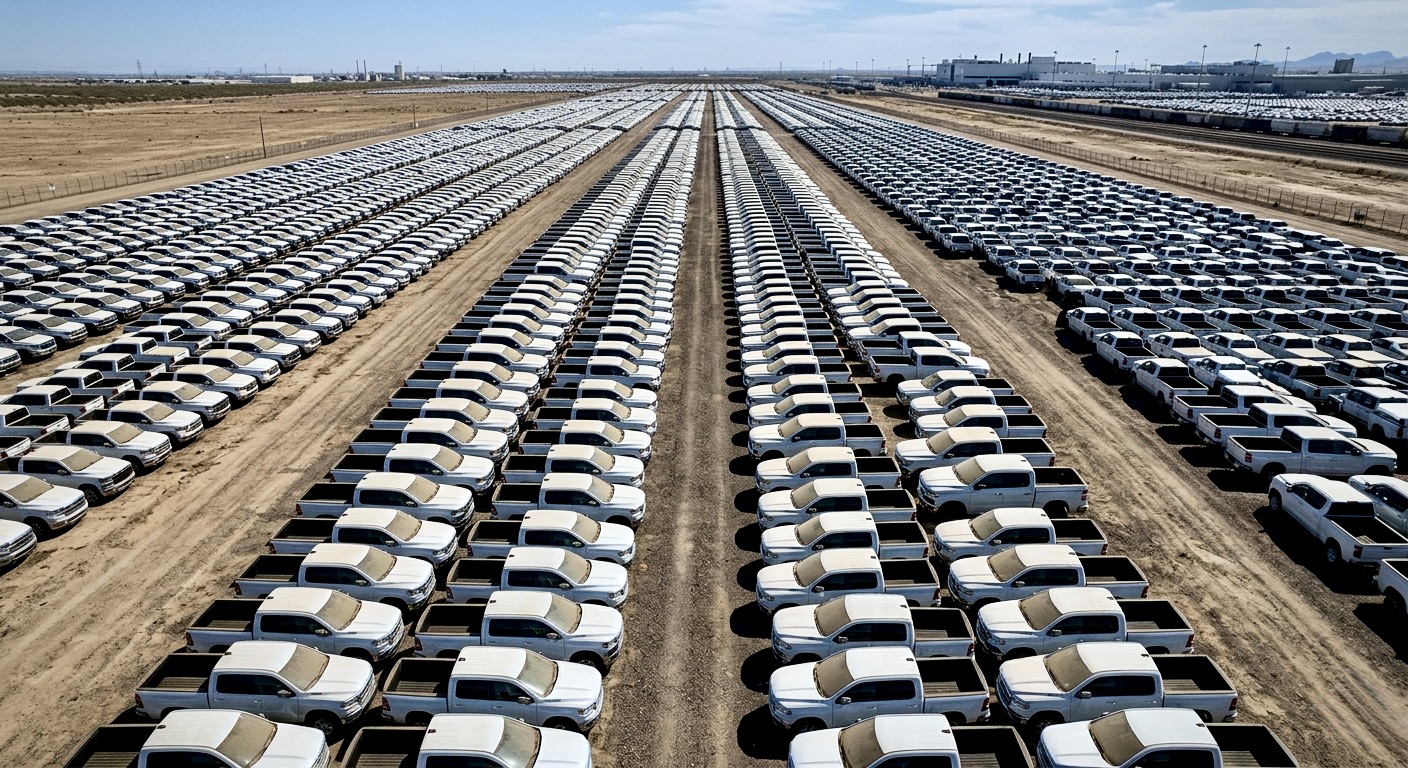
This “Chip War” has very real consequences for your wallet and daily life. Take the car industry. Modern cars are basically computers on wheels, and when the chip shortage hit, automakers couldn’t get the parts they needed. This led to a “build-shy” strategy where companies like Ford and GM built tens of thousands of trucks and just parked them in massive lots, waiting months for one single missing chip to arrive. Some brands, like Tesla and Stellantis, even started shipping cars without features like adjustable seats or blind-spot detection just to keep the assembly lines moving.
Why the Supply Chain Is So Fragile
We’re also seeing how fragile the supply chain is to random global events. In early 2026, conflicts in the Middle East caused a global helium shortage. Helium is essential for cooling during the manufacturing process, and this shortage has already driven up prices and slowed down production worldwide. Similarly, the war in Ukraine previously cut off the supply of neon gas used in the lasers that “carve” chip designs.
What Countries Are Doing About It
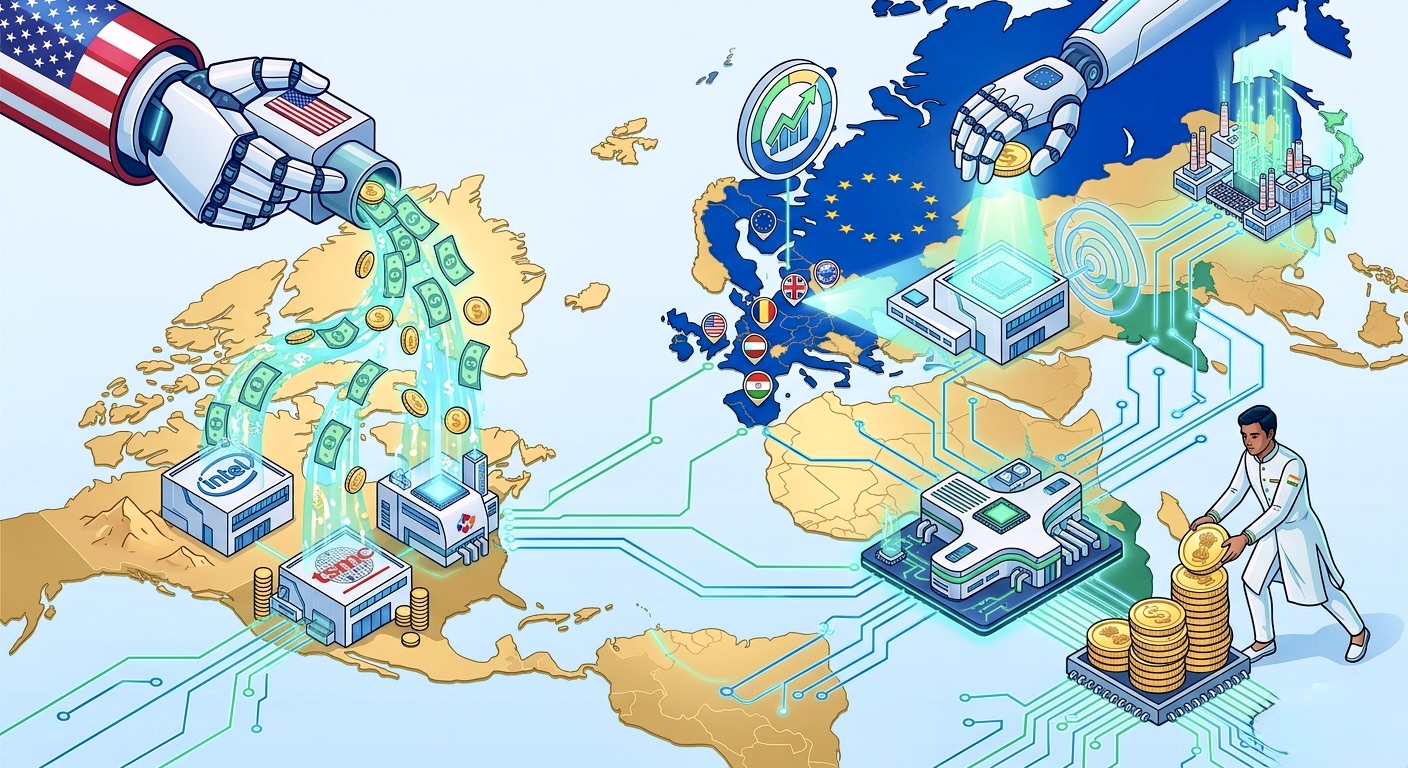
To fix this over-dependence on East Asia, governments are throwing billions of dollars at the problem. The U.S. CHIPS Act is spending over $50 billion to get companies like Intel and TSMC to build new factories in places like Arizona and Ohio. Europe is aiming to double its share of global production to 20% by 2030, and India is aggressively trying to become a new hub by offering to pay for 50% of the cost of building new factories.
Common Misconceptions About Chips
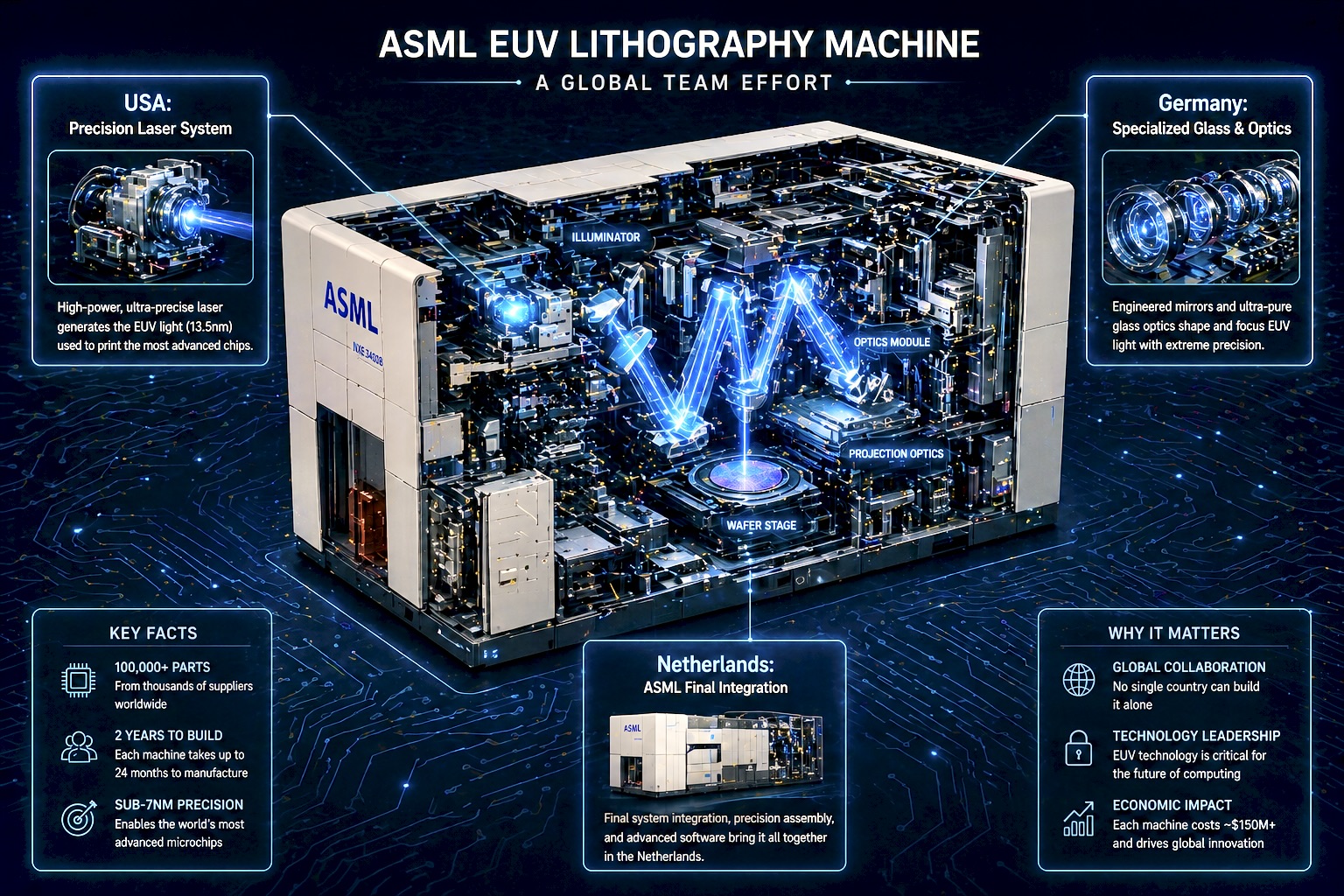
There are a few big misconceptions about all of this. A big one is that “smaller is always better”. While your phone needs the newest, tiniest chips to be fast, the military often prefers older, “mature” designs. Why? Because smaller chips get too hot and are fragile, whereas a tank or a fighter jet needs a chip that can survive extreme vibrations and heat. Another myth is that one company owns the whole process.
Even the Dutch giant ASML, which is the only company in the world that makes the multi-billion-dollar machines needed for advanced chips, can’t build them without a special laser from a U.S. company and specialized glass from a company in Germany. It is a massive, interconnected team effort.
The Real Challenge Ahead: Talent Shortage
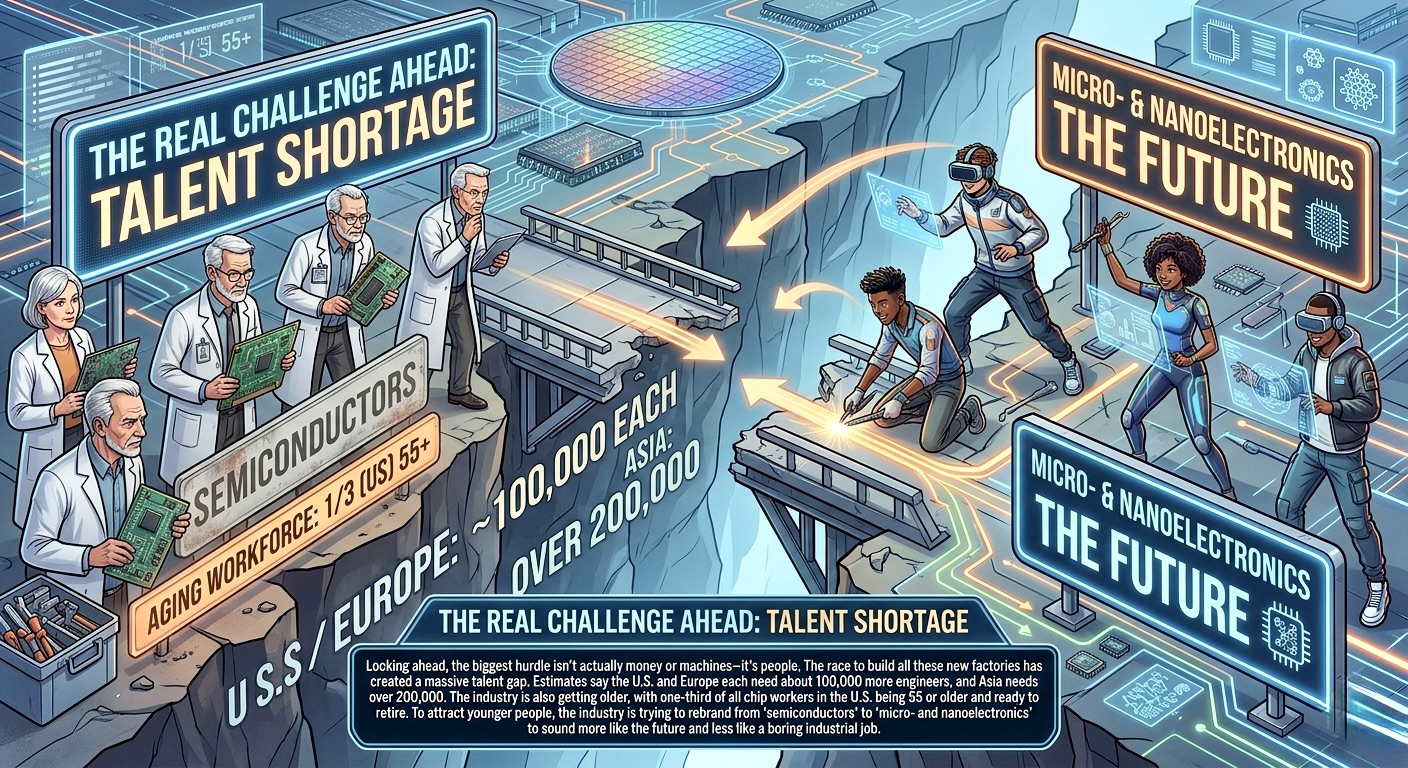
Looking ahead, the biggest hurdle isn’t actually money or machines—it’s people. The race to build all these new factories has created a massive talent gap. Estimates say the U.S. and Europe each need about 100,000 more engineers, and Asia needs over 200,000. The industry is also getting older, with one-third of all chip workers in the U.S. being 55 or older and ready to retire. To attract younger people, the industry is trying to rebrand from “semiconductors” to “micro- and nanoelectronics” to sound more like the future and less like a boring industrial job.
The Bigger Picture
The “Chip War” isn’t going away anytime soon. As we move toward a world of autonomous cars and AI everything. According to a report by McKinsey the global market is expected to hit $1 trillion by 2030. Every time you pick up your phone, just remember you’re holding a tiny piece of the most contested real estate on the planet.