At some point, almost everyone online has heard the same sentence:
“You need a VPN to stay safe online.”
YouTubers promote them. Podcasts advertise them. Tech creators talk about them like they’re an essential part of using the internet. Some people even act like browsing without a VPN is dangerous.
But most normal internet users still don’t fully understand what a VPN actually does. And honestly, a lot of the marketing around VPNs makes the confusion worse.
Some ads make it sound like a VPN turns you invisible online. Others make it seem like hackers are waiting behind every public Wi-Fi network ready to steal your data. The reality is much less dramatic.
A VPN can absolutely be useful. But for many people, it’s also one of the most misunderstood internet tools.
So What Does a VPN Actually Do?
A VPN, or Virtual Private Network, creates a private connection between your device and the internet.
Normally, when you open a website, your internet provider can see which websites you visit. The website itself can also see your IP address, which roughly tells them where you are connecting from.
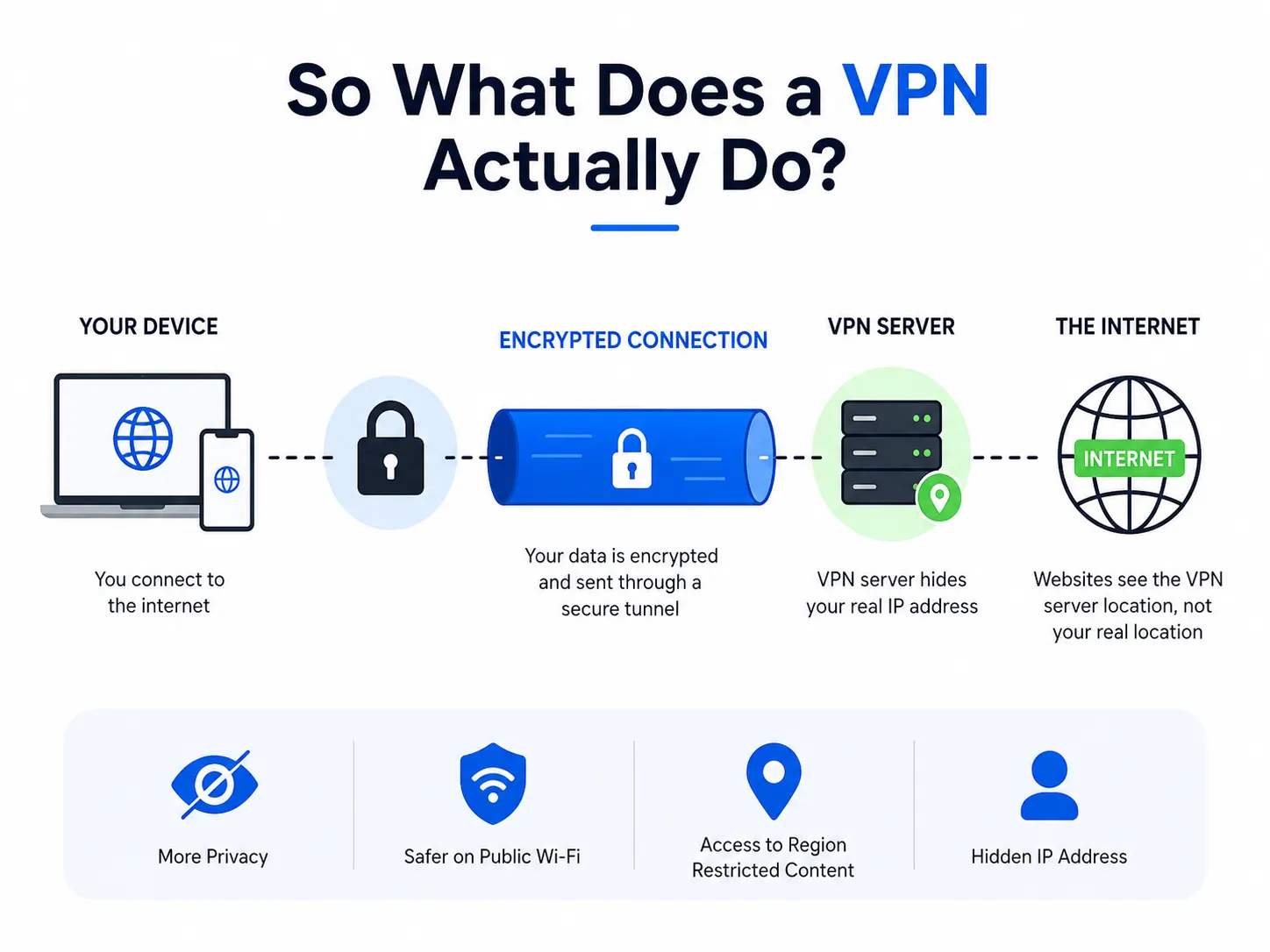
A VPN hides your original IP address and routes your connection through another server, often in another city or country.
That’s why someone in India can connect through a server in the US and appear to be browsing from America.
This is also why many people use VPNs for:
- accessing region-locked content
- changing Netflix libraries
- avoiding certain restrictions
- improving privacy on public networks
But this is where VPN marketing starts becoming misleading. A VPN does not make you anonymous online. Not even close.
What a VPN Does Not Hide
This is the part many people misunderstand.
If you log into your Google account, Instagram account, or Amazon account while using a VPN, those companies still know it’s you.
Your VPN is not magically deleting your identity online.
Websites can still track:
- your accounts
- browser fingerprints
- cookies
- device information
- activity patterns
A VPN mainly changes how your internet connection appears from the outside. That’s useful, but it’s not some invisibility cloak for the internet.
In fact, many people who buy VPNs expecting “total data privacy” end up disappointed because the internet simply does not work that way anymore.
Modern tracking is much more advanced than just IP addresses.
So Why Are VPNs Everywhere Suddenly?
Because VPN companies discovered something important years ago: Fear sells.
And internet privacy is easy to turn into fear-based marketing.
You’ve probably seen ads saying things like:
- “Hackers are watching you.”
- “Protect your identity now.”
- “Your data is exposed.”
- “Browse safely before it’s too late.”
The average person hears this and thinks the internet is basically a dangerous alley at night.
But for most people using normal websites, modern browsers, secure apps, and HTTPS connections, the internet is already far safer than it was 10 or 15 years ago.
That doesn’t mean privacy problems disappeared. They absolutely exist.
But VPN ads often exaggerate risks because the product itself is invisible. You can’t physically see what a VPN is doing, so companies rely heavily on fear and emotion to convince people.
That’s also why so many YouTubers promote VPNs. VPN sponsorships pay extremely well.
Why YouTubers Promote VPNs So Much
If you watch tech videos, gaming channels, podcasts, or even random commentary creators, you’ve probably noticed VPN ads everywhere.
That’s because VPN services became one of the internet’s biggest sponsorship industries.
The product works globally.
Almost everyone uses the internet.
And the business model is subscription-based.
Perfect combination.
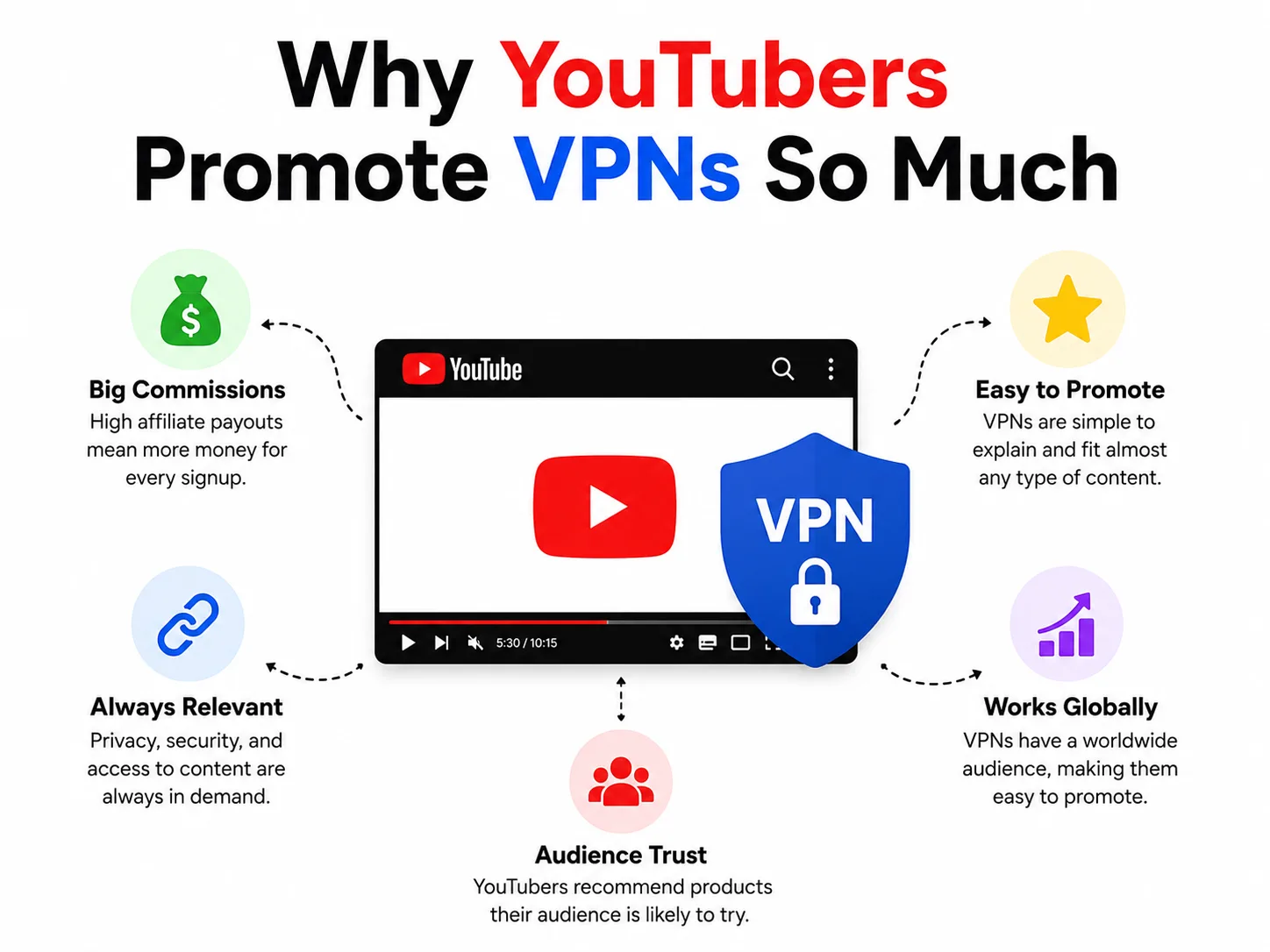
VPN companies also know that most users won’t deeply research how VPNs work. They just want to feel safer online.
So creators simplify the message:
- “Protect yourself.”
- “Stay private.”
- “Unlock content.”
- “Secure your browsing.”
And honestly, for sponsorship segments, that simplicity works.
But it also created a strange situation where millions of people hear about VPNs constantly without fully understanding when they actually need one.
When a VPN Is Actually Useful
For some people, VPNs genuinely make sense.
Especially if:
- you travel often
- you use public Wi-Fi regularly
- you want to access region-blocked content
- you live somewhere with heavy internet restrictions
- you want to reduce tracking from your internet provider
- you work remotely with sensitive company systems
In these situations, a VPN can add an extra layer of privacy and flexibility.
For example, connecting to random airport or hotel Wi-Fi networks is not always ideal. A VPN can help protect your traffic on those networks.
Similarly, if a website or streaming service is unavailable in your country, a VPN can sometimes help bypass those restrictions.
That’s the practical side of VPNs.Not internet superpowers. Just practical utility.
The Bigger Internet Privacy Problem
One reason VPNs became so popular is because people increasingly feel uncomfortable online.
Apps ask for location access constantly.
Websites track behavior.
Ads seem to follow users around the internet.
People feel watched. And honestly, that feeling isn’t completely wrong.
Modern internet companies collect massive amounts of user data because data powers advertising, recommendations, algorithms, and personalization. But VPNs only solve a small part of this larger system.
Using a VPN while still giving every app unlimited permissions doesn’t suddenly create digital privacy. That’s why internet privacy today is more about habits than a single tool.
Things like:
- limiting app permissions
- using stronger passwords
- enabling two-factor authentication
- avoiding suspicious links
- understanding tracking
often matter more for average users.
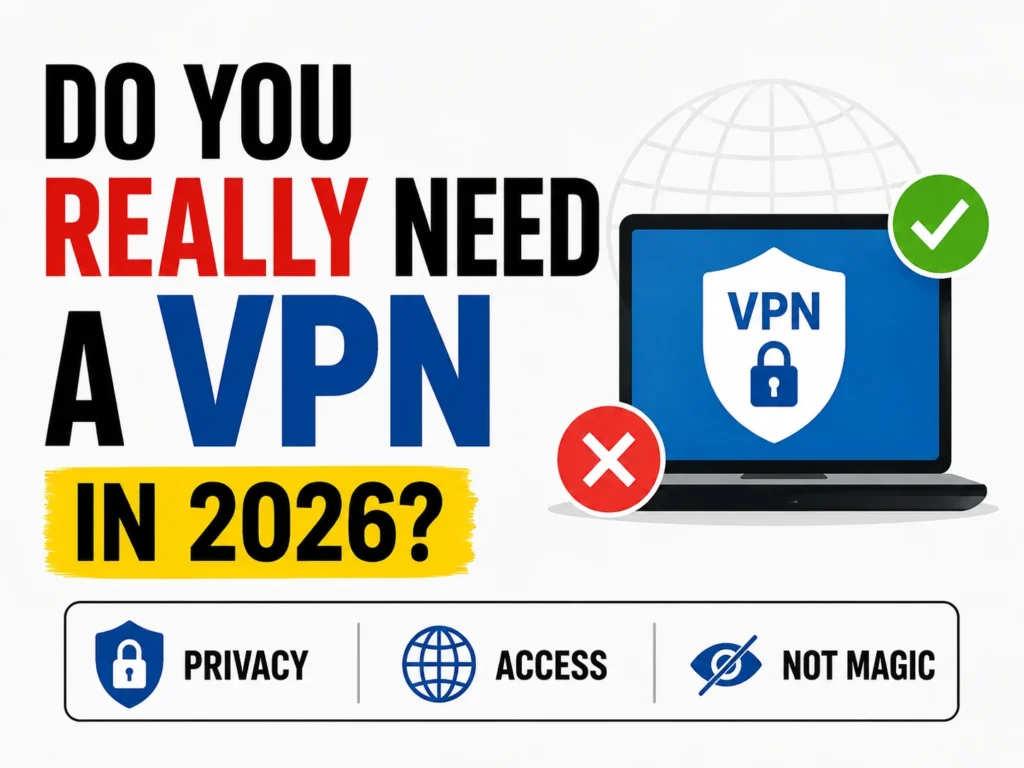
So, Do You Really Need One?
For most people, the answer is probably: “Sometimes, but not urgently.”
A VPN is useful in certain situations. It’s not useless. But it’s also not the magical internet shield many ads make it seem like.
If your daily internet use is mostly:
- YouTube
- Netflix
- shopping
- casual browsing
then a VPN is more of an optional privacy tool than a necessity.
Some people will genuinely benefit from it. Others buy one because constant advertising made them anxious. And that’s probably the most interesting thing about VPN culture today.
The internet became so complicated and hard to trust that people are now buying tools mostly for reassurance. Not because they fully understand them.
And honestly, that says a lot about what the modern internet feels like in 2026.