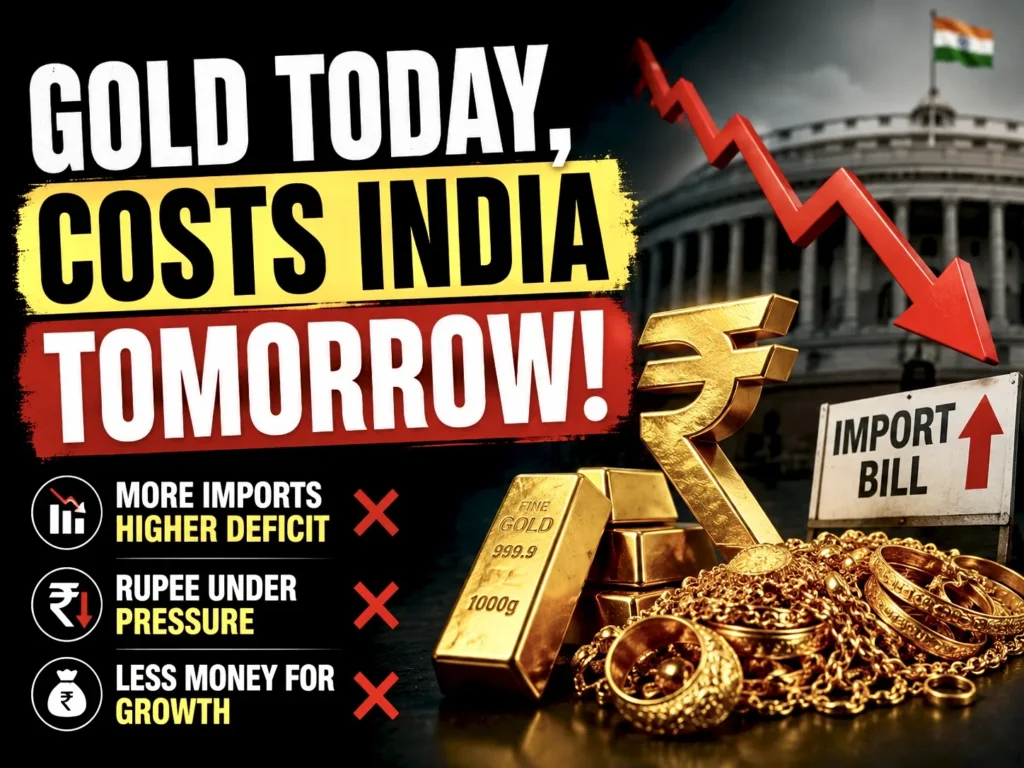
Gold has a strange place in people’s minds.
It’s not just jewellery.
It’s safety.
For generations, especially in countries like India, gold has been treated almost like financial emotional support. Families buy it during weddings, festivals, uncertainty, and sometimes simply because it “feels safer” than leaving money somewhere else.
So when governments talk about reducing gold imports, increasing import duty, or encouraging people to invest elsewhere, many people immediately feel suspicious.
Why would a government care what people do with their own money? At first glance, it sounds strange. But from an economic point of view, governments and ordinary people often look at gold very differently.
For most families, gold feels like protection. For governments, too much gold buying can become an economic problem.
Why People Trust Gold So Much
To understand this properly, you first have to understand why gold became so important in the first place.
Gold survives uncertainty.
Currencies change.
Governments change.
Markets crash.
Banks fail.
Inflation rises.
Gold simply sits there.

That psychological stability matters a lot, especially in societies where older generations experienced financial uncertainty directly.
In India, gold is also deeply cultural.
It’s tied to:
- weddings
- traditions
- family wealth
- long-term savings
- status
- emotional security
Many people trust physical gold more than digital numbers inside a bank account. And honestly, from a human perspective, that thinking is understandable.
Gold feels real.
You can hold it. Store it. Pass it down.
That emotional trust is one reason gold demand never fully disappears, even when prices rise dramatically.
So Why Do Governments Worry About It?
Because gold does almost nothing for economic circulation. That’s the key idea behind the entire issue.
When people buy gold, especially imported gold, a huge amount of money effectively gets locked away.
The gold sits:
- inside lockers
- inside homes
- inside vaults
But it does not actively help production, business growth, or economic expansion in the same way other investments can.
Governments generally prefer people to put money into:
- banks
- businesses
- stock markets
- bonds
- manufacturing
- infrastructure
- startups
Why? Because that money keeps moving.
It gets loaned.
Invested.
Spent.
Reinvested.
Economies grow through circulation. Gold usually doesn’t circulate like that. Especially physical gold.
The Bigger Problem: Imports
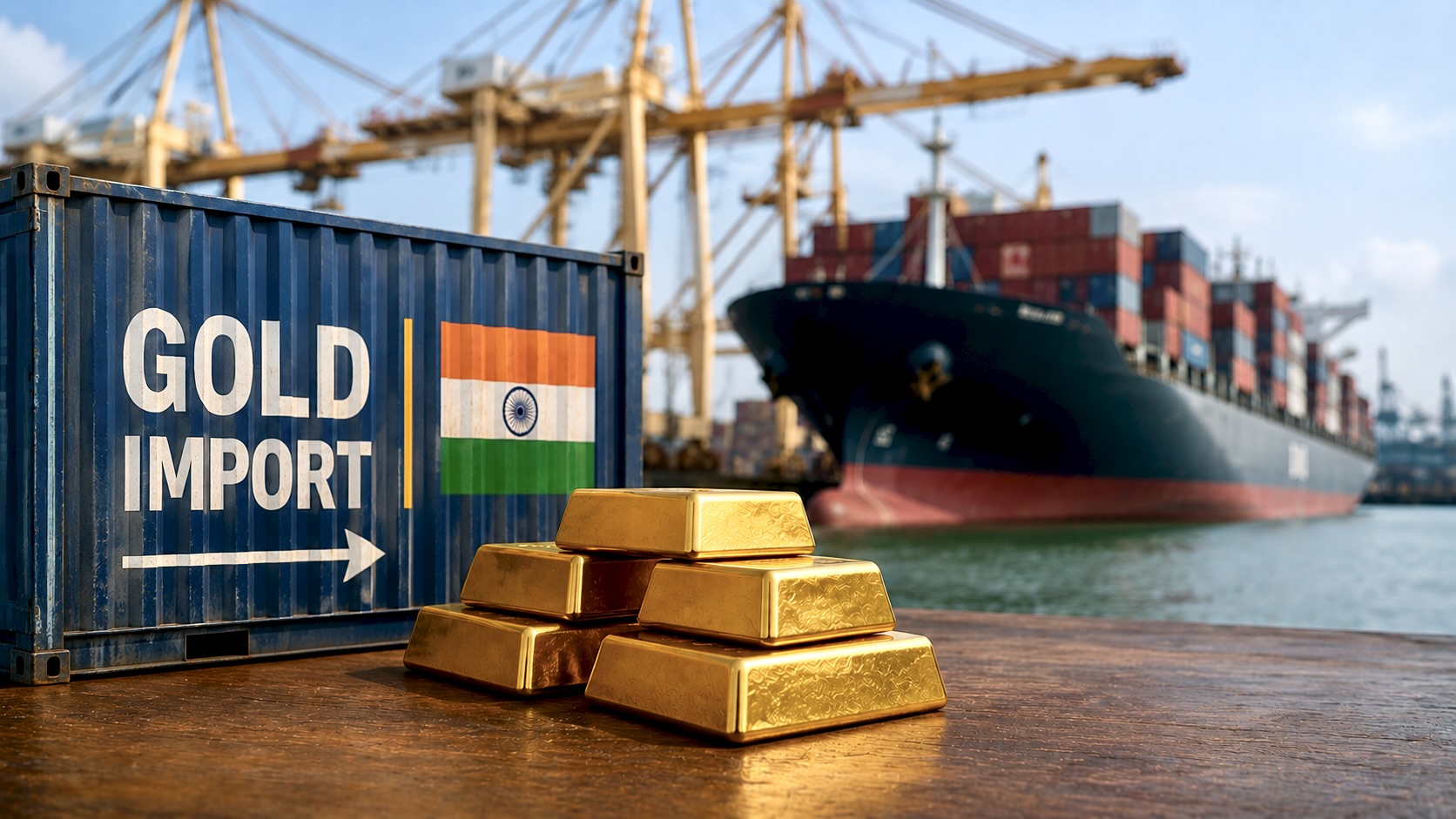
There’s another reason governments pay close attention to gold. Countries like India import massive amounts of it. And imports are not free.
India buys gold from outside the country using foreign currency, mainly US dollars.
So when gold imports rise heavily:
- more dollars leave the country
- trade deficits increase
- pressure on foreign reserves rises
- the currency can weaken further
This becomes especially sensitive during periods when:
- oil prices rise
- the rupee weakens
- global uncertainty increases
Because India already imports large amounts of energy and electronics, adding massive gold imports creates additional economic pressure.
That’s why governments sometimes:
- raise import duties
- discourage excessive buying
- promote digital gold alternatives
- push financial investments instead
The goal is not necessarily to “ban” gold. It’s to reduce dependency on imported physical gold.
Why Gold Demand Rises During Fear
Interestingly, governments often try discouraging gold at the exact moment people want it the most. During uncertainty.
Whenever people feel nervous about:
- inflation
- wars
- economic slowdown
- market instability
- currency weakness
gold demand usually rises.
Because people stop thinking emotionally like investors and start thinking emotionally like protectors. Gold becomes psychological insurance.
Even today, many people still believe:
“If everything goes wrong, gold will survive.”
That belief is incredibly powerful. And honestly, governments understand this too.
The problem is that what feels individually safe does not always help the economy collectively. That tension is what makes the gold debate interesting.
What Governments Probably Want Instead
When leaders talk about reducing gold dependency, they are usually imagining a different economic behavior.
They want households to move savings toward:
- mutual funds
- fixed deposits
- equities
- businesses
- entrepreneurship
- productive investments
Why? Because productive assets can generate:
- jobs
- taxes
- economic activity
- innovation
- domestic growth
From the government’s perspective, an economy becomes stronger when money actively moves through systems rather than sitting passively inside storage.
That’s also why modern governments push financial inclusion so heavily.
They want people connected to:
- digital banking
- investment systems
- formal financial networks
Gold exists slightly outside that structure.
It’s private. Physical. Independent. And that independence is exactly why many people trust it.
But People Don’t Always Think Like Economists
This is where the issue becomes very human.
Governments often think in terms of:
- macroeconomics
- trade balances
- liquidity
- investment flow
- GDP growth
Normal people think in terms of:
- safety
- family security
- stability
- trust
Those are very different mindsets.
A family buying gold jewelry for long-term security is not thinking about foreign exchange reserves.
They are thinking:
“What if hard times come later?”
And honestly, after watching inflation, layoffs, financial scams, and economic uncertainty around the world, many people feel more emotionally connected to gold than before.
That’s why simply increasing import taxes does not automatically reduce demand forever.
Sometimes people continue buying anyway because emotional trust is stronger than economic logic.
The Strange Relationship Between Gold and Modern Economies
What makes this topic fascinating is that gold still matters deeply in a modern digital economy.
We live in a world of:
- online banking
- digital payments
- cryptocurrencies
- AI-driven markets
- instant transactions
And yet gold still holds psychological power that technology never fully replaced. People still run toward it during uncertainty.
Even governments themselves hold massive gold reserves. That contradiction is important.
Countries may discourage excessive consumer buying while still treating gold as an important reserve asset nationally.
Because at the end of the day, gold represents one thing more than anything else:
Trust.
Or sometimes, lack of trust.
So Will Governments Keep Trying to Reduce Gold Buying?
Probably yes. Not because governments “hate” gold, but because modern economies function better when money keeps moving.
Gold is stable. Economies are dynamic.
That creates a natural conflict. And honestly, this issue will likely continue for years because both sides have understandable logic.
People buy gold because uncertainty feels real. Governments discourage excessive gold imports because economic pressure is also real.
Neither side is completely irrational. They’re simply solving different problems. And maybe that’s why gold remains such an emotional topic even today.
It’s not just about money. It’s about what people choose to trust when the future feels uncertain.