Most wearables sit on your wrist, finger or chest. Deepinder Goyal is trying something very different. His new device, Temple, sits against the side of your head and is designed to measure signals that normal fitness trackers cannot easily capture. It is already in early access, and the bigger idea behind it is far more interesting than the unusual design.
The first time most people saw Temple, the reaction was probably the same.
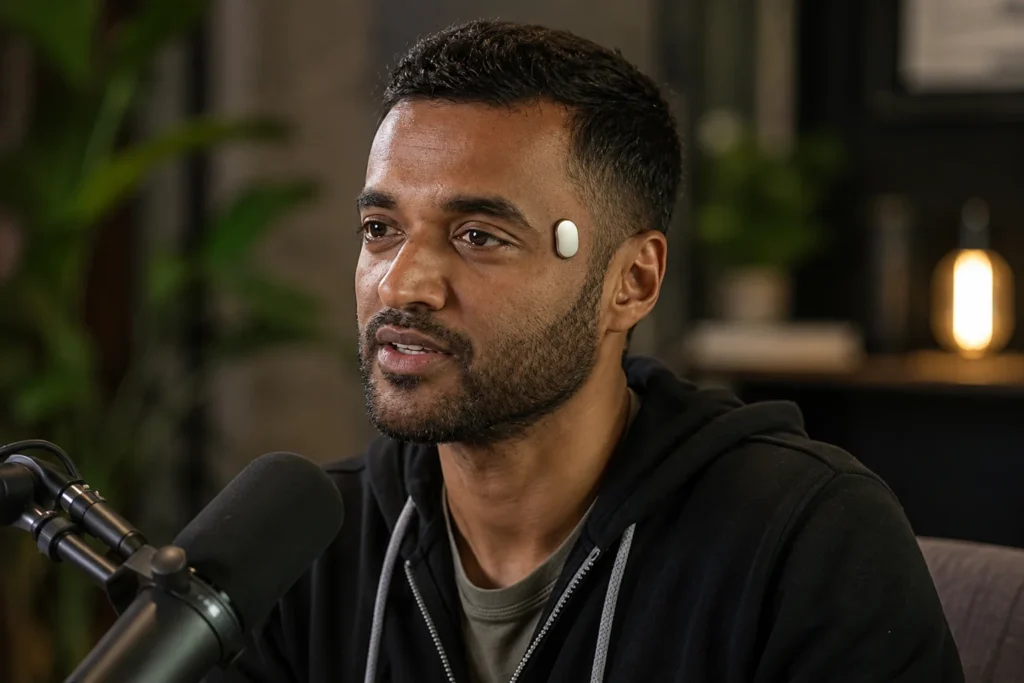
What is that thing on Deepinder Goyal’s head?
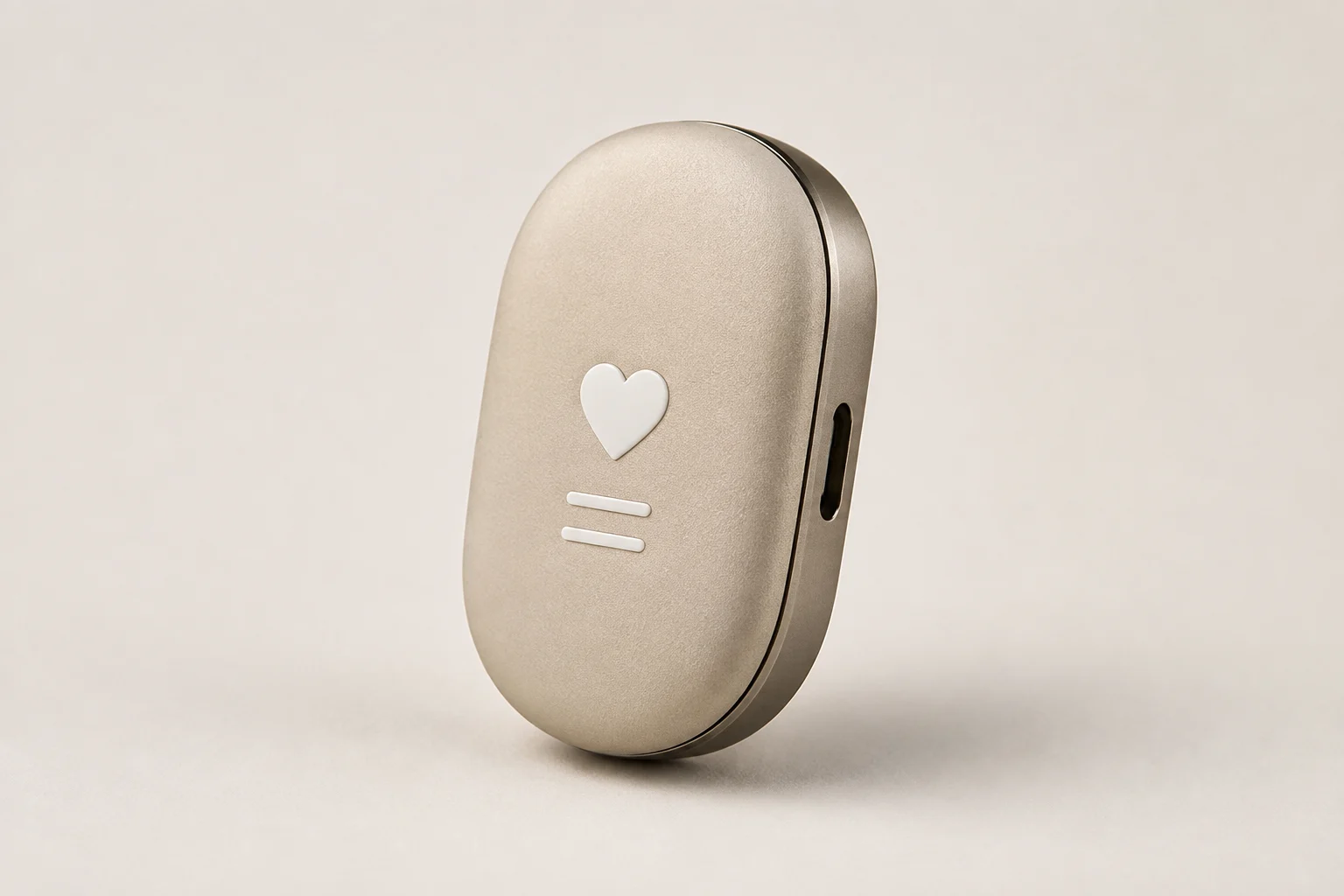
It looks like a tiny metal clip sitting just above the ear. It does not have a screen, it does not look like a smartwatch and it certainly does not look like the usual fitness band.
But this is not another smartwatch.
Temple is a wearable being built around a very different idea. Instead of mainly tracking things such as heart rate, steps and movement from the wrist, it is designed to capture physiological signals from the temple region of the head.
And Goyal is not building it just as a strange new gadget. The project has already moved from something he was personally testing into an actual product, with the first 100 units entering early access in May 2026. The company invited athletes, scientists, doctors, founders, creators and other people interested in physical and cognitive performance to become early users.
So why the head?
Why Put a Wearable on Your Temple
Your wrist is convenient, but it is not necessarily the best place to measure everything happening inside the body.
The temple area has relatively thin tissue, a lot of blood vessels and less movement compared with the wrist. Temple says this can give its sensors a cleaner signal than a wrist based device. That is the basic reason behind the unusual placement.
Think about what happens with a smartwatch.
You move your hands all day. You type, lift things, exercise, sleep on your arm and sometimes wear the watch a little loose. The sensor still manages to collect useful information, but there are limits to what you can measure from that position.
Temple is trying to move the sensor closer to the signals it actually wants to study.
One of the main things the device was originally designed around is blood flow related information from the brain.
That is a very different goal from simply counting your steps.
What Is Temple Actually Trying to Measure
The early descriptions of Temple focused heavily on brain blood flow and the changes in circulation that happen while you are moving, resting or sitting for long periods.
The idea is interesting because researchers already study cerebral blood flow, but doing that continuously during normal life is much harder than measuring it inside a laboratory.
Temple is trying to make that kind of measurement wearable.
Temple is still a new product and its health related claims have not been independently established to the level required for medical use. Neurologists who have looked at the idea have also warned that a sensor placed near the temple cannot simply be treated as a complete measurement of brain health.
The technology can be interesting without us assuming that it can diagnose a person’s brain or tell them whether they are aging well.
For now, it is better understood as an experimental wellness and research device.
Then Goyal Added Something More Interesting
The project became even more interesting in June when Goyal talked about something the Temple team calls Entropy.
According to Goyal, Entropy is a live number that updates every second and is meant to represent the body’s real time metabolic cost. He says it responds to things such as sleep, stress, exercise, coffee, meals and meditation. The company has also said it compared Entropy with a standard metabolic cart.
This is a much bigger idea than simply counting calories.
Most fitness trackers use heart rate and other signals to estimate what the body is doing. Temple’s claim is that it can measure something closer to the body’s actual metabolic state.
If that claim holds up under proper testing, it could give athletes and researchers a completely different way of looking at training and recovery.
Goyal’s Entropy claim is still a company claim. Independent validation and peer reviewed research will matter much more than a number appearing on a screen.
Goyal has said that Temple will launch as a wellness device and that peer reviewed studies supporting its health claims will be available around launch.
That evidence will probably be one of the most important parts of the entire project.
🏃 Why Would Athletes Care
This is probably the easiest use case to understand.
Imagine an athlete training every day.
A smartwatch can tell you your heart rate. A fitness tracker can record sleep. A ring can give you recovery information.
But athletes are often interested in something much deeper.
How hard is my body actually working? How quickly am I recovering?
What happens to my body during intense training. What changes when I sleep badly. What happens when I eat, drink coffee or take a day off.
Temple is trying to collect information continuously rather than asking the person to perform a test inside a lab.
That is why Goyal has repeatedly positioned Temple around high performance athletes. The first early access group was also aimed at people such as athletes, scientists and doctors rather than the general public.
For an ordinary person who simply wants to know how many steps they walked today, this may be complete overkill.
For someone training at a very high level, more detailed data could be much more useful.
⌚ Temple vs Apple Watch, Garmin and Oura
This is where Temple becomes easier to understand. It is not really trying to replace an Apple Watch.
An Apple Watch is a smartwatch first. It gives you notifications, apps, calls, workouts and health tracking.
Garmin is heavily focused on sports, training and outdoor activity.
Oura focuses on sleep, recovery and health tracking in a small ring.
Temple is going after something that these devices are not primarily designed to measure.
| Wearable | Main Strength |
| Apple Watch | Smartwatch features and broad health tracking |
| Garmin | Training, sports and performance |
| Oura | Sleep and recovery |
| Whoop | Training and recovery |
| Temple | Deeper physiological measurements from the head |
That does not automatically make Temple better. It makes it different. And that difference is basically the whole reason the device exists.
💰 It Is Not Going to Be Cheap
Temple is also not being positioned as a cheap fitness tracker.
Recent reports put the expected price around ₹75,000 to ₹80,000, while other reports have put it closer to ₹1 lakh. Goyal has said the commercial launch could happen within roughly six to twelve months, although he has also admitted that the project has already faced delays.
That immediately changes who the product is for. At that price, Temple is not competing with a basic fitness band.
It is closer to a specialised piece of health technology for people who believe the extra data is worth paying for. And that is probably the right approach.
Trying to convince everyone that they need a ₹80,000 device on their head would be difficult.
Building something that a smaller group of athletes, researchers and performance focused users genuinely wants is much more realistic.
The Science Is the Part to Watch
This is where Temple will ultimately succeed or fail.
The hardware is interesting. The idea is interesting.
Even the decision to put the sensor on the temple instead of the wrist makes sense from a product design point of view. But health technology cannot survive on an interesting idea alone.
Doctors have already raised questions about how much information a surface sensor can really provide about deeper brain activity and blood flow. Some experts have described Temple as experimental and said its claims need proper validation before people treat the device as a medical tool.
That does not mean the project is useless. It means the interesting part has not been proven yet.
If Temple can show through independent research that its measurements are accurate and useful, it could become something genuinely new in the wearable market.
If the numbers look impressive but do not translate into useful information, it will be much harder to justify the price.
So Why Is Goyal Doing This
This is probably the most interesting part of the whole story.
Goyal has spoken about Temple in the context of ageing, brain circulation and his Gravity Ageing Hypothesis. The idea has attracted plenty of criticism from medical experts, particularly around the claim that gravity could play a major role in ageing.
But you do not have to accept that theory to understand why Temple is interesting. The bigger idea is simple.
We already measure a lot about the human body. We measure heart rate, oxygen levels, movement, sleep, temperature and many other signals.
Goyal is asking whether we can measure something closer to what is happening around the brain and metabolism continuously, while a person simply goes about their normal life.
That is a much more interesting question than whether the device looks strange.
👀 Would You Actually Wear One
This may be the biggest challenge for Temple.
People have already accepted watches and rings because they are easy to wear. A small device on the side of your head is different.
It has to be comfortable. It has to stay in place. It cannot become annoying during sleep or exercise. And perhaps most importantly, it has to give you information that is useful enough to justify wearing it every day.
The first 100 units are now being used to learn exactly that. Temple has already moved into early access, so the next stage is not really about showing people a mysterious gadget anymore. It is about seeing what happens when real users wear it regularly.
That is where this project gets genuinely interesting.
Where Temple Could Go
Deepinder Goyal has already built a company around getting food from a restaurant to your door. Now he is working on something that sits on your head and tries to understand what is happening inside your body.
That sounds strange. But it is also exactly why Temple is worth watching.
The wearable market has spent years putting more sensors into watches, rings and bands. Temple is taking a different route and asking whether the body has better places to collect certain signals.
Whether that idea becomes a genuinely useful new category or an expensive experiment will depend on the data.
For now, the device is still early. The first users are only beginning to test it, the commercial launch is still ahead, and the science behind its biggest claims still needs to prove itself.
But if Temple manages to do what Goyal says it can do, the strange little device sitting on the side of his head may turn out to be one of the more interesting wearables to come out of India.