HARDWARE / PRIVACY PHONES
Brax Wink: Clever Modular Phone, or a $449 Gamble on 3D Renders?
The tiny modular phone has a genuinely smart idea behind it. The problem is that Brax opened reservations before it had a working sample that booted software.
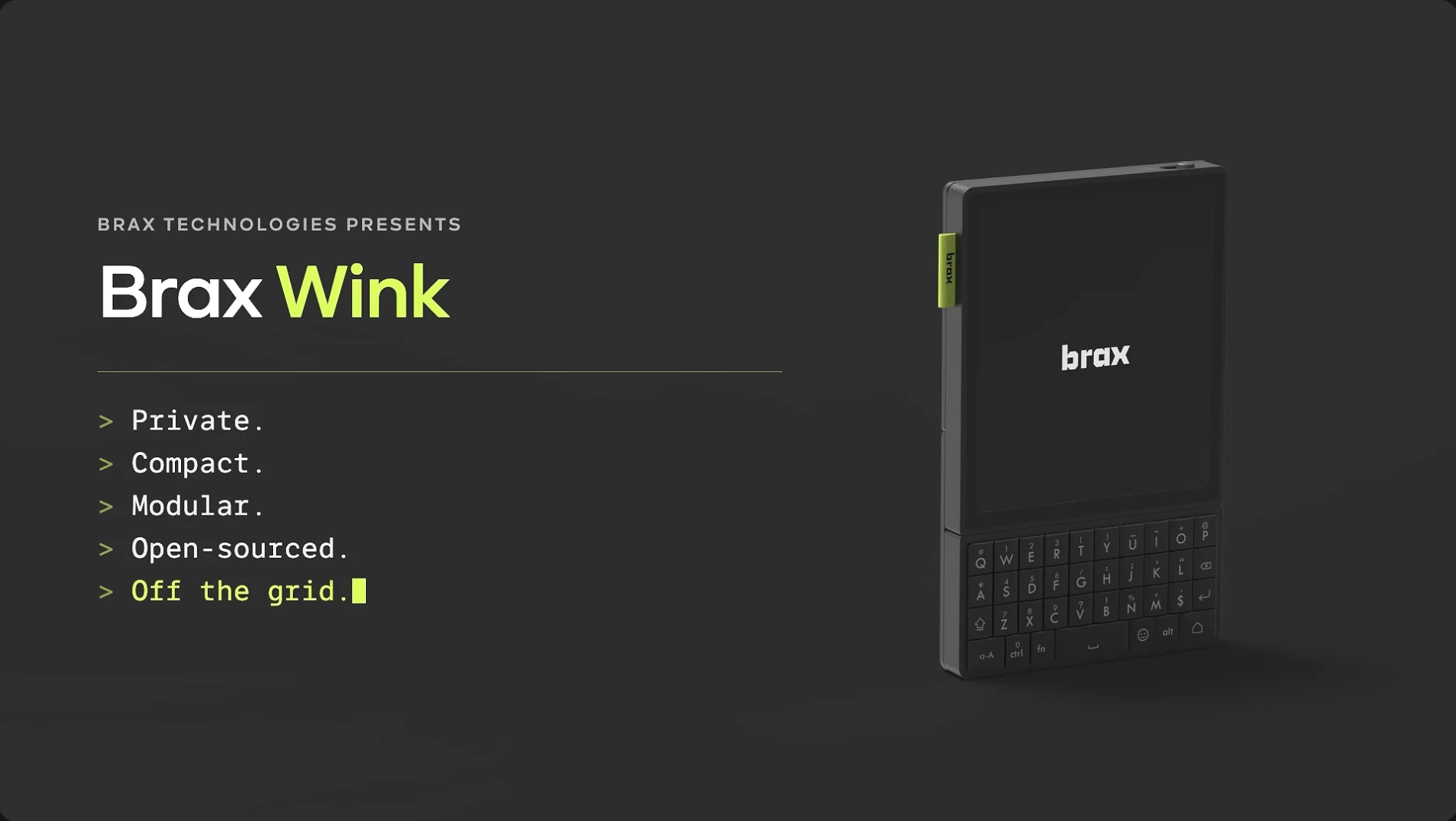
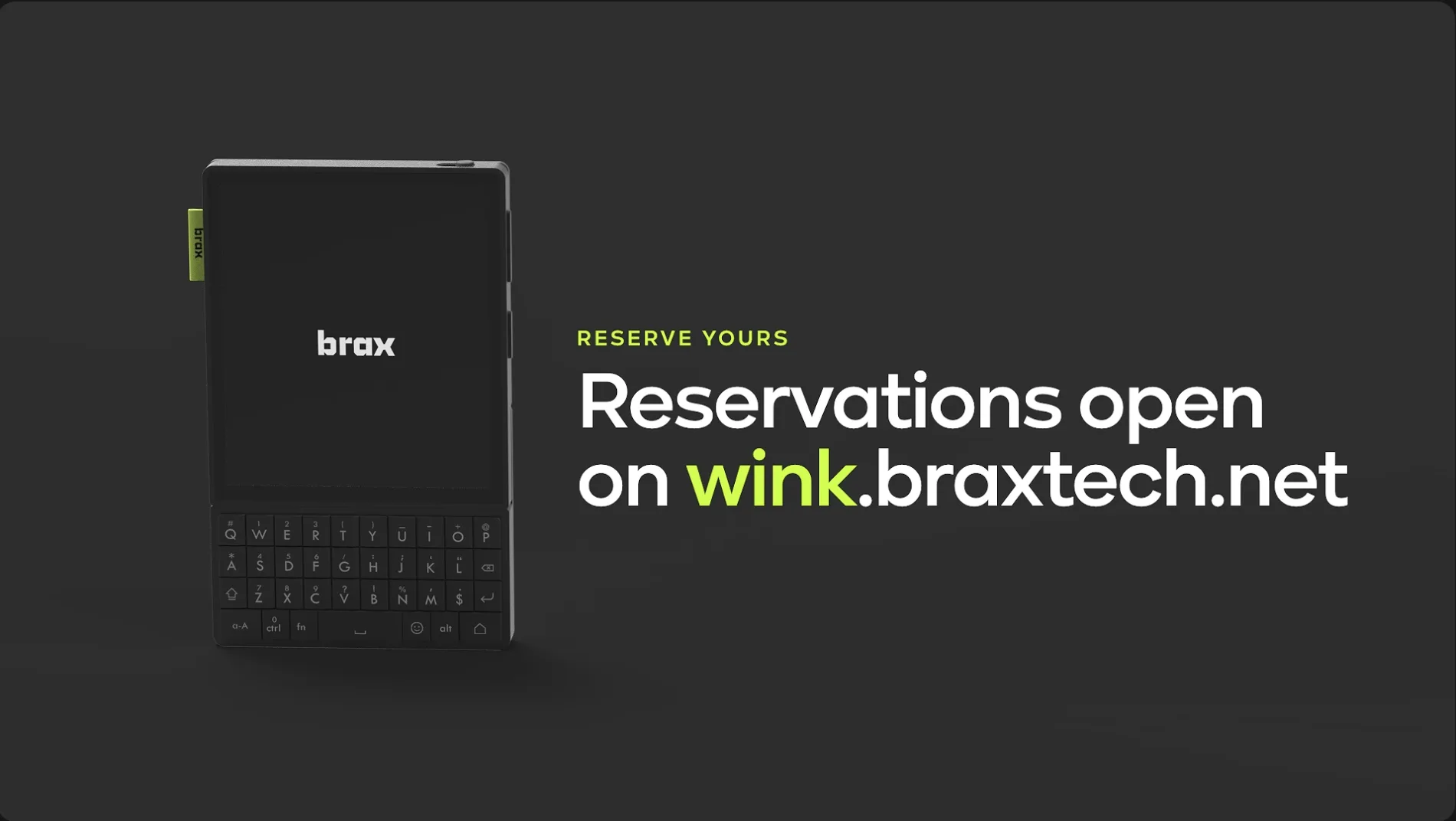
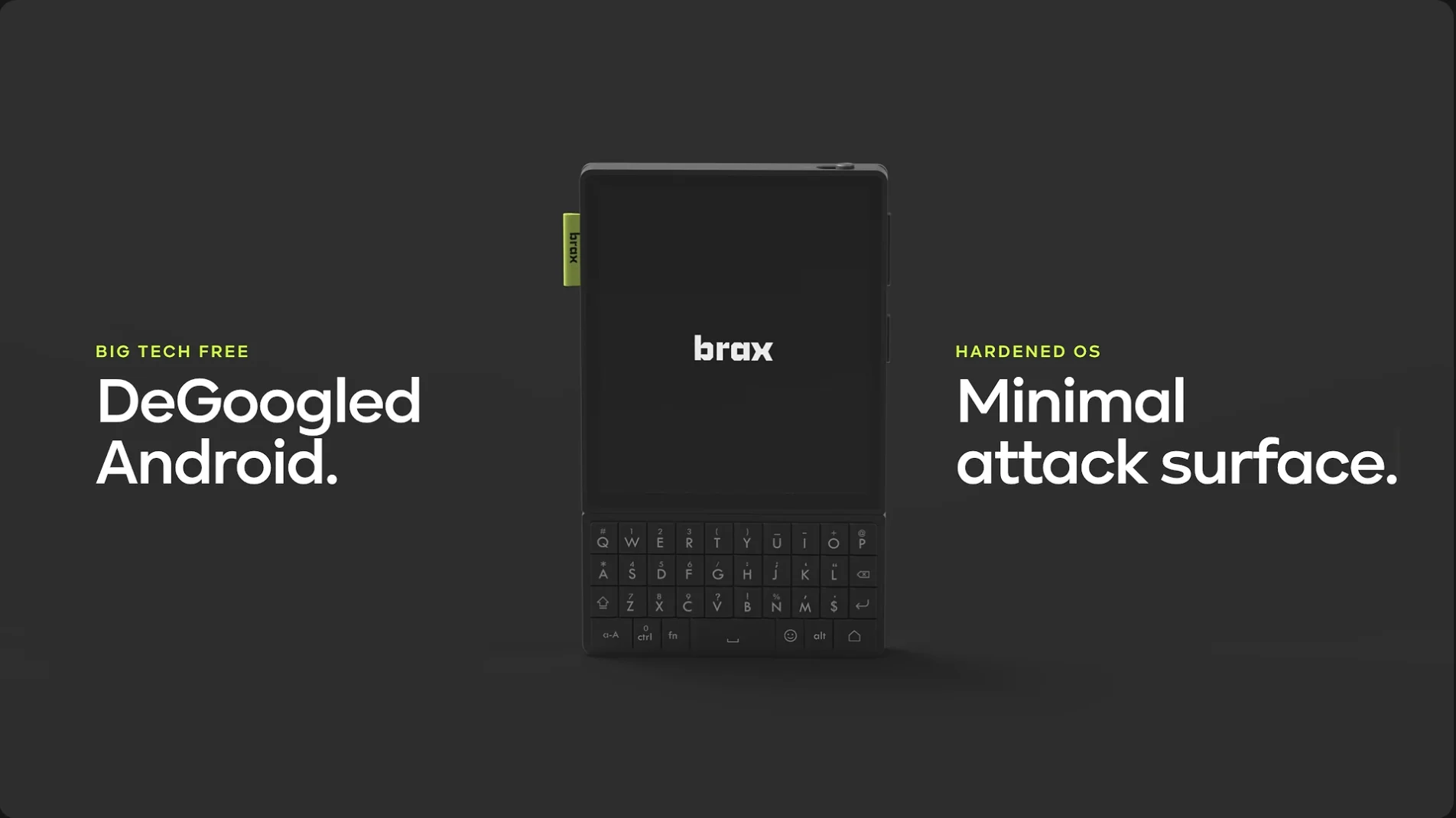
The Brax Wink looks like the phone alt-phone fans have been waiting for. It is tiny, modular, has a physical keyboard, and promises a de-Googled Android setup. But when reservations opened on October 15, 2026, the company still did not have a sample unit that booted software.
A day before launch, Brax support confirmed that the design and specs were not final and that it was still missing a working sample. That changes the whole preorder equation. You are not waiting for a finished phone to leave the factory. You are backing an unfinished design that is planned to ship in July or September 2027. Read Brax support’s reply ↗
THE HARDWARE IDEA
The modularity trick actually makes sense
Most alternative phones ask you to choose a compromise and live with it. The Wink’s best idea is letting the hardware change with the job.
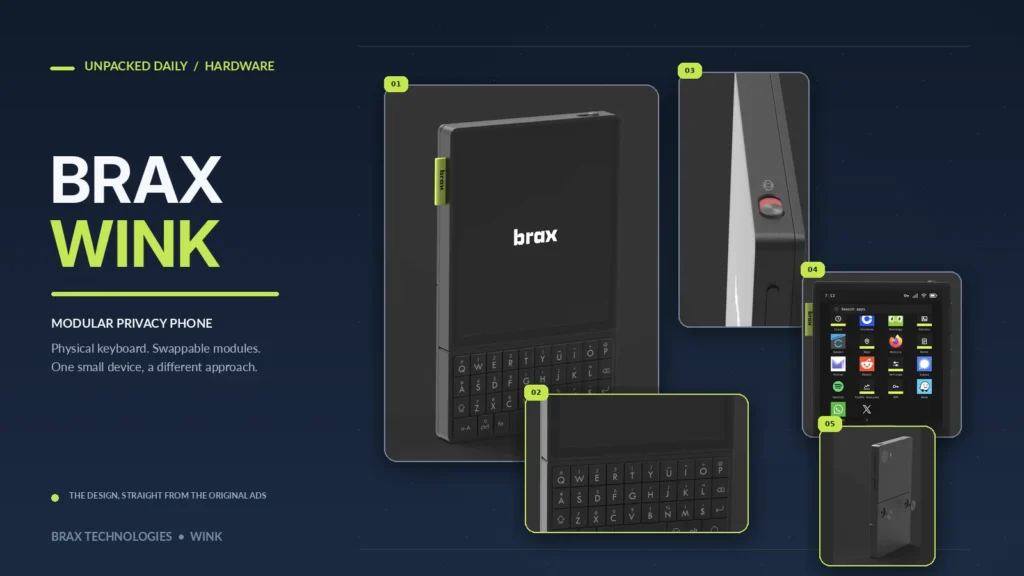
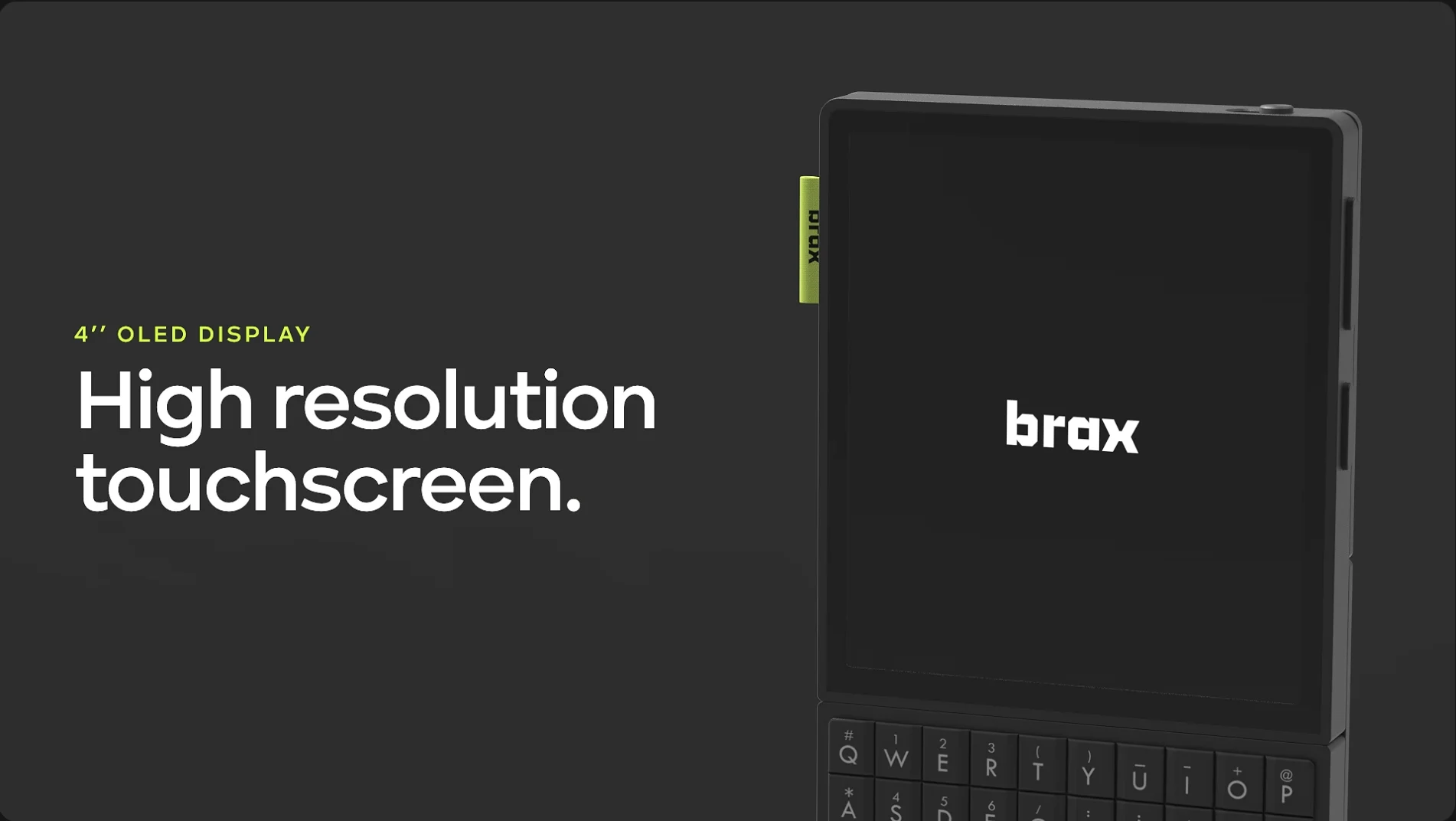
Without an attachment, the planned device measures 85.4 × 74.7 × 10 mm. Add the QWERTY keyboard and the height grows to 122.2 mm. The keyboard has dedicated ctrl, fn and alt keys, plus touch-sensitive keys you can swipe to scroll without covering the small screen with your thumb.
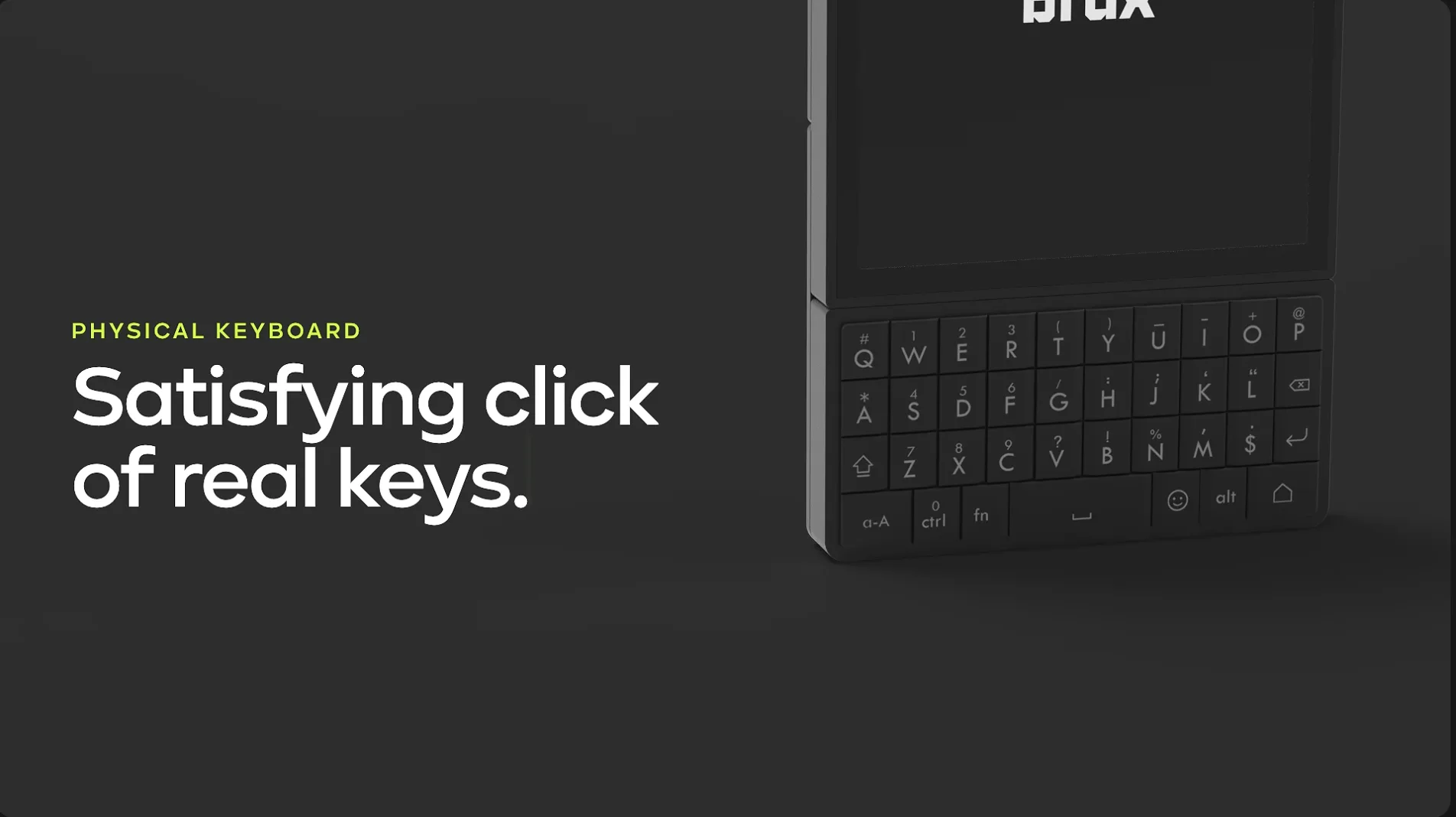
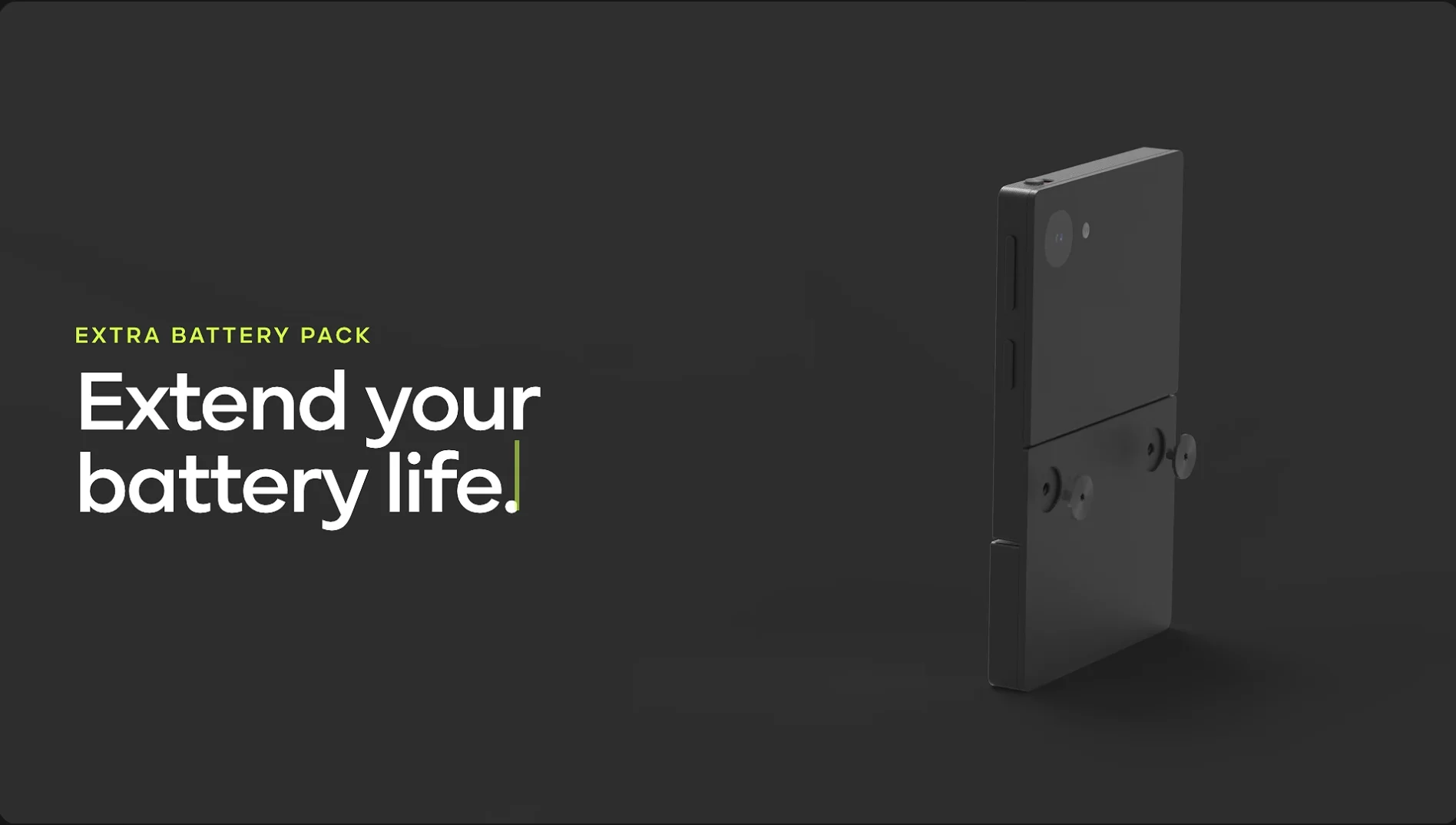
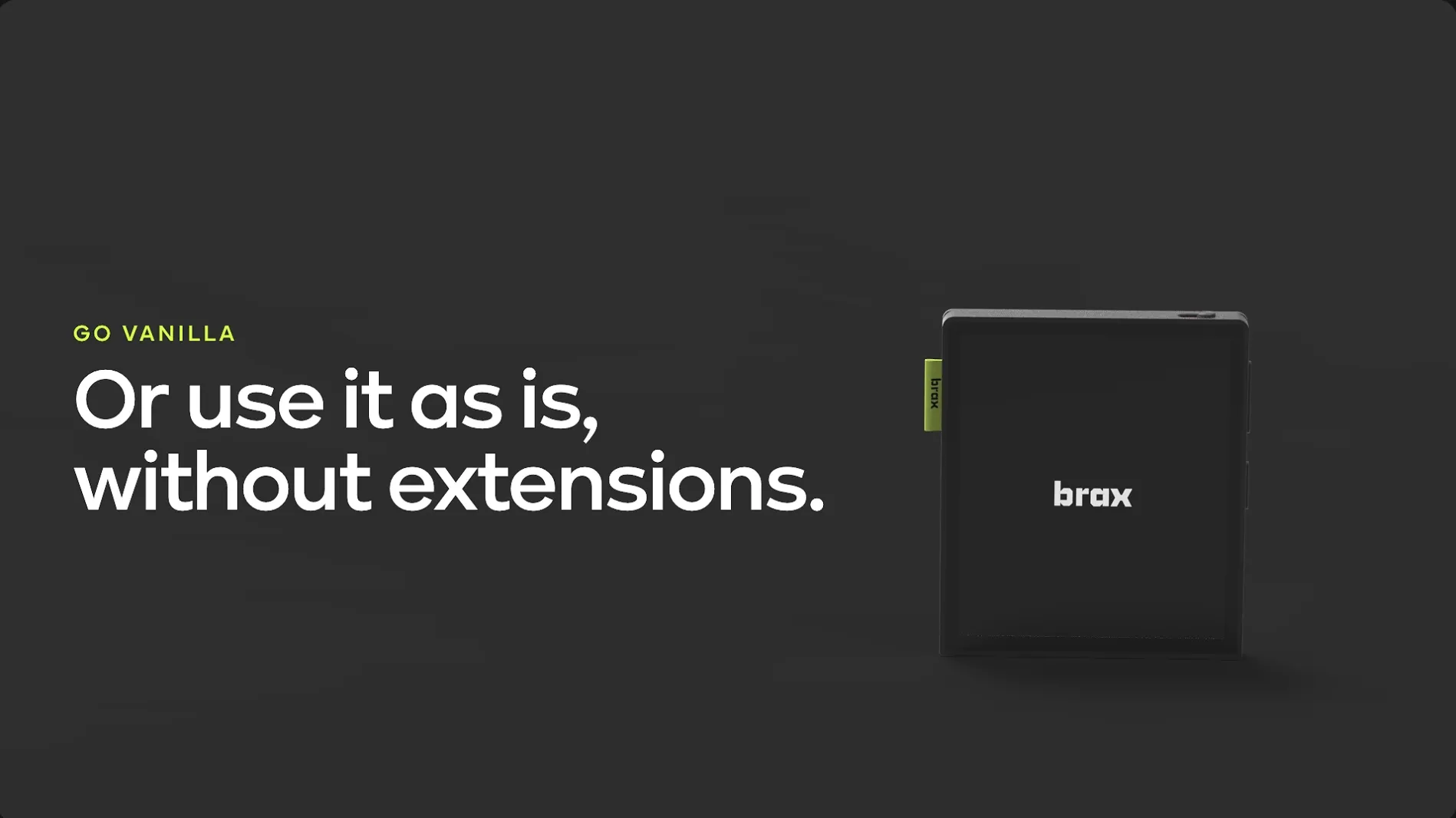
When you do not need the keyboard, the idea is to replace it with an extended battery module secured by two thumbscrews. The back also shows Torx screws, which fits the promise of a device owners can open. That is a good design direction, though real repairability still needs a teardown of a finished unit.
WHAT IS KNOWN
The spec sheet is less complete than the pitch
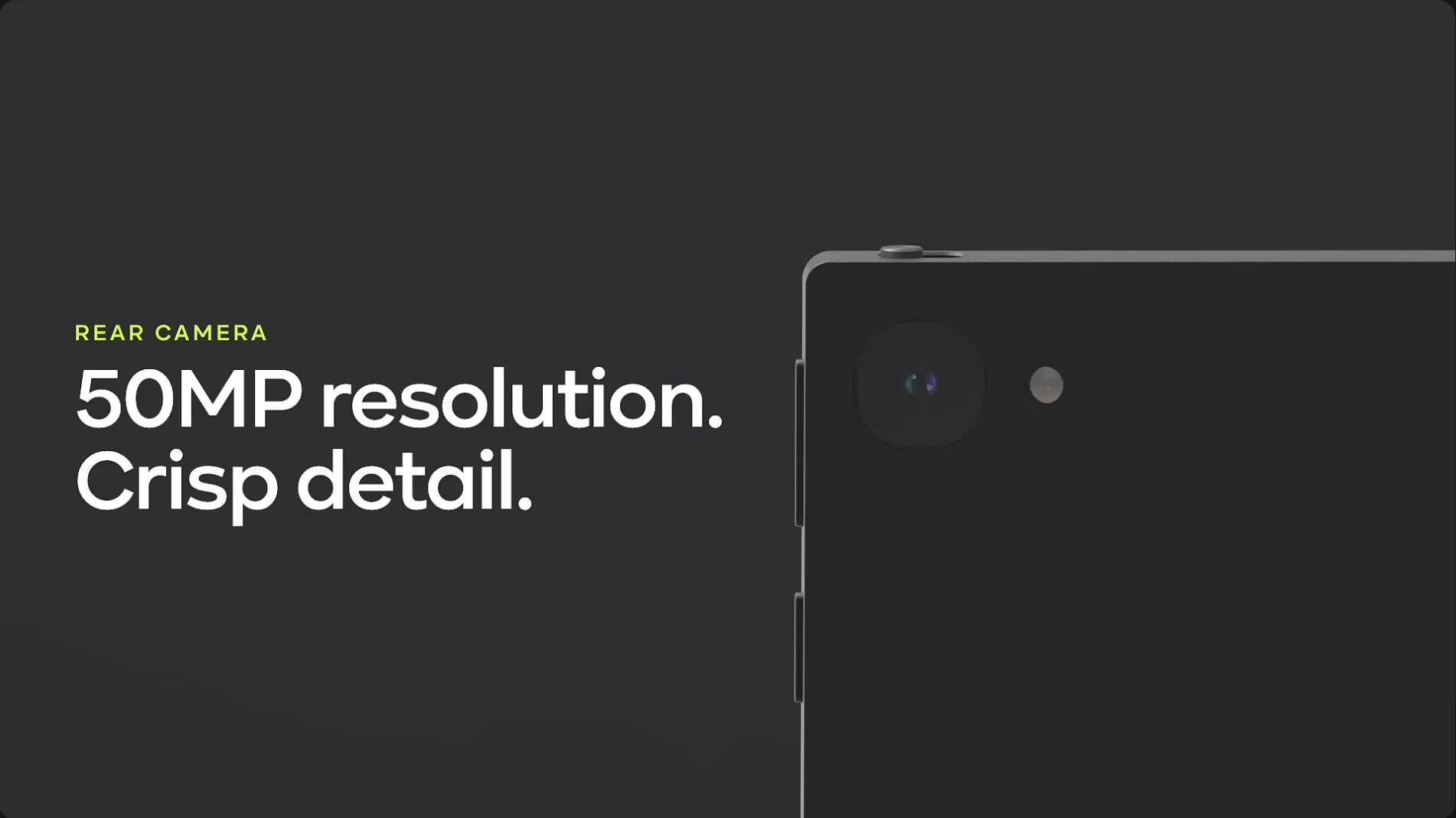
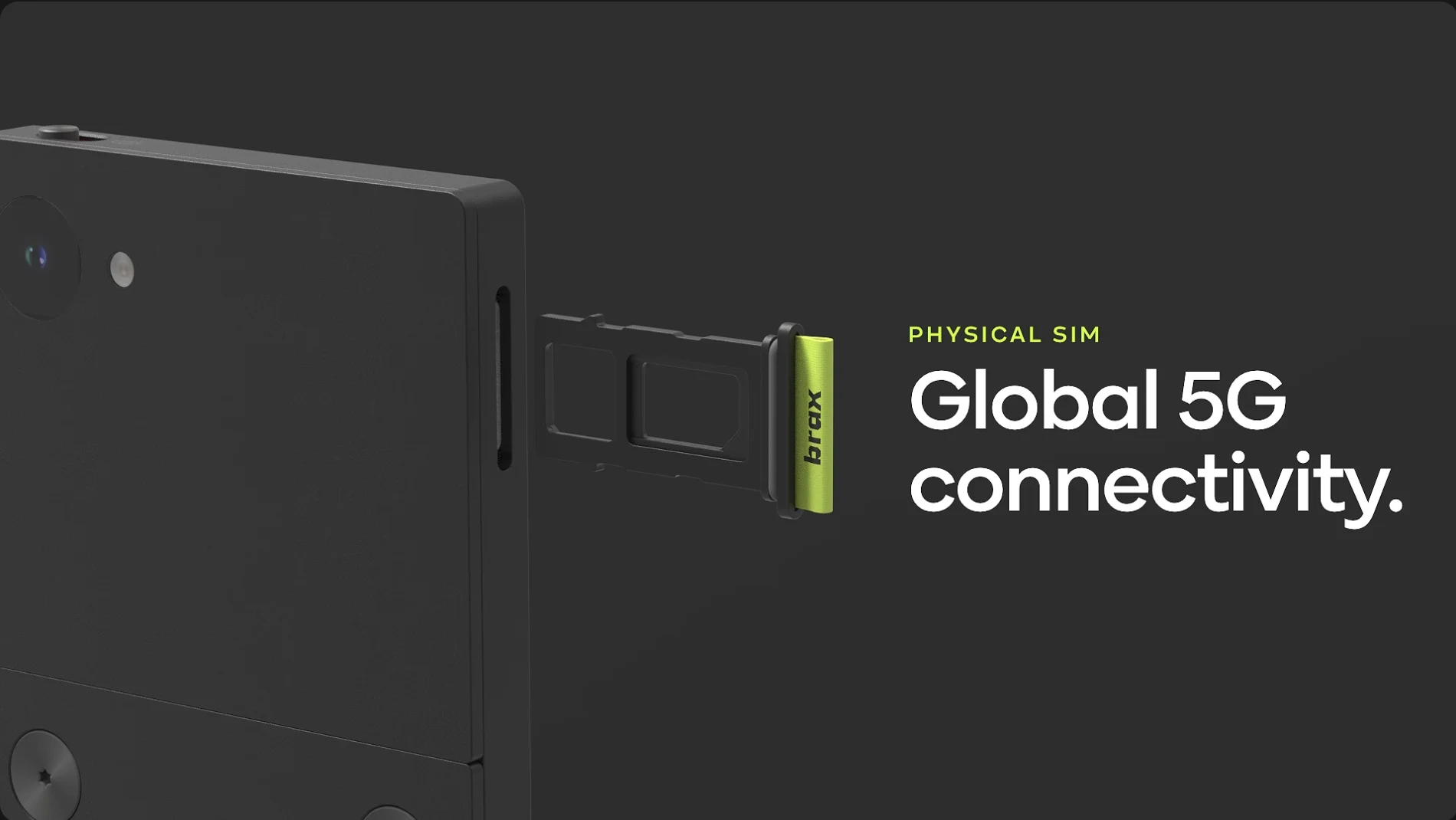
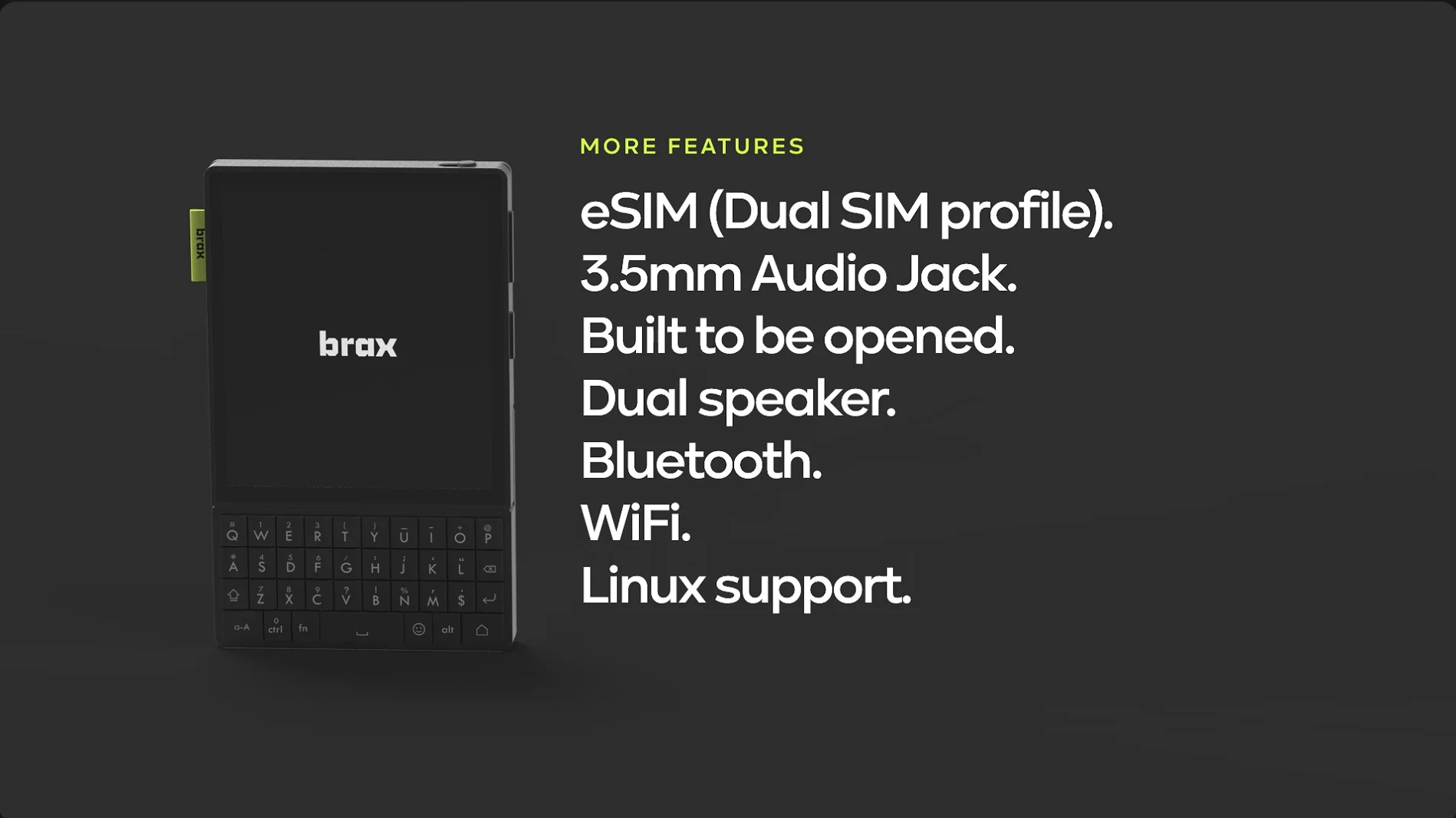
The planned hardware is not bare-bones. Brax lists 8GB of RAM, 128GB of storage, microSD expansion up to 1TB, a 50MP rear camera, physical SIM plus eSIM, Wi-Fi 6E, Bluetooth 5.4, USB-C 3.2, a 3.5mm headphone jack and dual speakers. It also promises software updates until 2032. Brax’s launch specifications ↗
The chip is a MediaTek MT8875 built on a 4nm process, with four Arm C1-Pro cores, four C1-Nano cores and a Mali-G625 MC2 GPU. MediaTek describes it as a mid-tier 5G IoT platform. The process size alone cannot tell us how fast the finished phone will feel, how hot it will run, or how long its battery will last. MediaTek’s MT8875 overview ↗
Still missing from the launch spec sheet
Those gaps matter in a phone this small. Our breakdown of why big battery numbers do not tell the whole story explains how battery design and thermal control are part of the result, not details you can skip.
One other render-level question: the ad shows a 50MP rear camera, but no front-facing camera is shown or listed in the current material. Yet the encrypted call screen has a VIDEO button. That may simply be a missing detail in unfinished mockups, but it is another thing Brax needs to clarify.
THE SOFTWARE CATCH
Zero Mode and Omni Mode are not quick toggles
The ad makes the choice look simple. Zero Mode is the stripped-down communicator. Omni Mode is the fuller Android setup, with an app store and room for apps such as WhatsApp, Spotify, Waze and Signal.
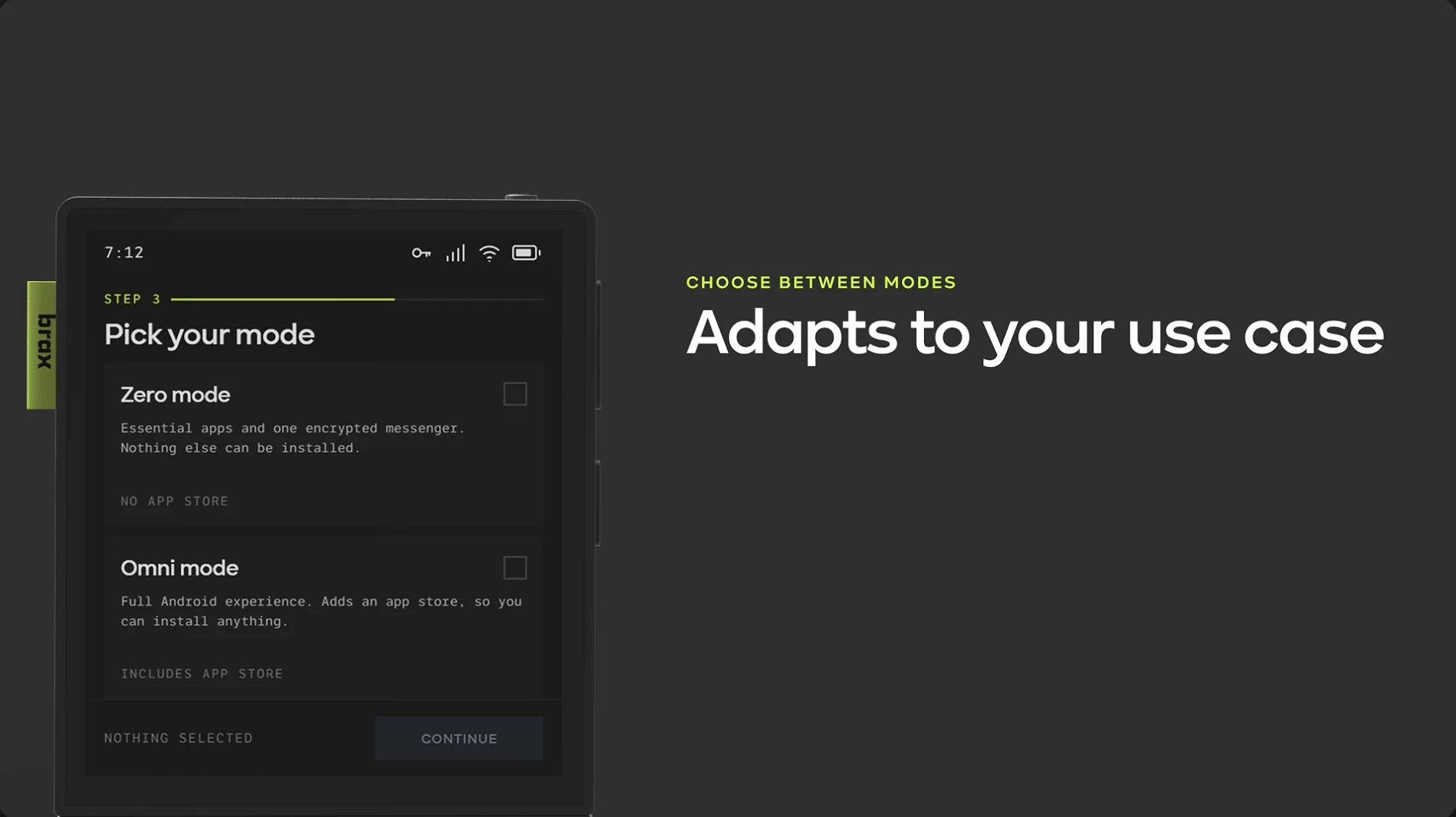
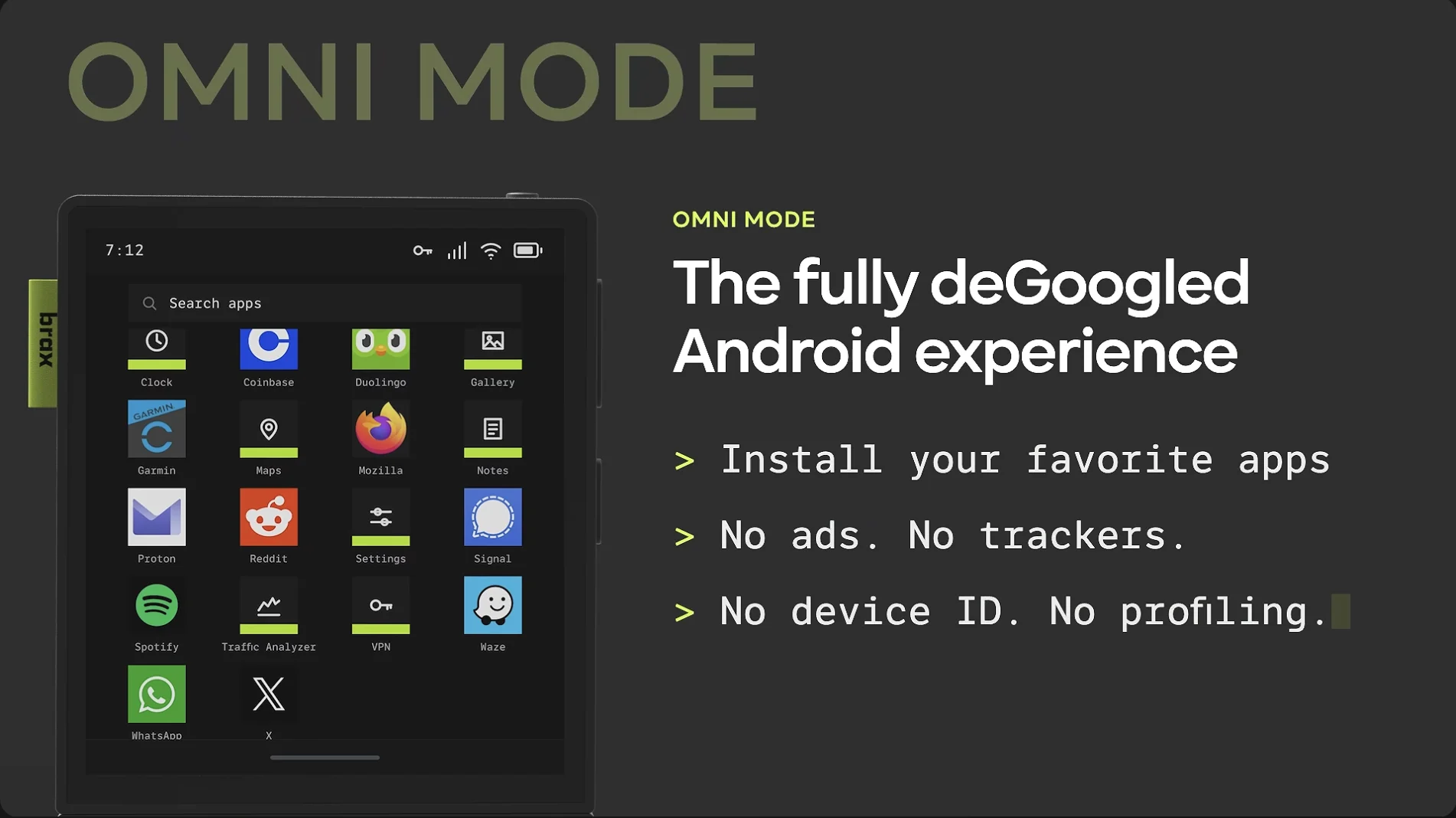
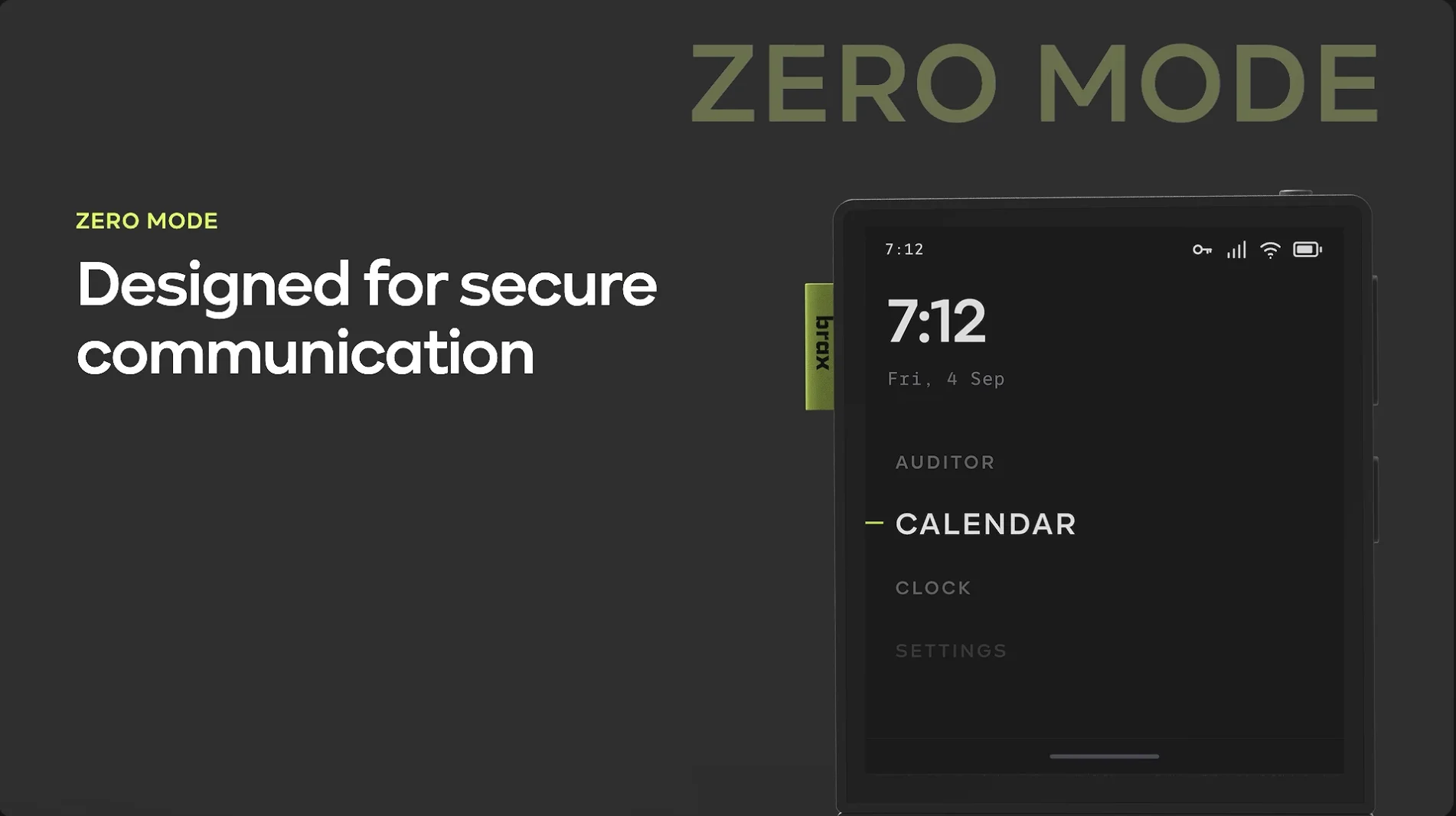
Brax confirms this in its official launch announcement ↗.
So you cannot casually use Zero Mode during the week and flip into Omni Mode on Friday without wiping the phone. From a security point of view, the reset makes sense. Apps and their data should not carry over into an environment designed to prevent third-party code from running. But it changes the product’s appeal. These are two setups to commit to, not profiles you switch between when your plans change.
THE PROOF PROBLEM
A red switch is not proof of a hardware kill switch
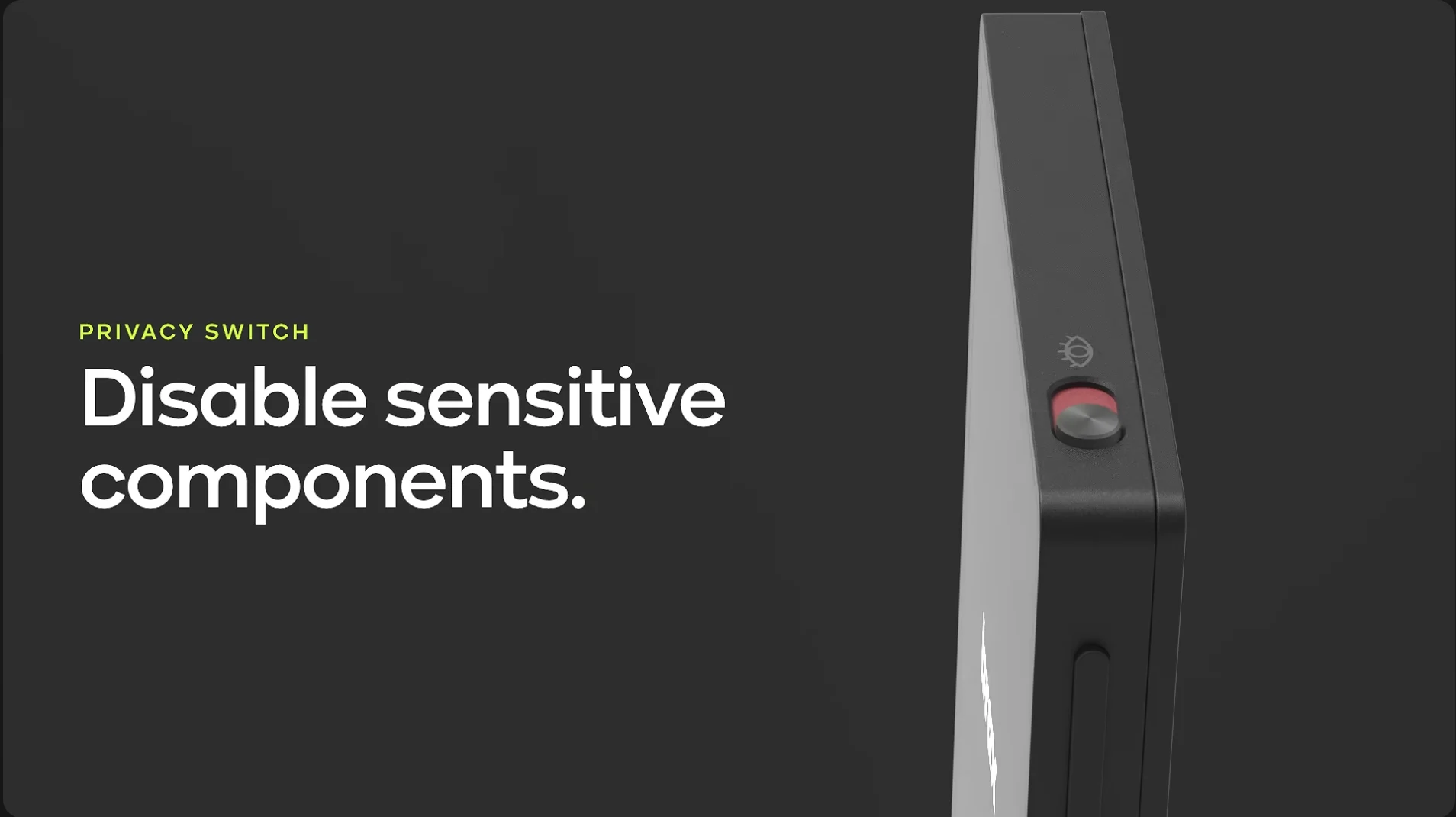
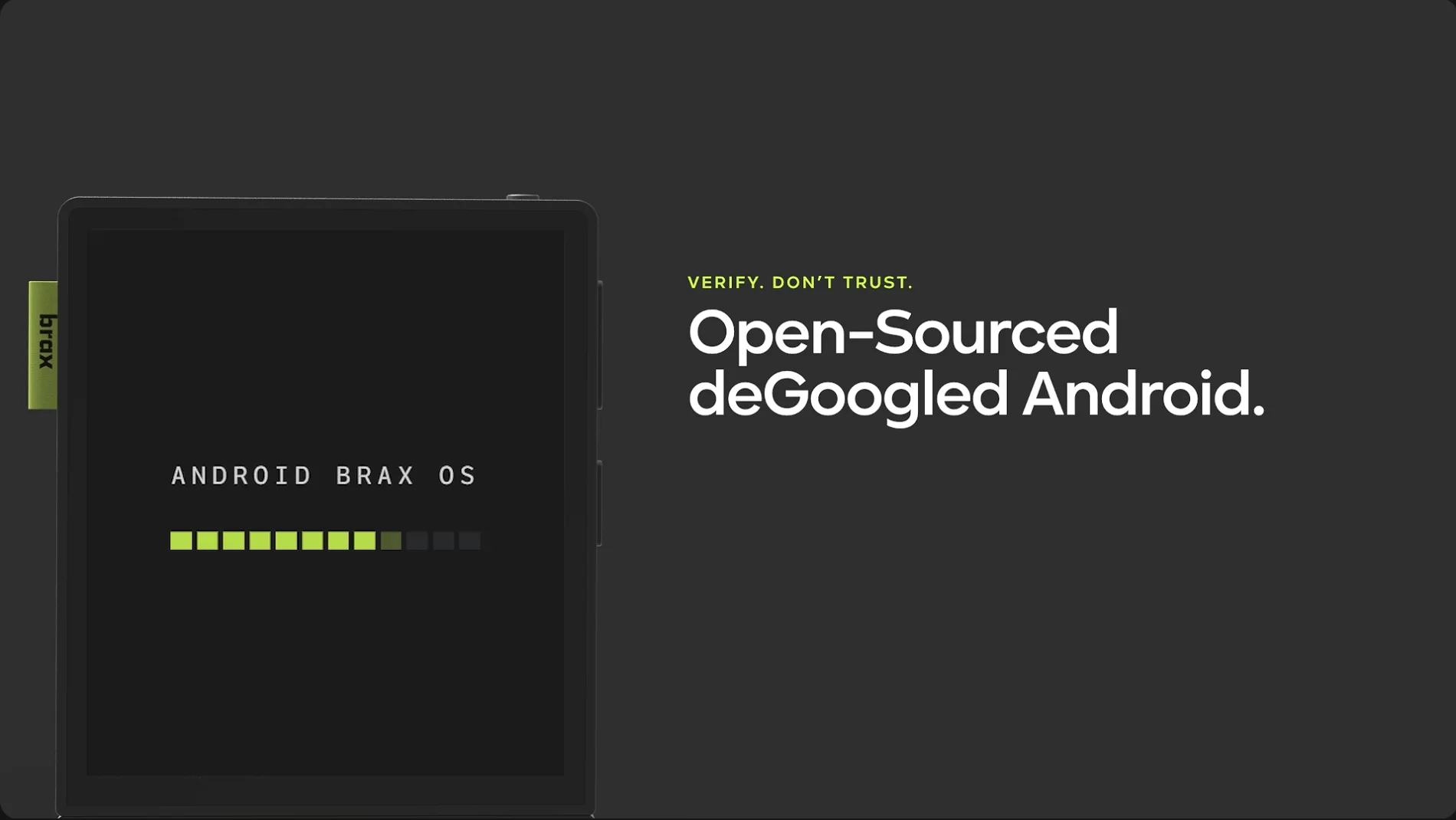
The privacy switch is one of the biggest unanswered details. Brax’s September roadmap described it as a switch that cuts power to the cellular modem. In October, support described the switch as disconnecting sensors or services on a software or lower level, then said the team was still validating exactly how each component would be disabled. Read the roadmap ↗ Read the support reply ↗
Those statements do not prove the switch is just a normal software toggle, but they also do not prove power is physically cut to every component. Until Brax publishes the details and the behavior can be tested on a real device, calling it a proven hardware kill switch goes too far.
The source-code promise has a similar problem. The ad says “Verify. Don’t trust,” but the public Brax Technologies GitHub organization ↗ currently lists a Windows device toolkit, not the Wink’s OS and device-specific code. Users were asking where that code was on the Brax community forum ↗. The issue is not whether source code might appear later. Buyers cannot independently verify this phone’s software today.
WHAT PRIVACY DOES AND DOES NOT MEAN
Encrypted calls are useful, but not magic
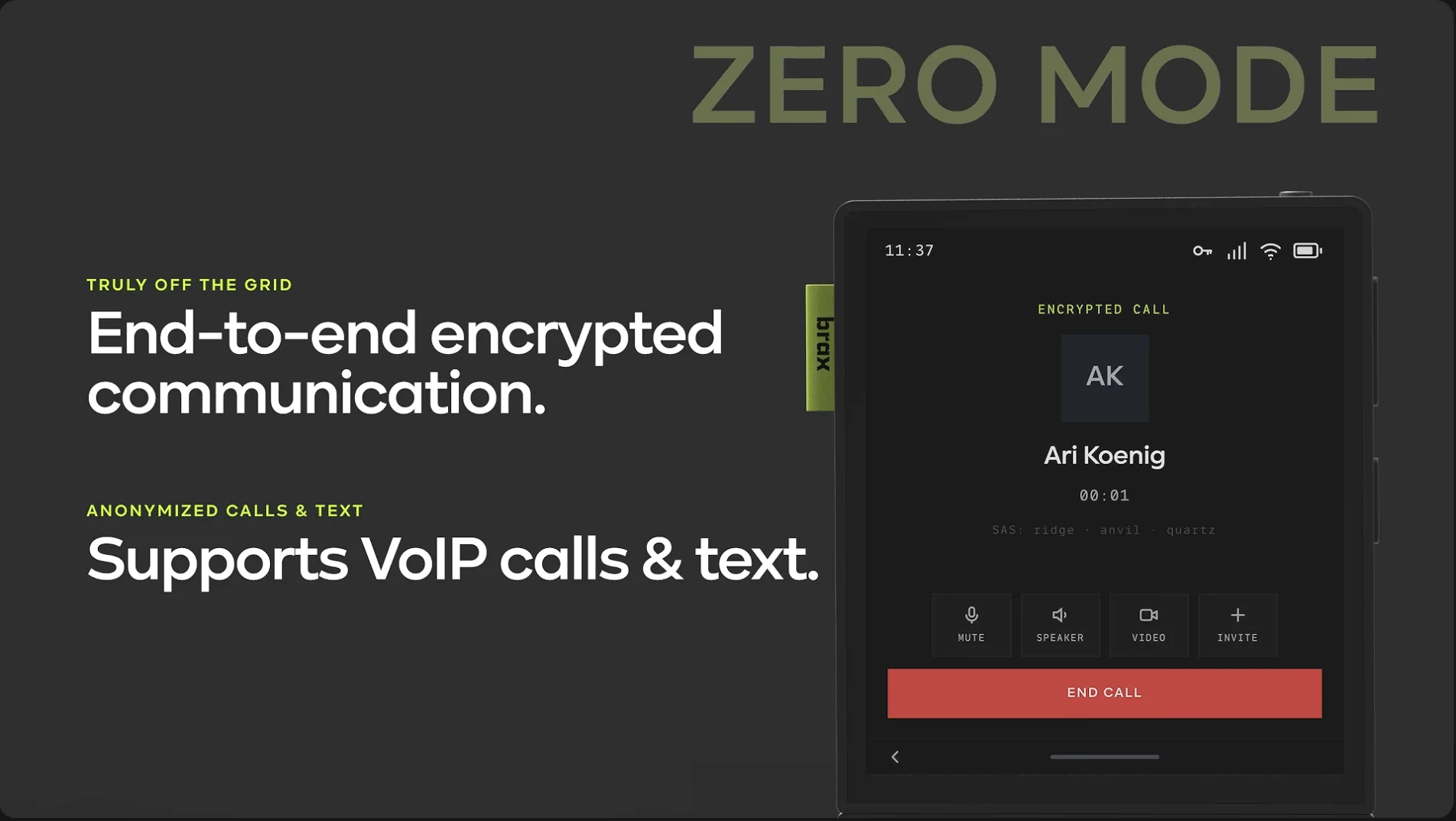
Brax says calls and messages between Brax Network users are end-to-end encrypted, and that users can self-host a server. Its data-only mode is also useful: it can block regular cellular calls, SMS and MMS while keeping mobile data on for VoIP and encrypted messaging. Those are real features worth testing on finished hardware.
But “off the grid” is too broad. Data-only mode still uses the mobile network for data, and the encrypted communication only protects conversations covered by the Brax Network setup. It does not turn ordinary calls to standard phone numbers into encrypted calls, or make the device anonymous by default. The protocols and the service design still need independent testing.
The app drawer raises a separate issue. The Wink is de-Googled, but the Omni Mode render also shows WhatsApp, X, Reddit and Spotify. Removing Google services can reduce one source of system-level data collection. It cannot stop a third-party app from collecting activity associated with an account you sign into. That is the difference between OS privacy and app privacy. We explain the same distinction in our guide to how online tracking connects small pieces of your activity.
THE MONEY QUESTION
The $30 option costs $101 more
PAY IN FULL
$449Batch 1, planned July 2027Locks in the lower priceRESERVE WITH $30
$550 total$30 now, $520 around July 2027Batch 2, planned September 2027The lower upfront amount is not the cheaper route. The $30 reservation path costs $101 more overall and has a later target shipment. Brax says both options are refundable, but read the current product-page terms before paying. The company also describes Wink as a single production round, and says specs and dates can change. Check the official preorder terms ↗
Brax has shipped the earlier BraX3, so this is not a company with no hardware deliveries behind it. But its own delivery thread records rescheduled batches and shipping delays tied to restocking and logistics. That does not prove Wink will be late, but it is a reason to treat July and September 2027 as targets, not guarantees.
For buyers in India, I would not make this the only phone until someone tests UPI, banking, work apps, network bands, VoLTE, warranty and import costs on the actual device. Alternative Android systems can have banking-app compatibility issues, and the Wink has not been tested in finished form. If security today matters more than the modular design, a supported Pixel running GrapheneOS is a better-documented option, although banking app support can still vary. GrapheneOS usage and compatibility notes ↗
There is also the Clicks Communicator, listed at $649 with a 4.03-inch display and a physical keyboard. Clicks says shipping is on track to begin in December 2026, though it is not currently accepting reservations from India. It is not as modular as the Wink, but it shows the small-phone keyboard idea is not unique to one company.
The Wink’s modular design is the reason to watch it. The missing hardware is the reason to wait. I would hold off on the $449 payment until Brax shows a real unit booting BraxOS, confirms the battery and display specs, publishes the source code, and explains exactly what the privacy switch can disable.