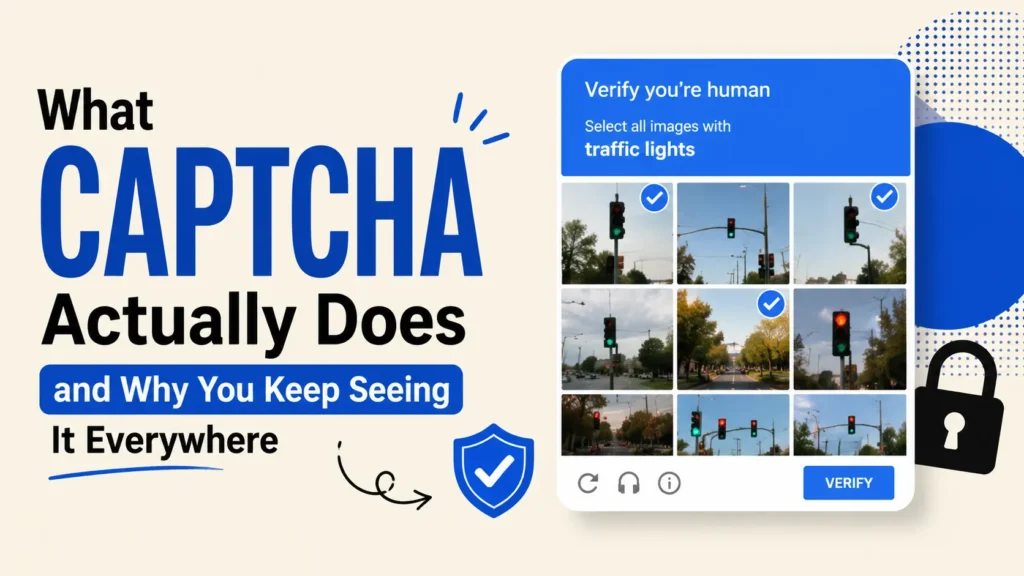
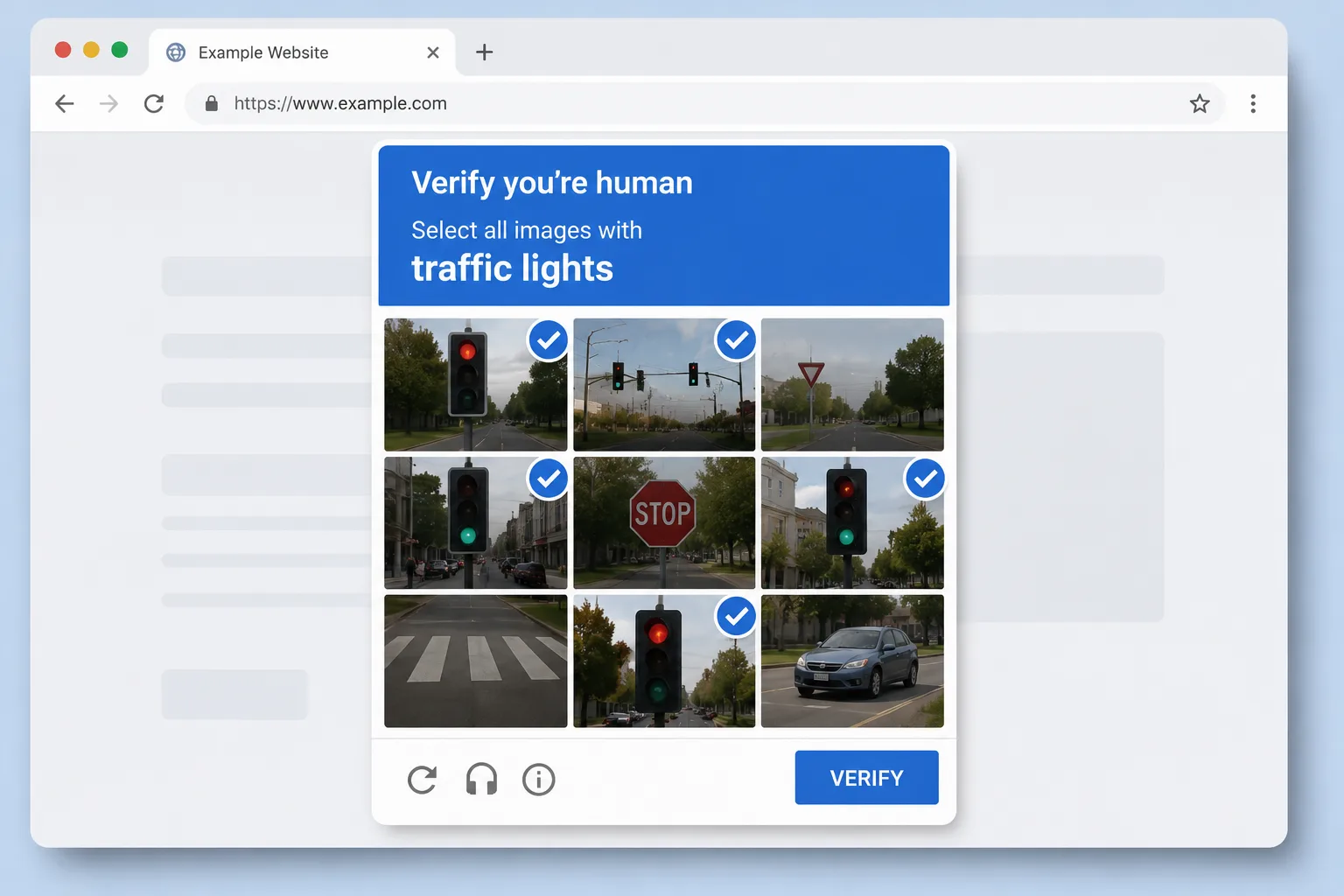
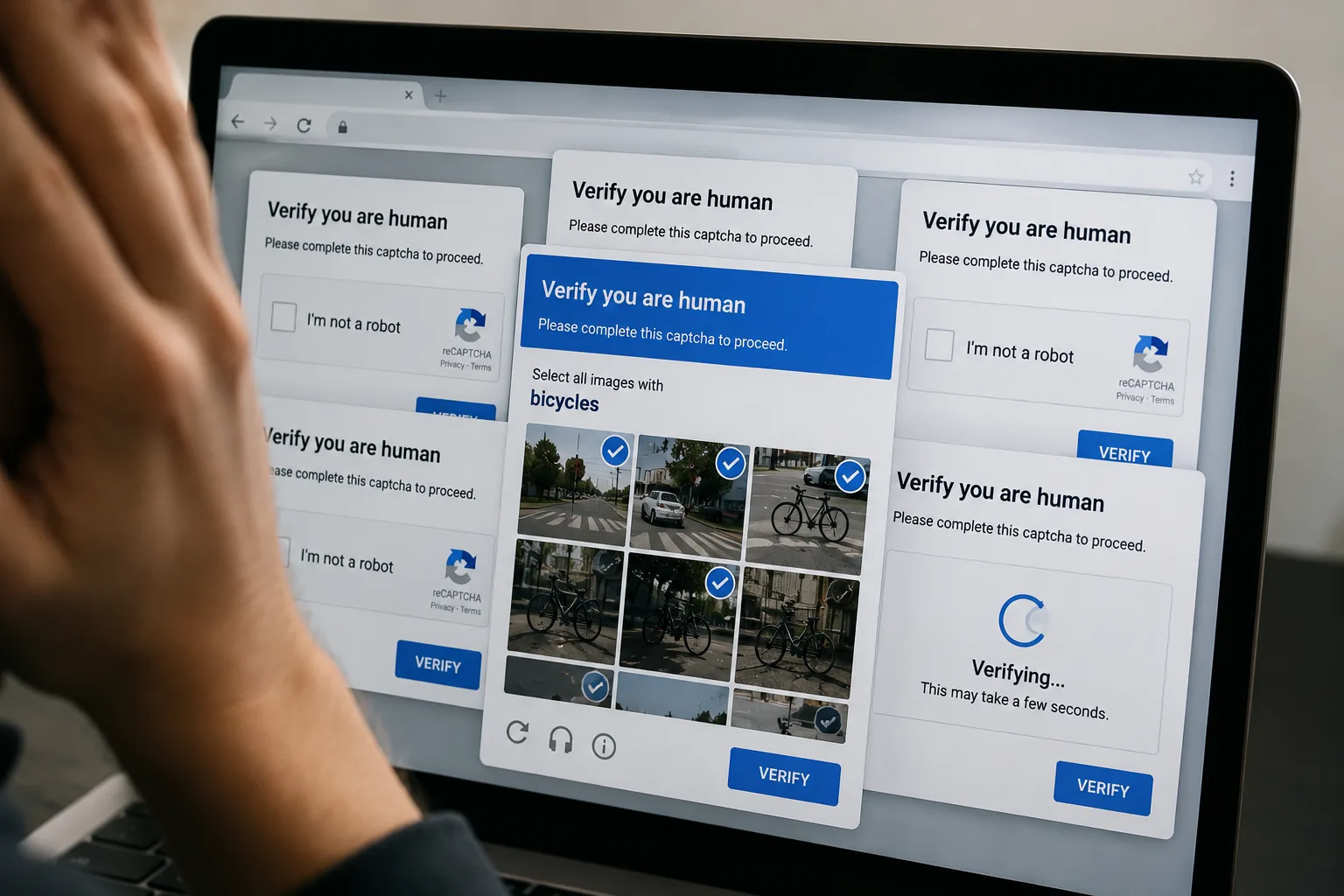
You know those “Select all traffic lights” tests almost every website shows now?
That’s called CAPTCHA and it exists because the internet is flooded with bots, spam, fake traffic, and AI systems trying to behave like humans online.
At this point, almost everyone on the internet has seen one.
Select all traffic lights.
Click every bicycle.
Verify you are human.
Sometimes it takes two seconds. Sometimes it feels impossible.
And honestly, many people still don’t fully understand why websites keep making them do this.
It can feel random. Annoying. Even suspicious.
But behind those little image puzzles is a much bigger internet problem that most normal users never really see.
CAPTCHA exists because the internet is full of bots. And now, with AI growing rapidly, websites are becoming even more paranoid about separating humans from automated systems.
So What Is CAPTCHA?
CAPTCHA is basically a security test designed to check whether the person using a website is actually human.
The full form is:
“Completely Automated Public Turing test to tell Computers and Humans Apart.”
Which sounds far more complicated than it really is.
The idea is simple:
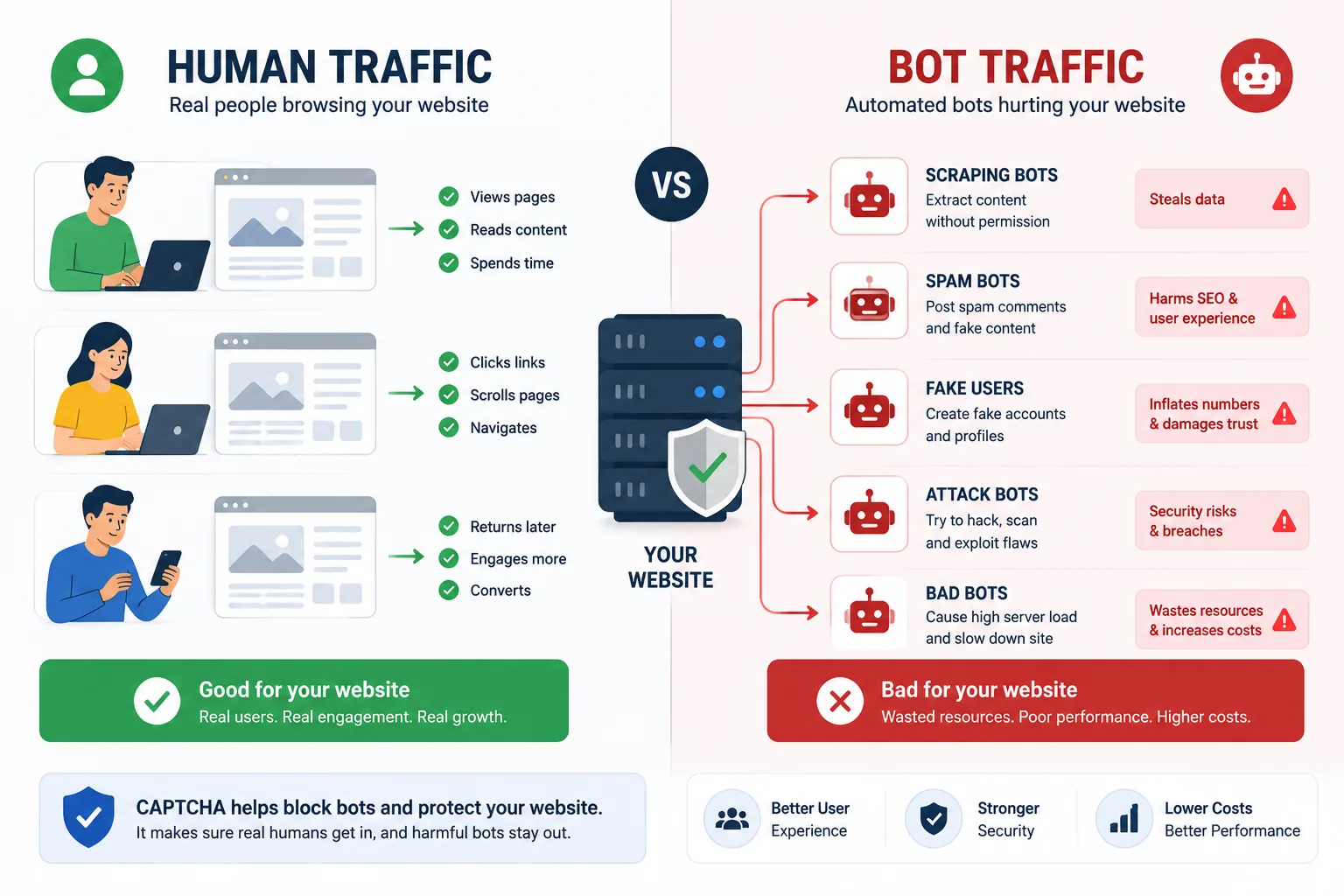
humans and bots behave differently online.
Bots can:
- create fake accounts
- spam comment sections
- scrape websites
- overload servers
- buy products instantly
- send fake traffic
- attempt password attacks
CAPTCHA acts like a checkpoint.
Before allowing certain actions, websites ask users to complete a small task that is supposed to be easy for humans but harder for automated systems.
At least in theory.
Why CAPTCHA Suddenly Feels Everywhere
If you feel like websites ask you to “prove you’re human” more often now, you’re not imagining it.
The internet has changed massively over the last few years.
Bots are no longer just simple spam programs posting fake comments.
Now websites deal with:
- AI scraping bots
- fake engagement farms
- account creation bots
- sneaker-buying bots
- ticket scalpers
- automated hacking attempts
- AI-powered crawlers
Some bots now behave almost like real people:
- moving mouse cursors naturally
- browsing pages slowly
- clicking like humans
- generating realistic text
And many of these systems became smarter. Much smarter.
That makes detecting fake traffic harder than before. So websites increased security checks. That’s why CAPTCHA systems became more aggressive.
What CAPTCHA Is Actually Trying To Stop
Most people think CAPTCHA exists mainly for cybersecurity. And yes, security is part of it.
But websites are also protecting:
- server costs
- traffic quality
- data
- infrastructure
- advertising systems
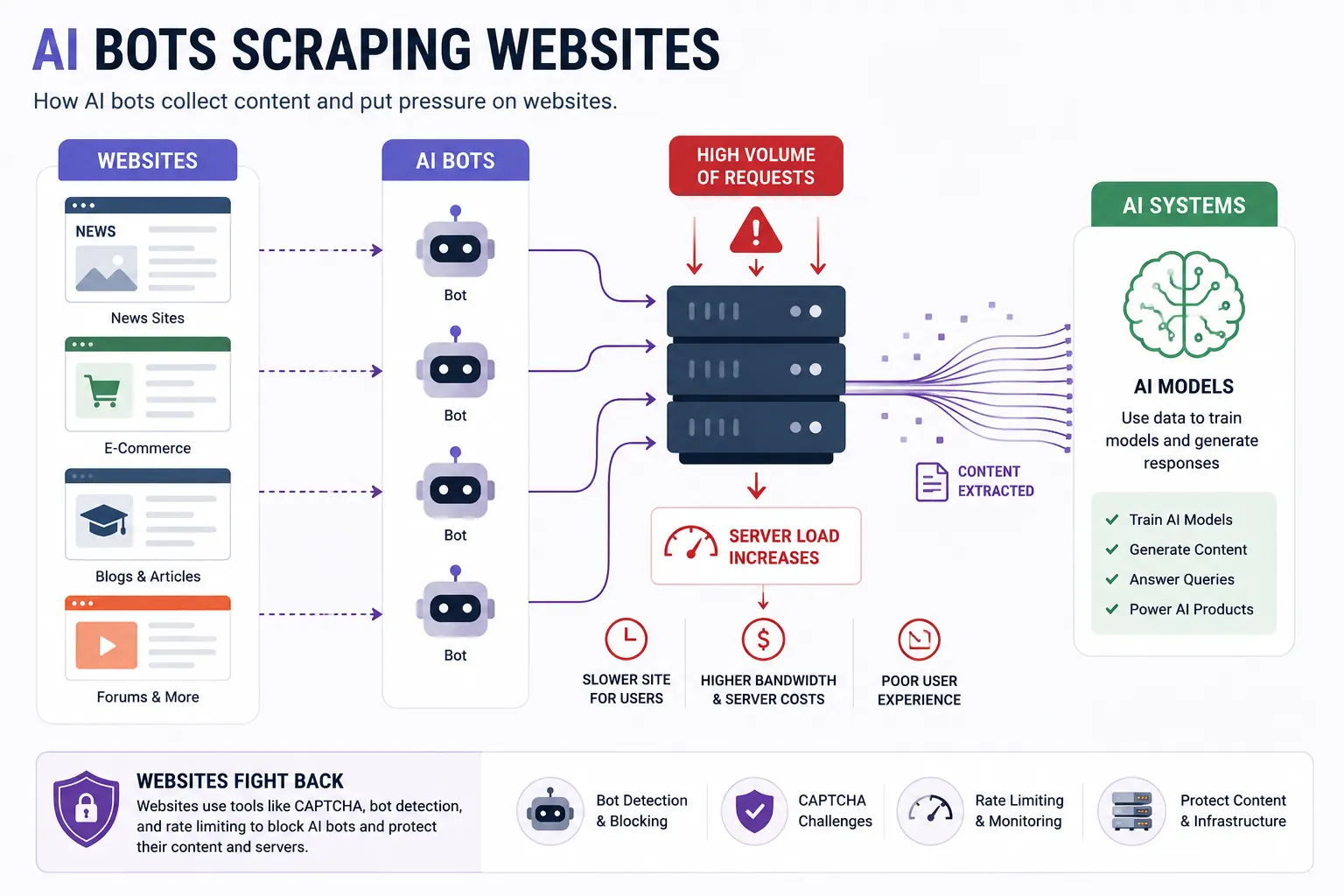
For example, imagine a website suddenly receives millions of automated requests from bots scraping content or trying to train AI systems.
That creates:
- bandwidth costs
- slower performance
- server pressure
Some websites now spend huge amounts of money just handling bot traffic.
In some cases, bots make up a surprisingly large percentage of total internet activity. That’s one reason many platforms now aggressively filter traffic before users even enter the site.
Sometimes the CAPTCHA appears before the website fully loads because systems are already checking whether your connection looks suspicious.
Why Some CAPTCHA Tests Feel So Bad
Honestly, because the internet became more complicated than the original CAPTCHA systems were designed for.
Older CAPTCHA tests were simpler:
- distorted letters
- random numbers
- text puzzles
But bots eventually learned how to solve many of them. So companies started using image recognition challenges instead.
That’s why you now see:
- traffic lights
- buses
- motorcycles
- stairs
- crosswalks
The system is not really testing your intelligence. It’s testing behavior.
Things like:
- how fast you click
- cursor movement
- hesitation
- interaction patterns
In many cases, the images themselves are only part of the analysis. The system is quietly observing how “human” your behavior looks while solving them. Which honestly sounds slightly creepy when you think about it.
CAPTCHA Is Also About Trust
One interesting thing about modern internet systems is that websites no longer trust visitors automatically. Years ago, the internet felt more open.
Now websites constantly worry about:
- fake users
- spam traffic
- AI scraping
- credential attacks
- automated abuse
So every visitor gets evaluated silently.
That’s why sometimes you complete a CAPTCHA instantly, while other times websites make you do multiple checks.
Your:
- browser
- IP address
- behavior
- traffic source
- device reputation
all influence how suspicious you appear to automated systems.
In other words: the internet now profiles humans and bots at the same time.
AI Is Making This Problem Bigger
This is probably the most important reason CAPTCHA systems are becoming more common now. AI changed the internet dramatically.
Modern AI systems can:
- generate human-like text
- imitate conversations
- automate browsing
- create fake accounts
- scrape massive amounts of content
And companies building AI models often collect huge amounts of public internet data.
Many websites are becoming frustrated with this.
Some feel AI companies are:
- taking content without permission
- increasing server loads
- extracting value from websites without sending users back
That’s one reason some platforms now use stronger anti-bot protection systems.
The internet is slowly turning into a battlefield between:
- websites protecting content
- bots collecting data
- AI systems scraping information
And ordinary users get caught in the middle solving bicycle puzzles.
Why CAPTCHA Sometimes Blocks Real Humans
Because no system is perfect. Sometimes real users get flagged accidentally.
Especially if:
- using VPNs
- browsing quickly
- blocking trackers
- using unusual browsers
- sharing networks
- appearing from suspicious IP ranges
To automated systems, privacy-focused behavior can sometimes look similar to bot behavior.
That’s why people occasionally get stuck in endless CAPTCHA loops even while doing nothing wrong. And honestly, this frustration is becoming more common.
The smoother internet experience people once expected is slowly disappearing. Now many websites treat every visitor as “possibly suspicious” first.
The Internet Is Becoming Less Human-Friendly
There’s something slightly ironic about CAPTCHA systems. Humans built the internet for humans.
But now humans constantly need to prove they are not machines just to access websites. And this problem may grow further.
As AI becomes better at imitating people, websites will likely increase verification systems even more.
Future internet systems may rely more on:
- behavior analysis
- device trust scores
- biometrics
- invisible verification systems
In many cases, websites already analyze users silently without showing visible CAPTCHA puzzles at all.
The checkbox saying: “I’m not a robot” is often only the visible part of a much larger background system.
So What Does CAPTCHA Actually Do?
At its core, CAPTCHA acts like a filter.
It helps websites reduce:
- spam
- fake accounts
- automated abuse
- bot traffic
- scraping
- suspicious activity
It’s not perfect. It’s often annoying. And sometimes it blocks real people unfairly.
But without systems like CAPTCHA, many parts of the modern internet would become flooded with automated activity very quickly. And honestly, that says something important about today’s internet. The web is no longer just humans talking to humans.
Increasingly, it’s humans, bots, AI systems, scrapers, algorithms, and automated traffic all competing for space at the same time.
CAPTCHA exists because websites are trying to figure out which one you are.