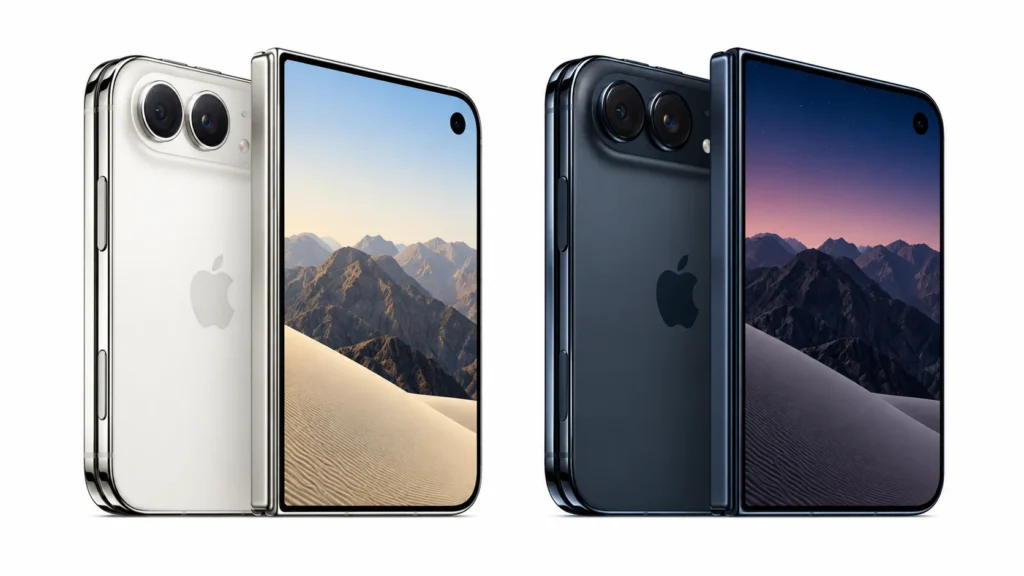
Apple finally blinked. After seven years of letting Samsung beta test foldables for the entire industry Apple has launched the iPhone Duo.
Every other tech site is currently copy pasting the press release about magical hinges and aerospace titanium. We are going to skip the poetry. If you are about to drop 3 Lakh on a smartphone in India you do not need marketing fluff. You need the actual hardware mechanics of what you are buying.
Here are the brutal compromises Apple had to make to get it this thin. Following the raw specs we have added our dedicated Unpacked POV on what this actually means for the Indian premium market.
The Screens
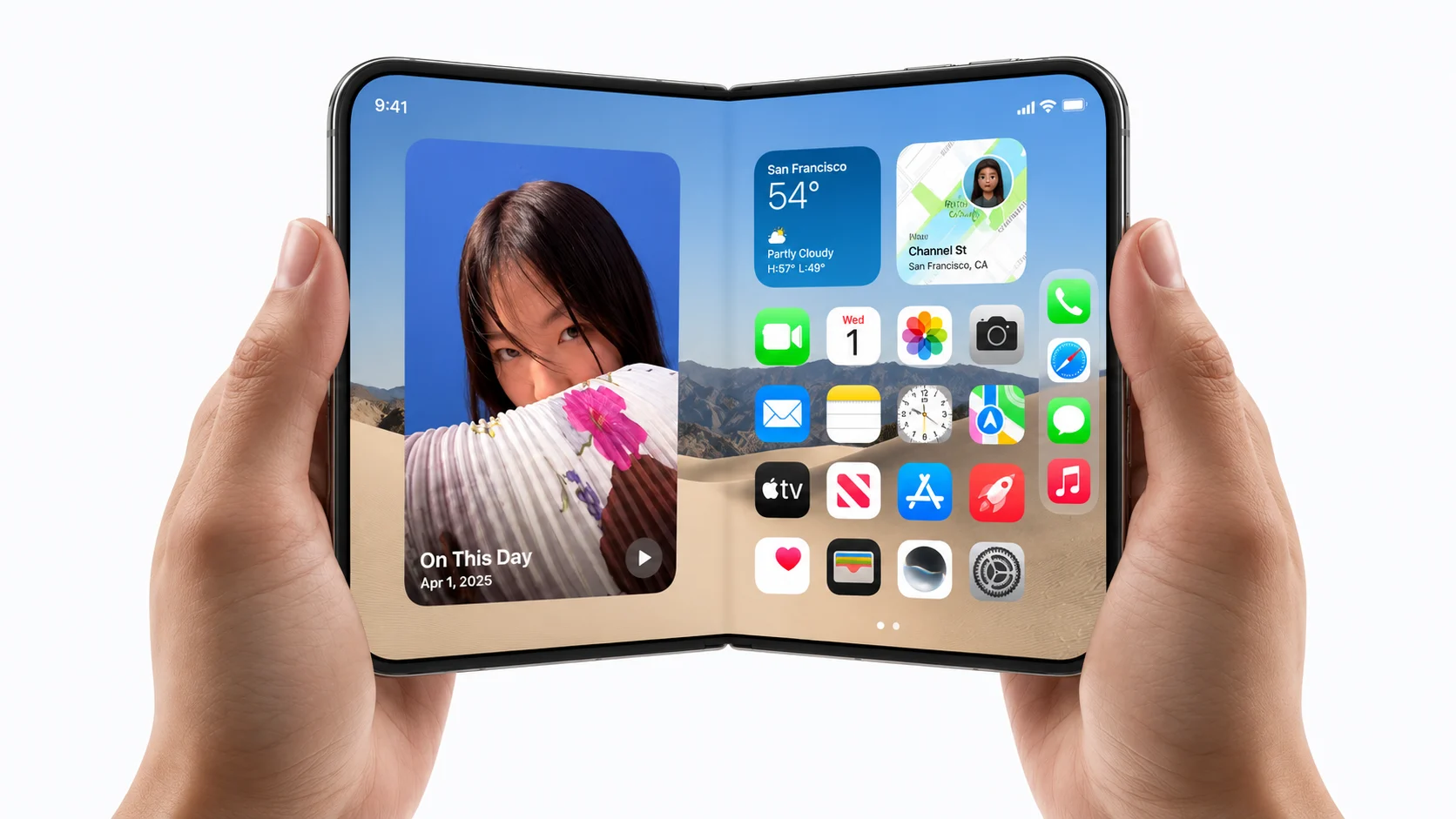
This is the only reason you are buying the phone.
- Inner Display: A massive 7.6 inch Super Retina XDR OLED. It runs at 120Hz ProMotion and hits a blinding 3000 nits of peak brightness outdoors.
- Cover Display: A 5.4 inch outer screen. It maintains the exact same aspect ratio as the inner screen so apps do not awkwardly stretch when you open the device.
- The Crease: Apple did not beat physics but they are trying to hide it. They used a custom polymer that is 40 percent stiffer than the industry standard. They also slapped a nano texture matte finish over the inner screen to kill the glare that usually highlights the crease on Android foldables.
- Under Display Camera: The inner screen is completely uninterrupted. No notch and no dynamic island. The FaceTime camera sits entirely underneath the display panel.
The Build and the Compromises
You cannot fold a piece of glass and metal in half without losing something. Here is what Apple had to cut to make the engineering work.
- Face ID is gone: The phone is too thin to fit the TrueDepth camera system. It is just 5.2mm when unfolded. Apple brought back Touch ID and built it directly into the side power button.
- No SIM Tray: The iPhone Duo is eSIM only worldwide. The physical SIM slot is officially dead on the foldable.
- No Action Button: Scrapped entirely to save internal space.
- The Battery: They split a 5800 mAh dual cell battery across both halves of the phone.
- The Engine: It runs on the A20 Pro built on a 2nm process. That is the exact same chip powering the iPhone 18 Pro paired with 12GB of RAM to handle the massive multitasking overhead of a 7.6 inch screen.
The Camera Downgrade
This is the biggest reality check of the device. The iPhone Duo is the most expensive iPhone ever made but it does not have the best iPhone camera.
- Main: 48MP Fusion Camera with sensor shift OIS.
- Ultra Wide: 48MP Fusion Camera.
- The Missing Lens: There is no dedicated 5x Telephoto lens like on the iPhone 18 Pro Max. The Duo relies purely on a digital crop from the main sensor.
If you are buying this for photography you are buying the wrong phone. You are paying for the hinge mechanism and not the glass.
The Indian Reality
Apple is not positioning this against Android foldables. They are positioning this as a luxury good.
- Starting Price: Rs 2,99,900 for the 256GB base model.
- Maxed Out: Rs 4,49,900 for the 2TB version.
- Pre orders: October 16 2026.
- Release Date: October 23 2026.
Our Comments on the iPhone Duo
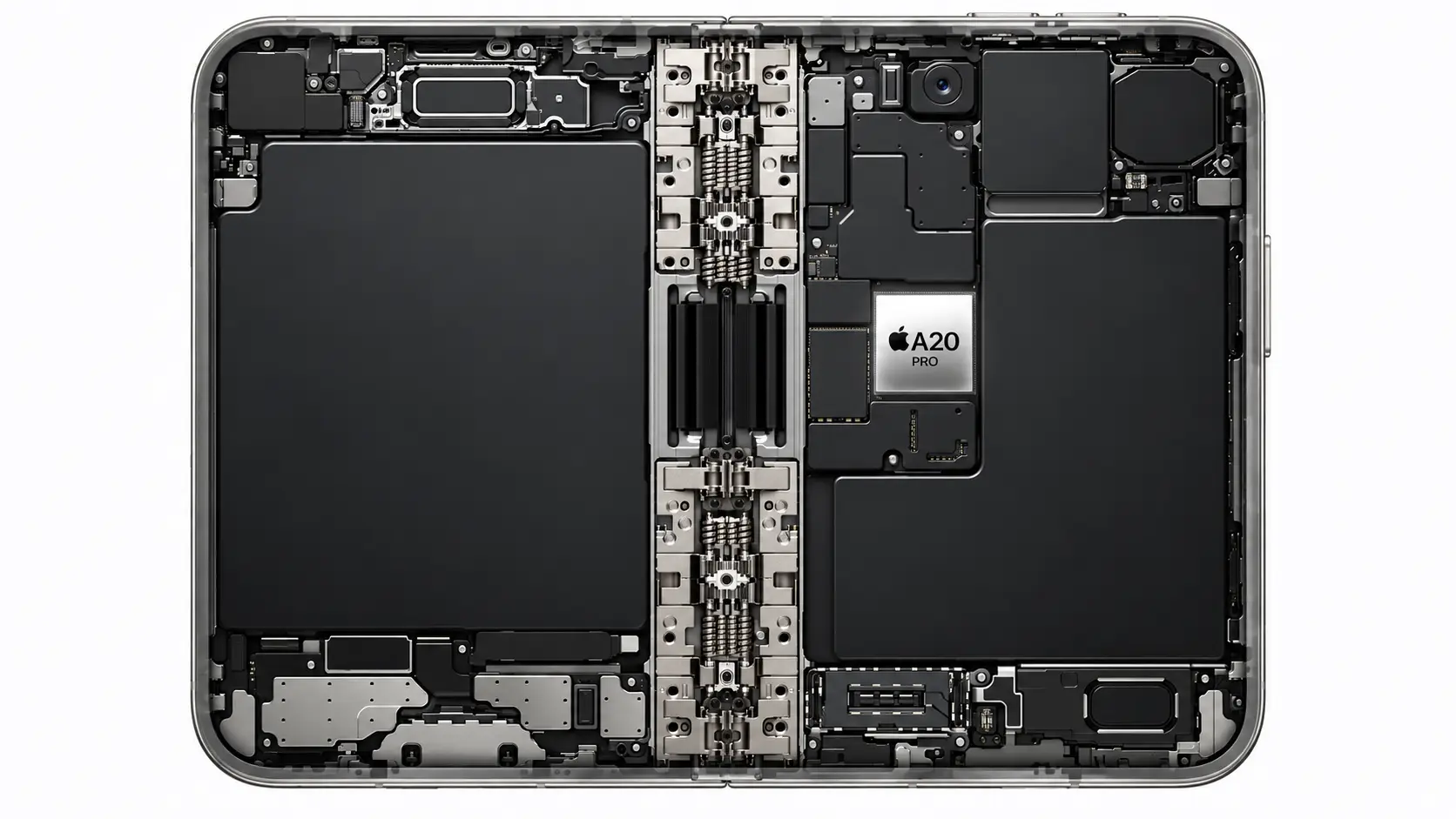
Specs only tell half the story. When you look at how this device will actually survive in the real world there are a few massive blind spots and one absolute masterstroke that nobody is talking about. Here is our take on what the iPhone Duo really represents for the Indian market.
The App Ecosystem Checkmate
This is the hidden reason Apple waited seven years to release a foldable. Android foldables have always felt like a gimmick because Android tablet apps are terrible. When you unfold a Samsung Galaxy Z Fold you usually just get a stretched out version of a phone app. It looks weird and it wastes screen real estate.
Apple does not have this problem. They have the iPad.
Developers have spent the last decade building native powerful apps for the iPad interface. When you open the iPhone Duo you are not getting a stretched out iOS app. You are instantly booting into iPadOS territory. The software transitions seamlessly. Lightroom Final Cut and Excel will look exactly like they do on a premium tablet because the developer ecosystem is already built. This is the kill shot. Apple just wiped out the high end Android foldable market not by building a better hinge but by having better software ready on day one.
The Thermal and Battery Reality Check
Let us be completely realistic about using this in India.
Apple put a 5800 mAh battery inside this device. That sounds like a lot until you realize it has to power a 7.6 inch screen running at 120Hz pushing 3000 nits of brightness. Now imagine taking this phone out in the middle of a Delhi summer or a humid Mumbai afternoon. You unfold it to read a complex spreadsheet or take a video call.
Physics always wins. Running that much screen at maximum brightness on a 2nm chip inside a chassis that is only 5.2mm thin is a recipe for severe thermal throttling. There is simply nowhere for the heat to go. The phone will get hot and the screen brightness will aggressively dim to protect the internal components. You are paying for 3000 nits but you will probably only see it for ten minutes at a time before the software forces it down to 800 nits to prevent the battery from melting.
The Repairability Trap
Buying a foldable is a financial trap. It is a fact of moving parts and soft polymer screens. They break.
The inner screen of the Duo is not solid glass. It is a flexible material. What happens when Indian dust gets trapped inside that aerospace titanium hinge? What happens when humidity starts peeling the factory installed screen protector?
If you buy this phone you are effectively forced to buy AppleCare Plus. You cannot risk a 3 Lakh device failing out of warranty because a screen replacement on this thing will easily cost upwards of Rs 80,000. It is a subscription model disguised as a hardware purchase. You are not just buying the phone. You are signing up for a massive recurring insurance cost because the hardware is fundamentally fragile.
The eSIM Nightmare for Indian Business
Removing the physical SIM tray is a classic Apple move but it is completely detached from the reality of doing business in India and the Middle East.
If you are the type of executive who drops 3 Lakh on a phone you probably travel. You probably land in Dubai or Singapore and swap in a local physical SIM card to avoid insane roaming charges. Or you have a dedicated physical corporate SIM that your IT department controls. By forcing the Duo to be eSIM only Apple is prioritizing internal battery space over practical usability. It is going to frustrate a lot of legacy business users who rely on physical hardware tokens.
The 3 Lakh Question
The iPhone Duo is not a smartphone. It is a status symbol.
Samsung spent eight years bleeding billions of dollars in research and development to normalize the idea of a folding screen. Apple let them take all the risks. Now Apple is stepping in to claim the luxury crown. In the premium circles of Bangalore and South Delhi this is the new digital Rolex. It signals that you have the disposable income to drop 3 Lakh on a first generation product just to be seen with it.
If you are a founder who lives in spreadsheets and hates carrying an iPad in your bag the Duo is the ultimate convergence device. It fixes the problem of carrying two screens.
But if you are just looking for the best premium smartphone experience you are looking in the wrong place. The iPhone 18 Pro Max has a vastly superior camera system. It has better battery life. It will not randomly break if you drop it on a desk too hard. It costs a lakh less.
The Duo is a beautiful piece of engineering but you should let the top 0.1 percent beta test this hinge for a year before you actually depend on it.