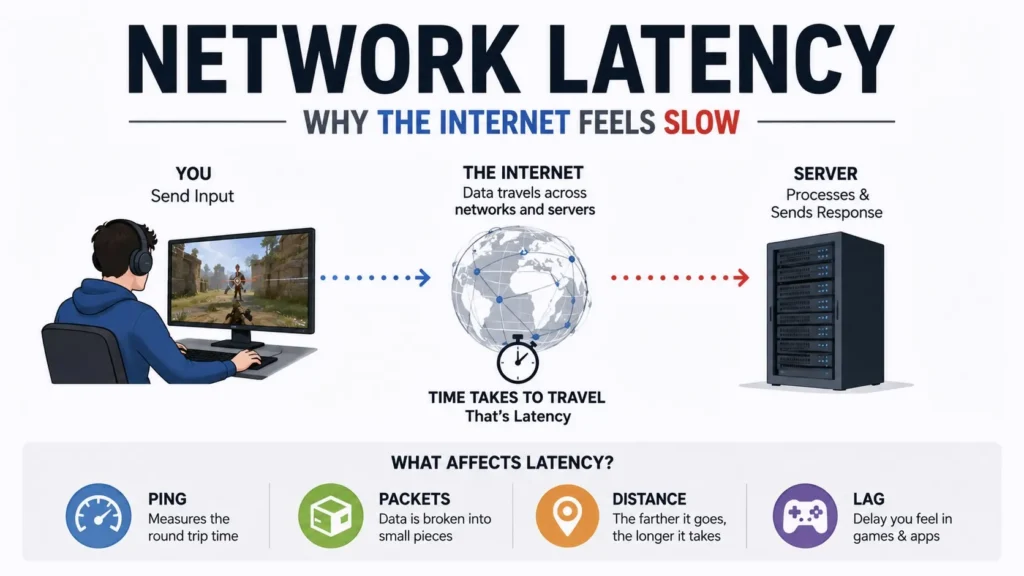
We spend a huge part of life waiting for things online.
A video buffer. A game lags. A website loads slowly for no reason. Someone talks over you in a video call because the audio arrived late.
Most people just call it slow internet. But honestly there is a real physical reason behind all this.
The internet is not some magical invisible thing floating around us. It is a giant physical system made of:
- cables
- routers
- servers
- data centers
Every time you click something, real data has to physically travel across the world to reach another computer and come back.
That travel time is called network latency. And once you understand this properly, you start seeing the internet very differently.
What Network Latency Actually Means
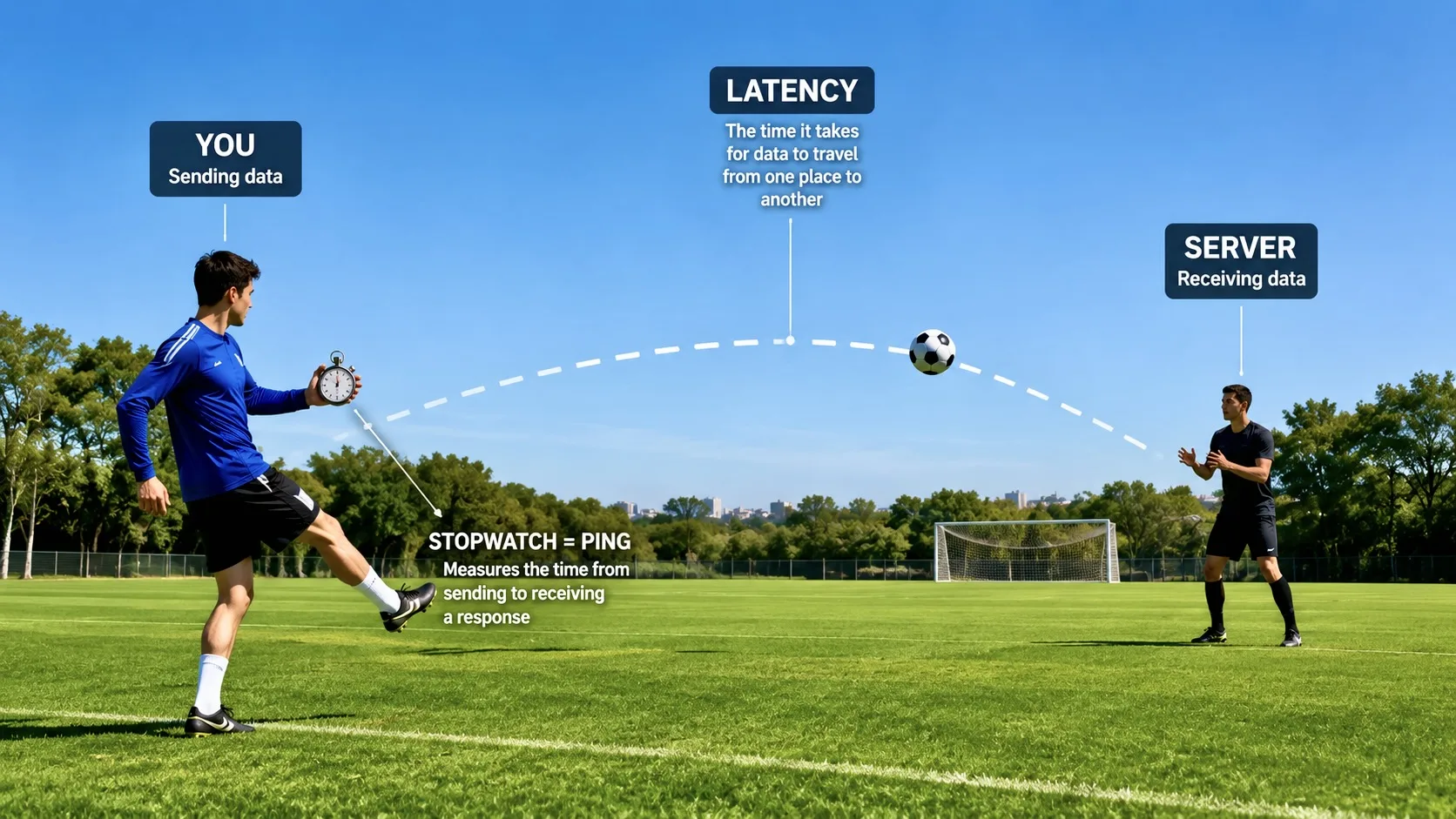
Latency is simply delay. More specifically, the time data takes to travel from one place to another.
Even though internet data moves extremely fast through fiber optic cables, it still takes time. Because distance still matters.
If a server is physically far away from you, your data has to travel farther to reach it.
A good way to think about this is throwing a ball to someone.
The time between you throwing the ball, and the other person catching it, is basically latency.
The farther the person stands, the longer the delay becomes. Internet data works similarly.
The Internet Is Still Bound By Physics
People sometimes forget this. The internet feels instant, but it is still operating inside the real physical world.
Data moves through underground fiber optic cables using light signals. That sounds futuristic, but even light takes time to travel long distances.
So if you are in India trying to access a server sitting somewhere in Europe or America, the data still has to physically make that journey.
That delay may only be milliseconds, but we can notice milliseconds surprisingly easily.
Especially during:
- gaming
- video calls
- live streaming
- scrolling
- fast interactions
Ping And Latency Are Basically Connected
Gamers use the word ping constantly. Low ping. High ping. Ping spikes.
Ping is basically the measurement of latency.
It checks how long data takes to go somewhere and come back.
A low ping feels smooth and responsive. A high ping feels delayed.
That is why games start feeling terrible once latency increases too much.
You press jump and the character reacts slightly late. You shoot someone and the hit registers slowly.
Everything starts feeling disconnected.
The Internet Does Not Travel In One Straight Line
This is something many people never realize.
When you send data online, it does not move directly from your device to another device in one clean line.
Your data keeps hopping through multiple systems.
For example:
- your phone
- your WiFi router
- your internet provider
- different networks
- exchange points
- servers
Every stop adds a tiny bit of delay. It is very similar to a postal system.
A package does not travel directly from your house to another house instantly.
It moves through:
- sorting centers
- trucks
- warehouses
- different routes
Internet packets behave almost the same way.
Data Gets Broken Into Small Pieces
When you send a file or open a website, the data usually gets split into small packets. These packets travel separately across the network.
Sometimes they even take different paths to reach the same destination. Then your device rebuilds everything correctly at the end. Data gets broken into small packets.
But if one packet gets delayed or lost, the system has to wait for it again. That waiting becomes part of the latency you feel.
This is one reason the unstable internet feels frustrating even if speed looks technically high.
Why Video Calls Feel Weird Sometimes
Video calls expose latency very clearly.
You probably experienced moments where:
- both people start talking together
- audio arrives late
- video becomes blurry
- faces freeze suddenly
That happens because real time communication is extremely sensitive to delay. The system has to prioritize speed constantly.
Sometimes apps intentionally reduce video quality just to keep conversations moving smoothly. That is why video suddenly becomes pixelated during weak internet moments.
The app is basically sacrificing quality to reduce latency. Because delayed conversation feels worse than blurry video.
Gaming Makes Latency Extremely Obvious
Gaming is where people notice latency the most. Especially competitive games.
In online games your actions first travel to a server before becoming official. So even tiny delays matter.
Game developers use tricks to make games feel smoother locally.
Your computer predicts movement before the server fully confirms it. That is why games often still feel smooth even with some latency. But sometimes prediction fails.
Then you see:
- rubber banding
- teleporting
- snapping backward
because the server corrected your screen. That is why online games sometimes feel unfair.
Why You Die Behind Walls In Games
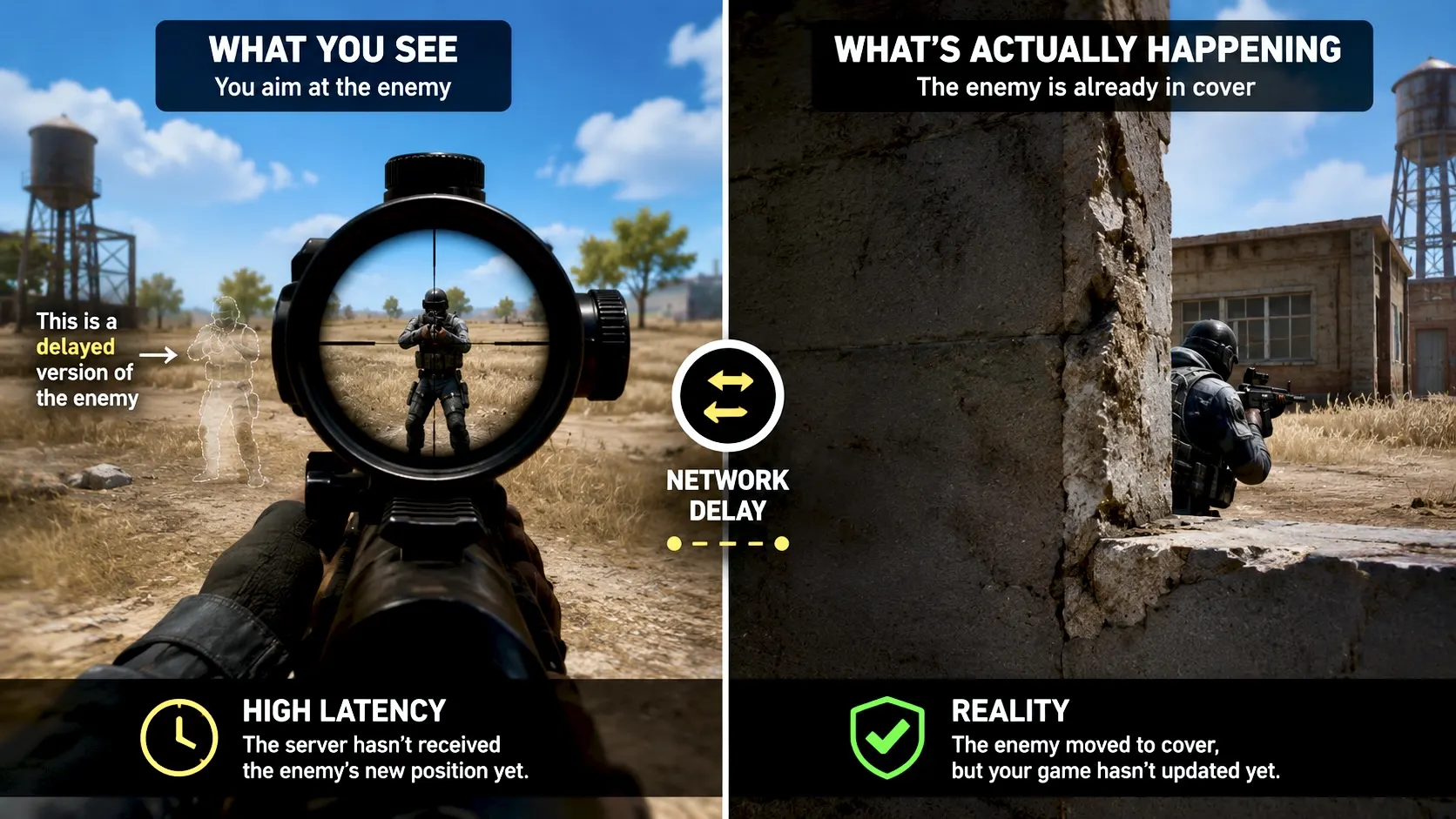
This is honestly one of the strangest parts of latency. Sometimes you hide behind cover but still get shot.
It feels broken. But what happened is the other player saw an older version of your position because of network delay.
Their shot reached the server based on where you were milliseconds earlier. The server accepted that shot.
Meanwhile on your own screen, you already moved behind the wall. That tiny time difference creates those frustrating moments.
Buffering Is Also Related To Latency
Buffering happens when your device consumes data faster than the internet can deliver new data.
It is basically waiting for more information to arrive. Distance plays a huge role here too.
If a website or video server is extremely far away, the delay naturally increases. That is why companies use systems called content delivery networks.
Instead of storing files in one place, they copy them across many servers around the world.
So your request gets routed to the closest location possible. That reduces latency massively.
Faster Internet Does Not Always Mean Lower Latency
This part confuses many people. People think higher internet speed fixes everything. Not always.
Bandwidth and latency are different things.
Bandwidth is how much data can move at once. Latency is how long data takes to start arriving.
You can have:
- fast download speeds
- but terrible latency
especially during gaming or video calls. That is why some internet connections feel fast for downloads but still lag badly during live interactions.
WiFi Can Also Add Delay
Wireless internet adds its own small delays too.
Signals can face:
- interference
- congestion
- walls
- device conflicts
That is why wired ethernet connections usually feel more stable for gaming.
Your home router also matters more than people think.
If too many devices are using heavy internet at the same time, latency increases.
Especially when:
- large uploads happen
- streaming runs everywhere
- downloads overload the router
The network becomes crowded.
The Internet Feels Instant Because Engineers Hide The Delay
Honestly one interesting thing about modern internet systems is how much work happens behind the scenes just to hide latency from us.
Companies constantly try to reduce delay because we notice slow responses instantly.
That is why apps:
- preload content
- cache files
- predict actions
- store servers closer to users
Modern internet infrastructure is basically obsessed with reducing waiting time. Because we hate waiting online.
The Internet Is Physical After All
Most people think of the internet like some invisible digital world disconnected from reality.
But latency reminds you that the internet is still physical. Your messages. Your videos. Your game inputs.
Everything is traveling through:
- real cables
- real machines
- real distances
Latency is simply the time needed for that physical journey to happen. And honestly once you understand this, internet lag stops feeling like random magic.
You start realizing the internet is basically millions of computers trying to move information across the planet as fast as physics allows.