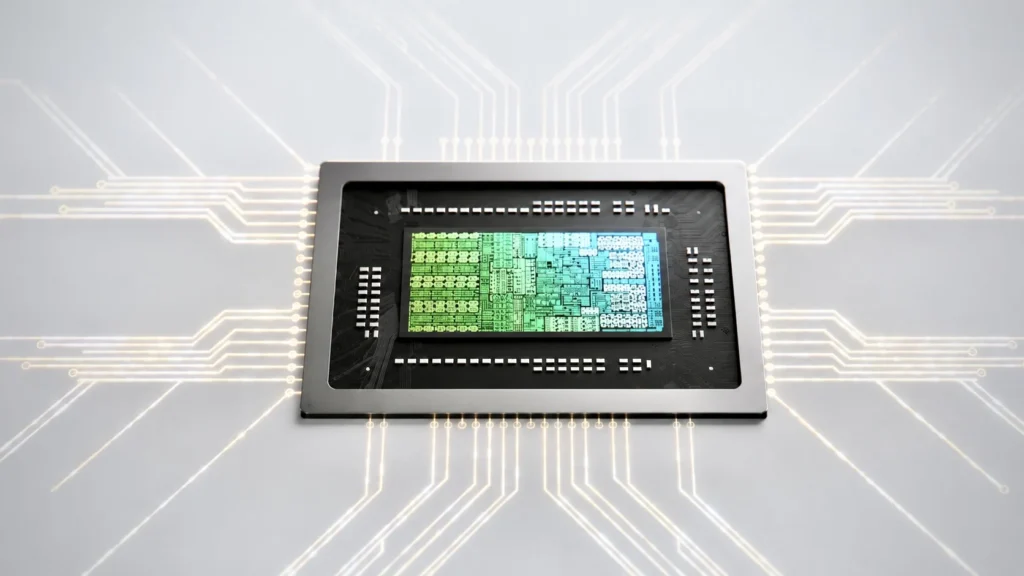
Most AI tools today depend on powerful servers located somewhere else. When you ask a chatbot a question or generate an image, the actual work is usually done in a data centre, not on your computer. NVIDIA’s RTX Spark platform wants to change that. It is designed to bring more AI processing directly to your PC, making AI tools faster, more private, and less dependent on the cloud. While it is still early, RTX Spark gives us a glimpse of what future AI-powered computers could look like.
A few years ago, buying a computer was pretty simple.
You chose a processor, picked a graphics card if you needed one, added some memory, and that was about it. AI wasn’t part of the conversation. Most people barely thought about it.
Today, things are changing fast.
AI tools are becoming part of everyday work. People use them to write emails, generate images, edit videos, summarize documents, code software, and answer questions. The problem is that almost all of these tasks happen somewhere else on servers owned by companies like OpenAI, Google, Anthropic, or Microsoft.
RTX Spark is NVIDIA’s attempt to change that.
Instead of sending everything to the cloud, NVIDIA wants future PCs to be powerful enough to run advanced AI models directly on your machine.
That’s why RTX Spark might be one of the most important announcements NVIDIA has made in years.
So what exactly is RTX Spark?
At first glance, RTX Spark sounds like another graphics card.
It isn’t.
RTX Spark is a complete computing platform built around a new NVIDIA-designed chip that combines several major components into a single package.
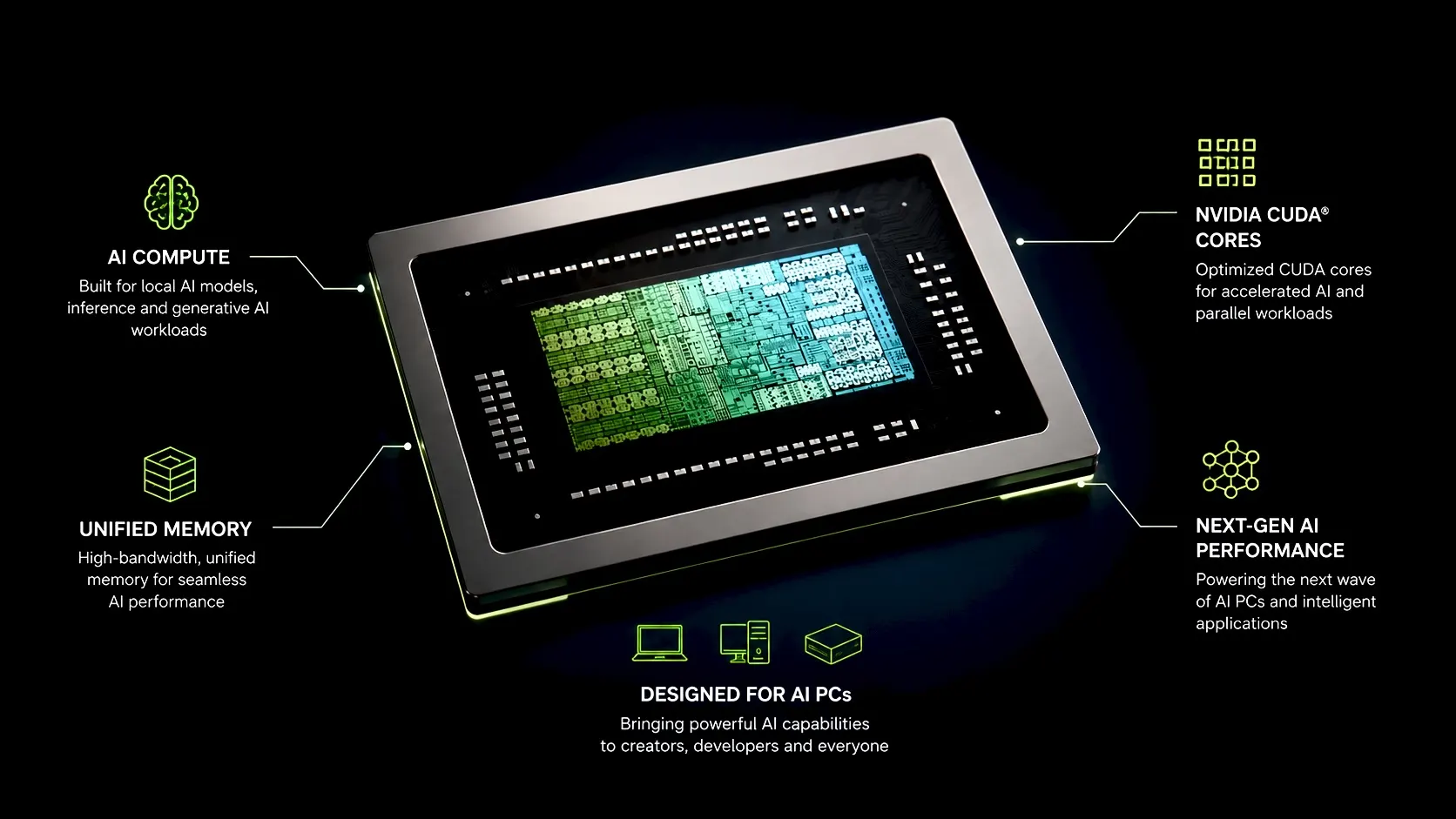
Instead of having a separate CPU, separate GPU, and separate memory pools, RTX Spark brings everything much closer together.
The platform combines:
- An ARM-based CPU
- NVIDIA Blackwell graphics technology
- Dedicated AI acceleration hardware
- Large amounts of unified memory
The goal is simple:
create computers that are specifically designed for AI workloads rather than treating AI as just another application.
In many ways, the idea is similar to what Apple did with its M-series chips.
Rather than building separate pieces and connecting them together, the system is designed as one integrated platform.
Why Did NVIDIA Make It?
Because the way people use computers is changing. For years, performance was mostly about gaming, rendering, video editing, or productivity software.
Today, AI is becoming another major workload. When you ask an AI chatbot a question, generate an image, or use AI inside editing software, huge amounts of computing power are involved.
Most of that power currently lives in cloud data centre’s. That approach works, but it comes with several limitations.
Cloud AI Is Expensive
Running powerful AI models costs money.
Every request requires computing resources somewhere.
Companies absorb those costs through subscriptions, usage limits, advertisements, or enterprise pricing.
As AI adoption grows, those costs grow too.
Content Creation
Video editors, designers, photographers, and creators increasingly rely on AI tools.
Tasks like:
- Background removal
- Image generation
- Object replacement
- Video enhancement
- Voice cleanup
- Automatic editing
can benefit from dedicated local AI processing.
Software Development
Developers are already using AI coding assistants every day.
More powerful local AI hardware could allow coding models to run directly on the machine instead of depending entirely on cloud services.
Privacy Concerns
Many users don’t love the idea of sending every document, conversation, image, or project to remote servers.
For businesses, privacy concerns can be even bigger.
Running AI locally keeps more information on the device itself.
Speed Matters
Sending information to a server and waiting for a response introduces delays.
Local AI can often respond instantly because everything happens directly on the machine.
AI Models Are Getting Smaller
Not every useful AI model needs massive data-center infrastructure.
Many modern models can already run surprisingly well on powerful consumer hardware.
NVIDIA sees an opportunity here.
If future PCs become powerful enough, more AI tasks can happen locally instead of in the cloud.
RTX Spark is designed around that idea.
What Will RTX Spark Actually Do?
This is where things get interesting.
Most people won’t buy an RTX Spark system just to chat with an AI assistant.
The bigger impact will come from applications that quietly integrate AI into everyday workflows.
What Does This Mean for Gamers?
Probably less than the marketing suggests, at least for now.
If your main goal is playing Valorant, CS2, Fortnite, or Forza Horizon, a traditional desktop with a powerful GPU will still make more sense in many situations.
Gaming performance remains important, but RTX Spark isn’t primarily a gaming story. It’s an AI story.
The platform is designed around the idea that AI workloads will become as common as web browsing or video editing.
Whether that prediction turns out to be correct remains to be seen.
Personal AI Assistants
Imagine an AI assistant that understands your files, notes, projects, emails, and documents without constantly sending everything to remote servers.
Instead of being just a chatbot, it becomes part of your computer.
That’s one of the visions companies are pushing toward.
Research and Learning
Students, researchers, and professionals could run specialized AI models locally for analysis, summarisation, tutoring, or technical work.
Business Applications
Many organizations want AI capabilities without exposing sensitive information to external services.
Local AI systems could become attractive in industries where privacy matters.
Why Everyone Keeps Talking About Unified Memory
One of the most interesting parts of RTX Spark isn’t the AI hardware. It’s the memory design.
Traditional PCs often separate memory into different pools.
Your CPU uses system RAM. Your graphics card uses VRAM.
Moving large amounts of data between them creates overhead.
Unified memory changes that approach.
The CPU, GPU, and AI hardware can access the same memory pool.
This can improve efficiency when handling large AI models and massive datasets.
It’s one of the reasons Apple’s M-series machines became so popular among creators and developers.
NVIDIA appears to be taking a similar direction.
NVIDIA’s Strategic Pivot
The most interesting part of RTX Spark isn’t the hardware itself. It’s what the announcement says about where the industry is heading.
For decades, computers were designed around human-operated software. You opened programs. You clicked buttons. You manually performed tasks.
The next generation of computers may increasingly revolve around AI systems that assist, automate, search, generate, organize, and execute tasks alongside users.
Companies across the industry seem to believe that future PCs will need specialized hardware for that world.
Microsoft is pushing AI-focused Windows experiences. Apple continues expanding AI features across its devices. Qualcomm is investing heavily in AI-powered PCs. And now NVIDIA wants a bigger role than simply providing graphics cards.
RTX Spark represents that ambition.
Should You Care Right Now?
Probably not because of the product itself. Most people won’t rush out and buy an RTX Spark machine tomorrow.
Prices, software support, real-world performance, and practical use cases still need time to mature. But the announcement is worth paying attention to for a different reason.
It offers a glimpse of where major technology companies think personal computing is headed.
For years, the conversation around AI has focused on giant cloud services and data centers.
RTX Spark suggests another possibility: bringing more of that intelligence back onto the computer sitting on your desk.
Whether it becomes the future of computing or just another industry experiment remains uncertain.
But one thing is clear. NVIDIA isn’t trying to build a faster graphics card anymore. It’s trying to help define what the next generation of PCs looks like.