Is Every AI Image Hiding a Secret? You might have heard that every AI photo has a hidden ID tag inside it, but while tools like Google’s SynthID are making some images easier to trace, it’s not a universal tracking chip found in every single pixel.
As these AI-generated images get better and better, it’s getting harder to know what we can actually trust. Lately, there’s been a lot of talk going around that every single AI image has a hidden ID tag inside of it. It sounds like something straight out of a spy movie, right? Like there’s a secret tracker in every pixel watching where the photo goes.
I’m here to slightly challenge that idea. While the technology is definitely getting more sophisticated, it’s not as if there is one universal tracking chip for the entire internet’s pictures. It is actually a lot messier than that, but there is one specific tool called SynthID that is trying to bring some order to the chaos.
What is SynthID?

Simply put, SynthID is a tool made by the smart folks over at Google DeepMind. Think of it like a digital tattoo that you can’t see. You know those big, distracting watermarks you see on some stock photos that sit right in the middle of the image? This is the exact opposite of that.
It is completely invisible to our human eyes, but a computer can “see” it and know exactly where the image came from. This isn’t just about images, though. Google has been busy expanding this to all sorts of things, including audio, video, and even the text you get from AI chatbots.
The main goal is to add a layer of transparency so we aren’t all just guessing whether something was made by a person or a machine. It’s Google’s way of trying to make the AI world feel a little bit safer and more honest.
How it actually works
The way this works is actually pretty clever. It doesn’t just slap a label on the image after it’s already finished. Instead, it gets baked into the image while the AI is still building it. If you think of an image like a giant mosaic made of millions of tiny colored tiles, SynthID makes very slight changes to the colors of those tiles.
These changes are so small that you could stare at the screen all day and never notice anything is different. Google uses a “fingerprint” analogy to describe this. Just like your fingerprint doesn’t change your hand or how you use it, this hidden pattern doesn’t change the quality or the look of the image. It just stays hidden in the background, waiting for a special scanner to come along and identify it.
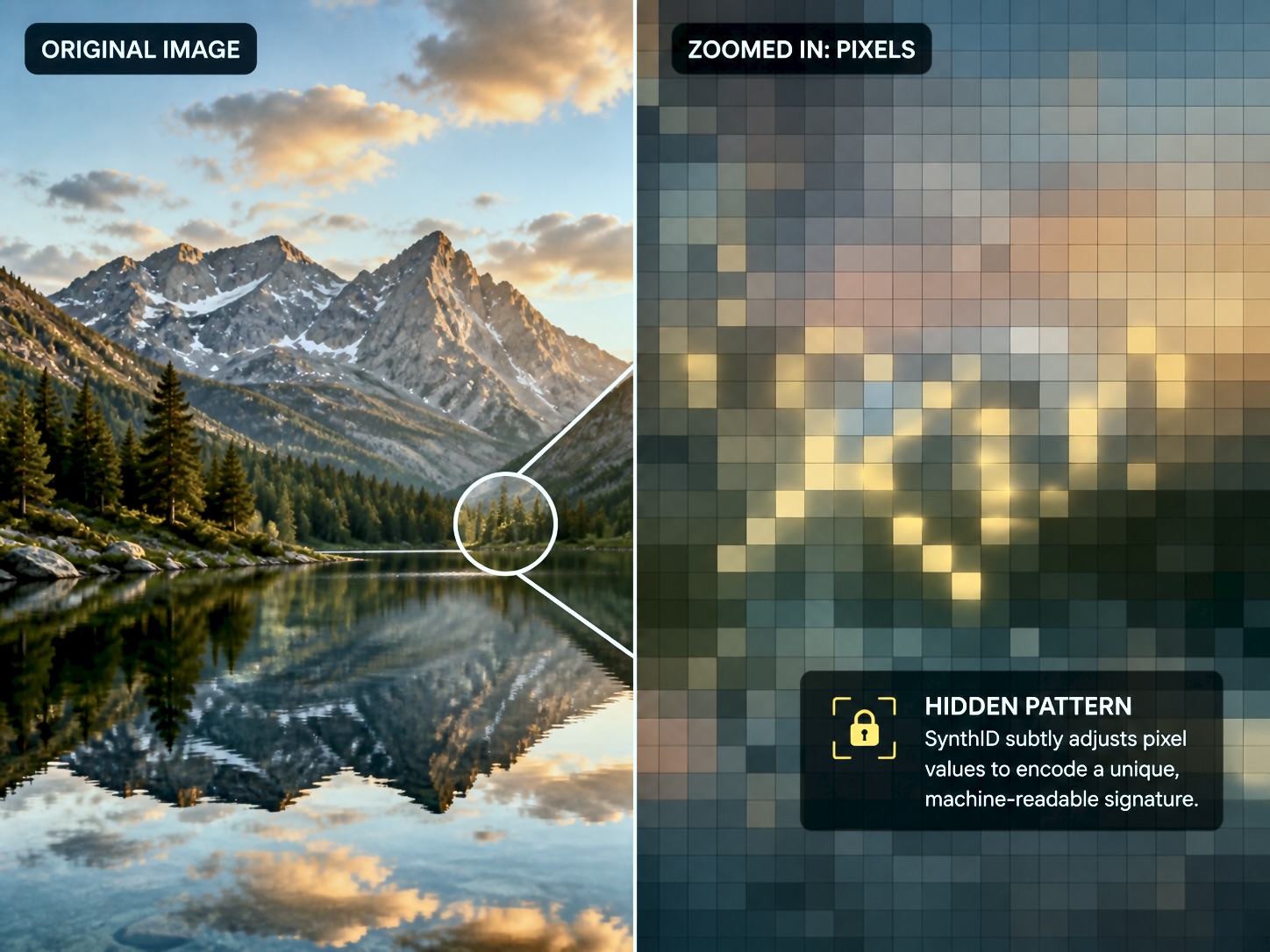
It’s basically a digital signature that’s part of the picture’s DNA. When it comes to things like audio, they do something similar by hiding the signal in the sound waves in a way we can’t hear but a computer can detect. For text, they actually tweak the way the AI chooses its next word.
It’s all very mathematical, but for us regular people, the main thing to know is that it’s a hidden pattern that stays with the content wherever it goes on the web.
Why this matters to you
You might be wondering why any of us should care about a hidden digital tattoo. Well, it’s because the internet is getting a little weird. Deepfakes, those fake videos and photos that are used to trick people, are becoming a major problem. They can be used to start rumors, sway elections, or just make it impossible to tell what’s real anymore.
SynthID is meant to be a way to build a little more trust. It gives us a way to say, “Yes, this was definitely made by an AI,” which helps clear up the confusion before things get out of hand. As AI gets more realistic, we need these kinds of tools to act as a reality check. It’s about making sure that when we see something that looks suspicious, there’s a technical way to find out the truth.
Clearing up the biggest myth
Now, let’s clear up the biggest myth out there: the idea that every AI image has this hidden ID. This is definitely not true. SynthID is a specific technology used by specific Google tools, like their Gemini app or their image generator called Imagen. If you go to a random AI generator on some corner of the web, it probably isn’t using any kind of invisible watermark.
There is no single “Master Key” that tracks every AI image on the planet, at least not yet. Other companies have their own ways of doing things, and some don’t use any watermarking at all. So, just because you don’t find a SynthID tag doesn’t mean the image is “real” or made by a human. It just means it wasn’t made by a Google tool that has this feature turned on.
It isn’t a perfect solution
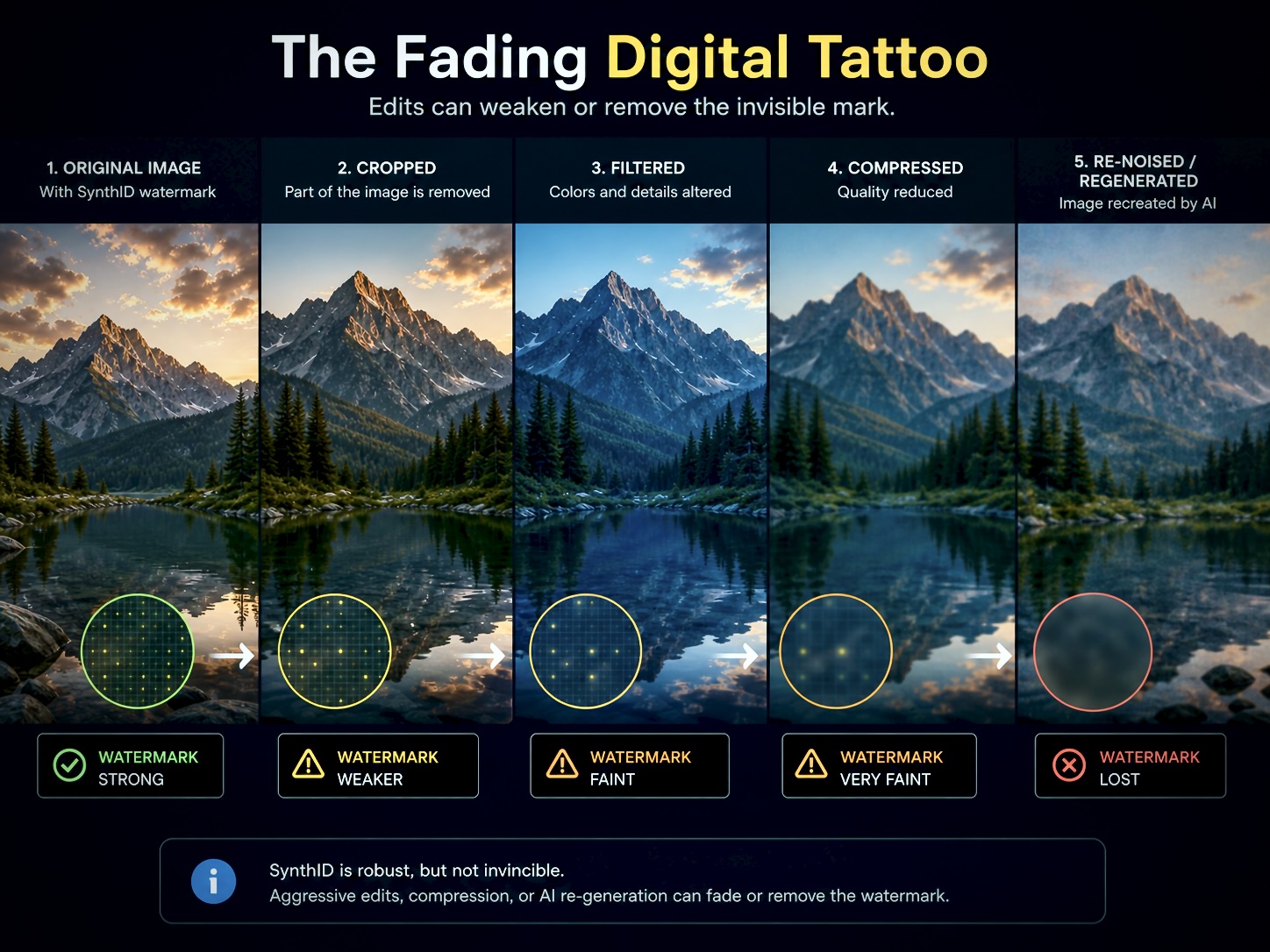
It is also important to know that this technology isn’t a perfect shield. It has some real limitations. Because the watermark is hidden in the pixels, it can be damaged. If you crop a photo heavily, change the colors in an editor, or squash the file size down to make it smaller, that hidden “fingerprint” can get blurred or even wiped out entirely.
There are even people out there who have figured out how to “scramble” these watermarks on purpose. They use a technique that’s basically like taking a picture of a picture. By remaking the image with a different AI tool, something the community calls “re-nosing”. They can keep the visual look but “wash away” the invisible watermark. It’s a bit of a technological cat-and-mouse game where one person builds a lock and another person builds a better pick.
A real-world example
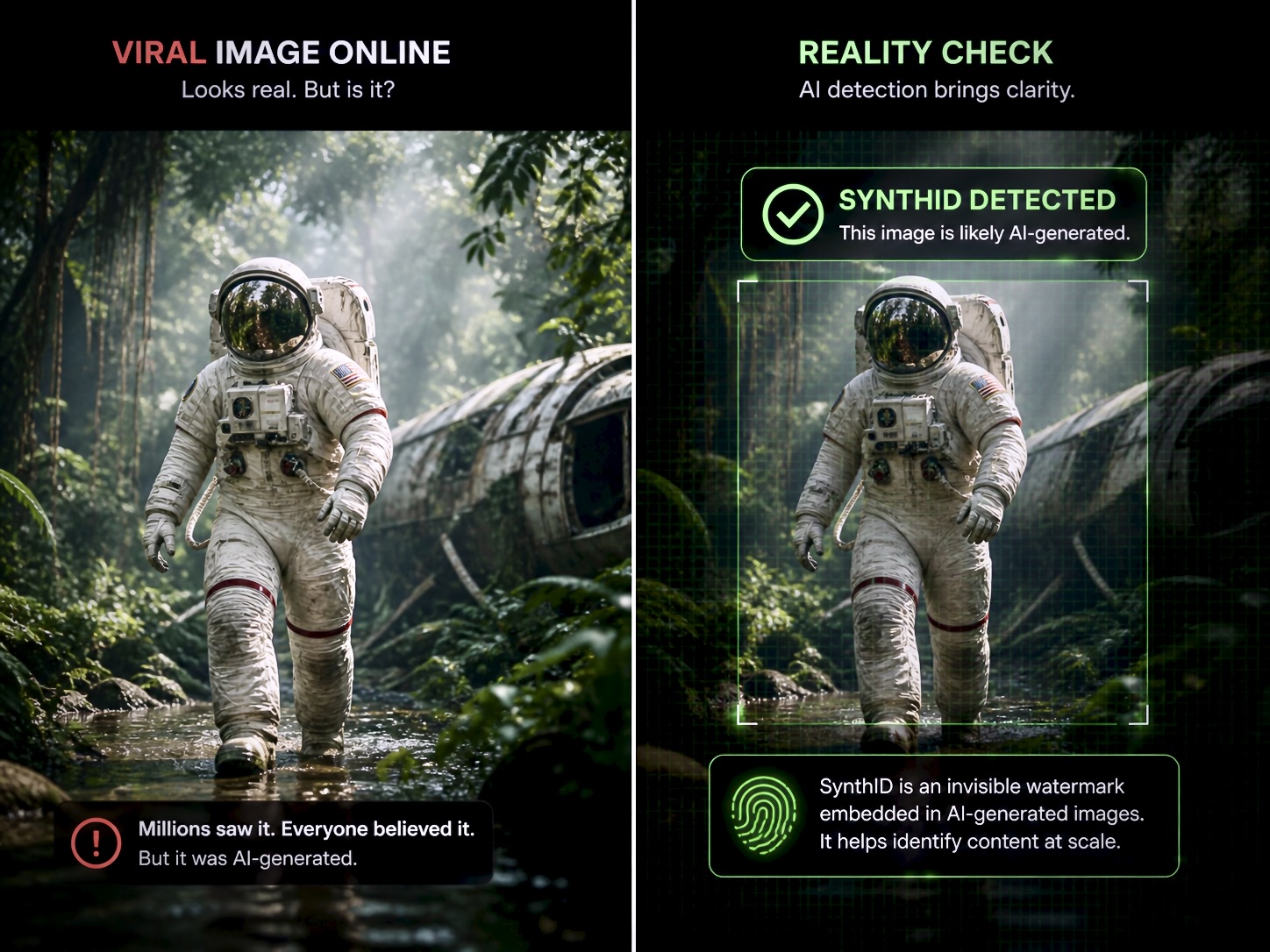
To see how this works in real life, imagine a viral fake image situation. Think of a photo of a major political leader at a place they never actually visited. If that photo was made with a tool like Google’s, someone could take that file, run it through the SynthID scanner, and immediately tell the world it’s a fake.
It wouldn’t stop the image from existing, but it would give us the truth much faster than we could figure it out on our own. Recently, legal experts have been debating how to handle these kinds of things.
An AI image of a dragon flying over a city is obviously fake, so it doesn’t really need a label. But a fake photo of a person that looks 100% real is much more dangerous. That’s where things like SynthID really earn their keep, by helping identify the stuff that’s meant to deceive us.
What this means going forward
Going forward, we have to realize that the internet is still figuring this out. There is no perfect system that will catch every fake or track every AI creation. Some companies are joining together to try and create standards, but it’s a long road.
We are basically in the middle of a massive experiment to see if we can still trust our eyes in a digital world. Even though it isn’t perfect, having a tool like SynthID is a step toward making the internet a bit more honest.
Governments are also starting to get involved. Places like Europe are passing laws that will soon require AI companies to label their content so it’s easy to detect.
This means that in the next few years, these hidden “digital tattoos” might become a lot more common across all the tools we use. It won’t just be a Google thing anymore; it might be the standard for how the whole internet works.
A final thought on trust
It’s a little strange to think about our pictures having hidden lives that we can’t see, but it’s the reality of the tech we’re using now. As these AI tools get better and better, we’re going to need even better ways to label them.
We might never reach a point where every image is perfectly tracked, but every little bit helps when it comes to building trust online. In the end, it really comes down to how we want to use these tools. AI can be amazing for creativity and work, but it’s a double-edged sword.
Technology like SynthID is just one way we’re trying to keep the “good” side of AI while protecting ourselves from the “bad” side. It’s a reflective moment for all of us as we learn to navigate a world that is becoming increasingly synthetic.
Frequently Asked Questions